
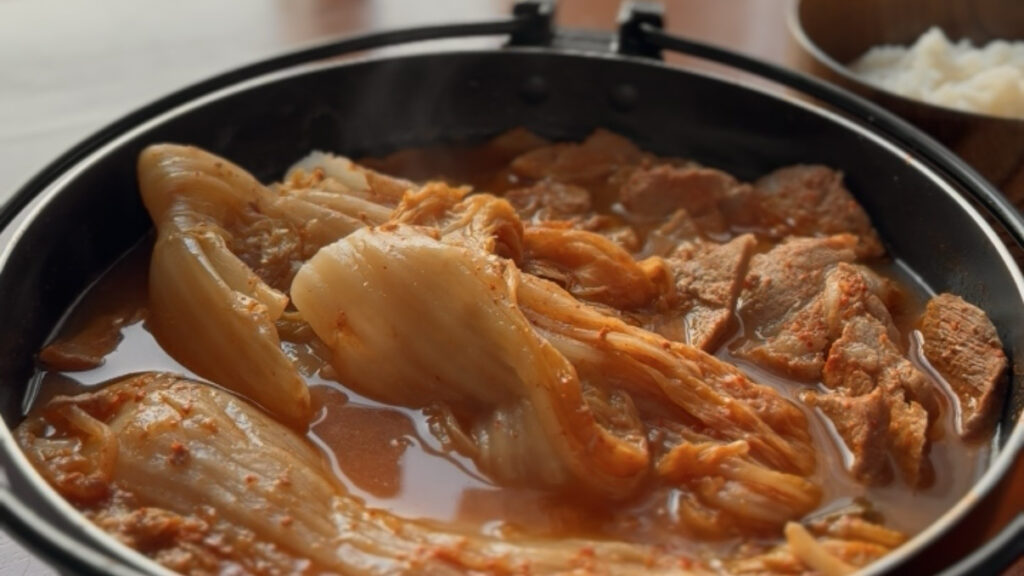
🥢 Cozy Korean Pork Kimchi Stew at Home
Kimchi jjim is one of those Korean dishes I like to make when I have well-fermented kimchi in the fridge. When kimchi gets too sour to eat on its own, I use it to make this dish instead.
I usually make kimchi jjim with a whole head of kimchi and pork in one pot. I use either pork shoulder or pork belly, depending on what I have at home. I place the kimchi and pork next to each other in the pot, add the seasoning and water, and let everything cook slowly together. It’s a simple way to make a comforting meal without preparing lots of ingredients.
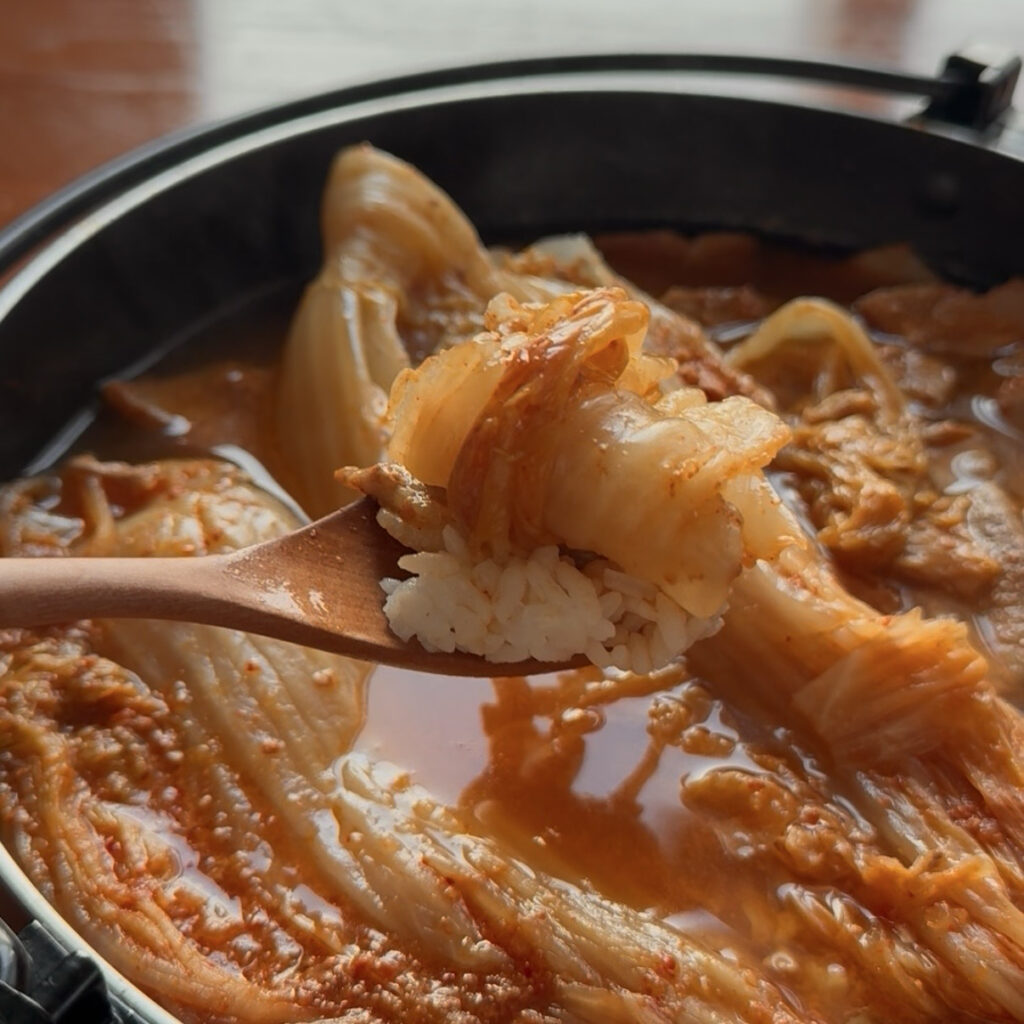
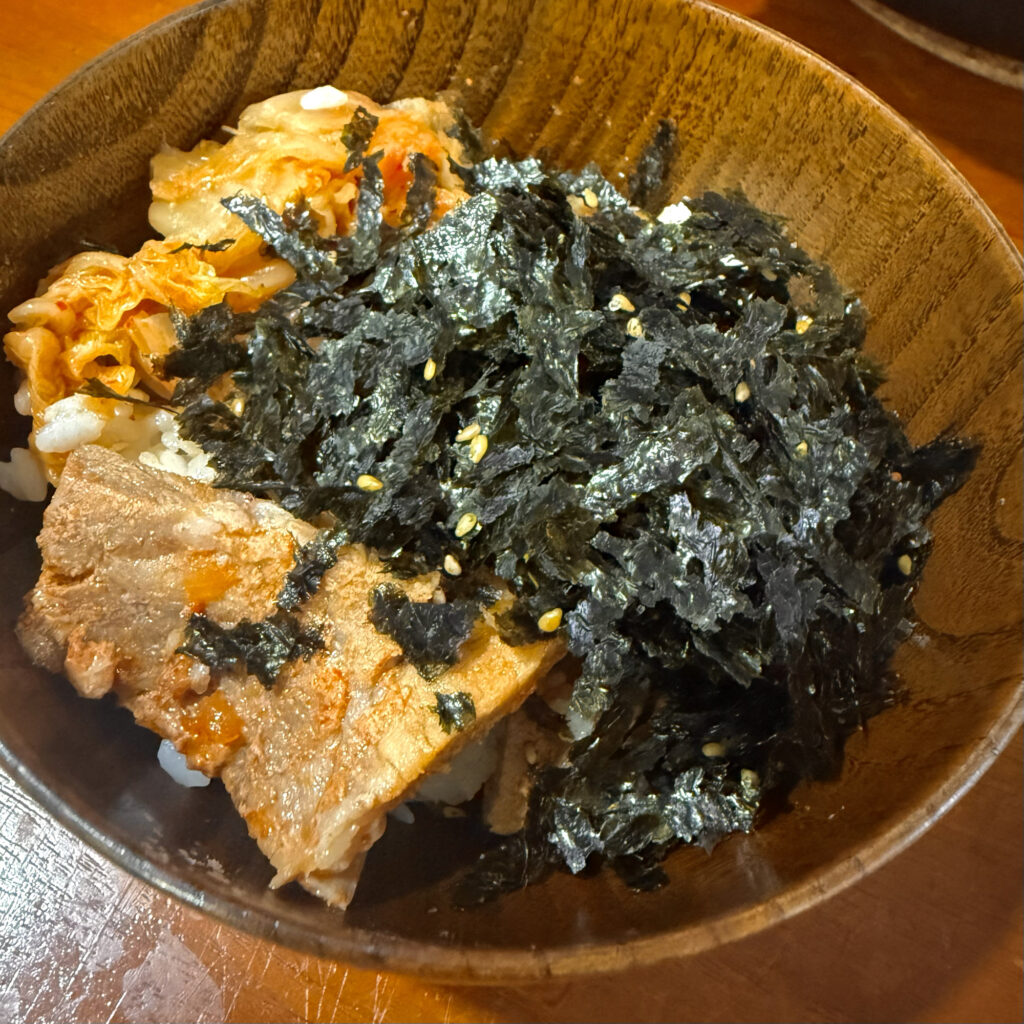
I like to eat kimchi jjim with warm rice. Sometimes, I mix the soft cooked kimchi into my rice with a little sesame oil and crushed roasted seaweed. The kimchi becomes tender as it cooks, and its deep, tangy flavor goes really well with the pork and rice.
🛒 Ingredients
✓ 1 head aged kimchi (about 500–600 g)
✓ 500 ml water
✓ 500 g pork shoulder or pork belly
Seasoning
✓ 1 tbsp gochugaru (Korean red pepper flakes)
✓ ½ tbsp gochujang (Korean red pepper paste)
✓ 1 tbsp soy sauce
✓ 1 tbsp sugar
✓ ½ tbsp oyster sauce
✓ 1 tbsp minced garlic
✓ 3 tbsp kimchi juice
✓ ½ tbsp sesame oil
🍳 How to Make Korean Braised Pork and Kimchi (Kimchi Jjim)
Step 1. Layer the kimchi and pork
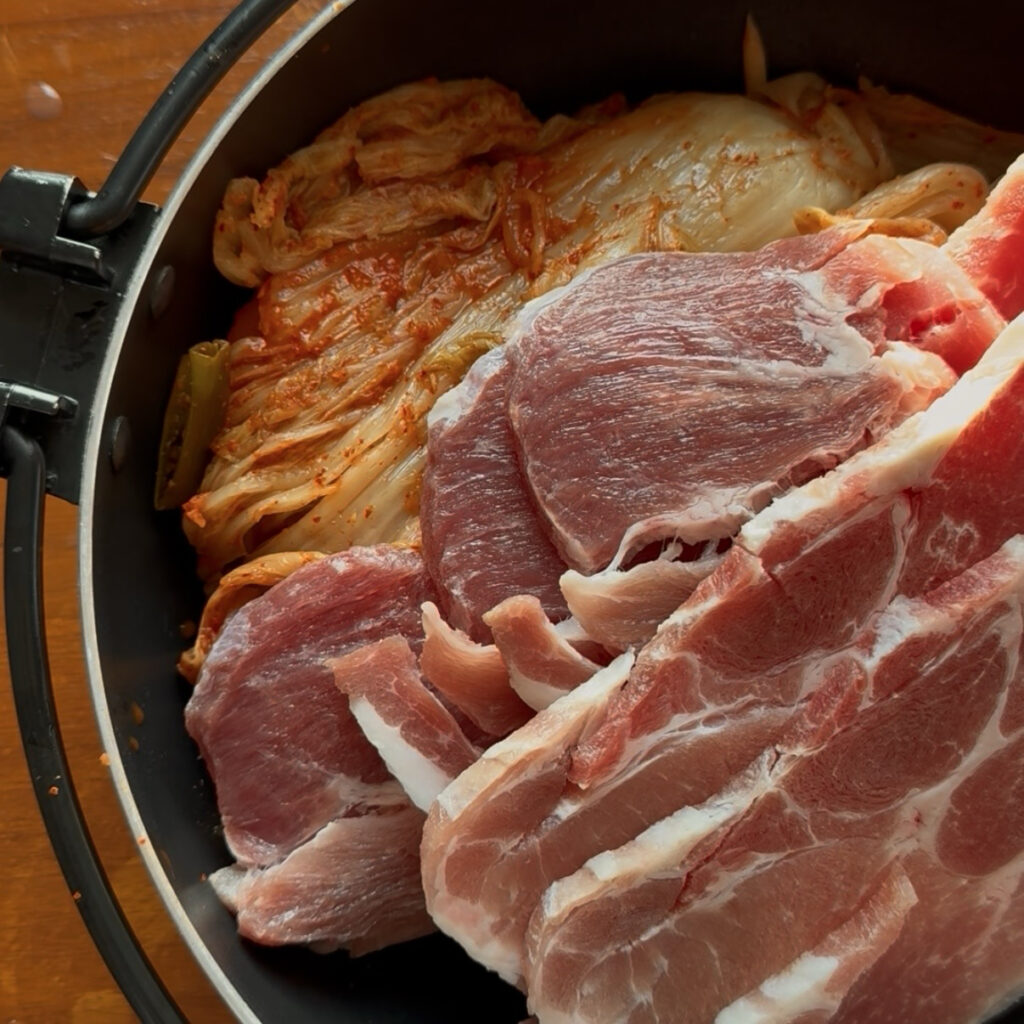
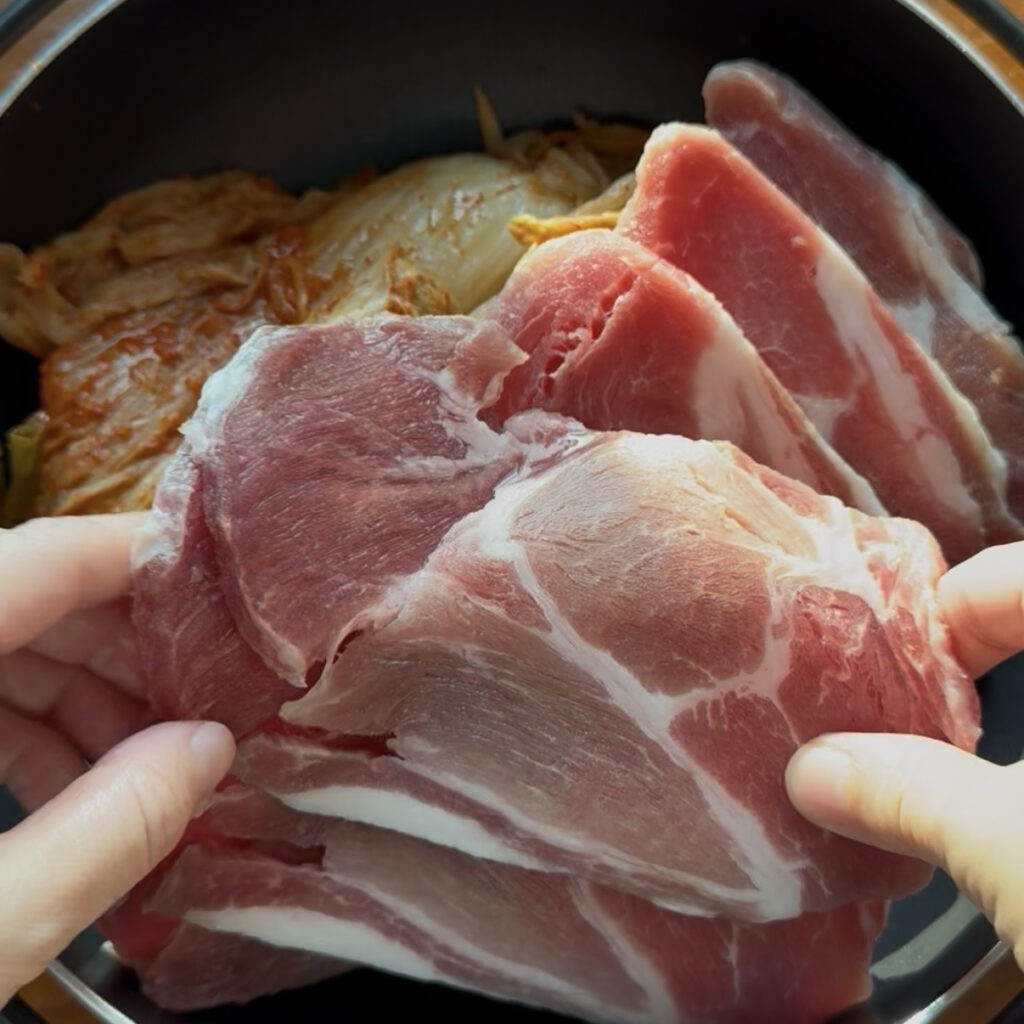
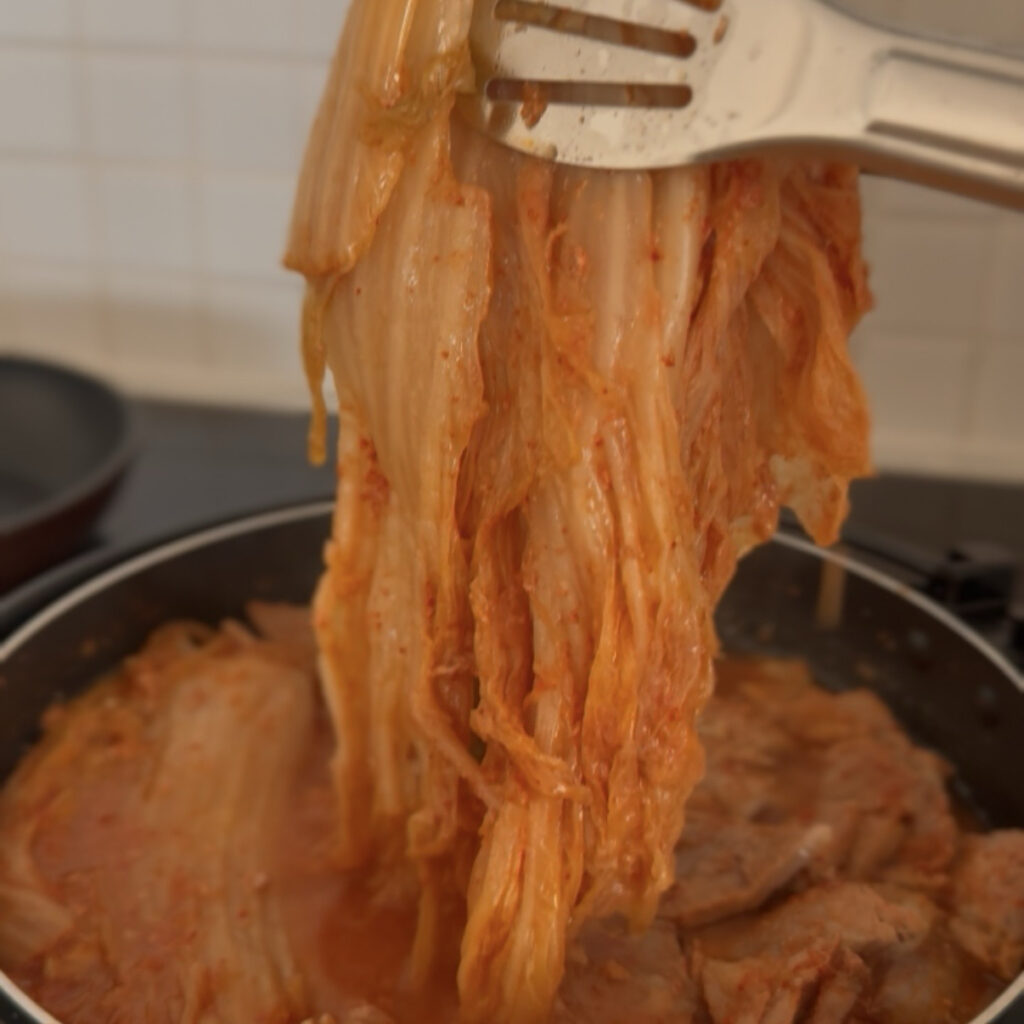
Place the whole head of aged kimchi in the bottom of a large pot. Arrange the pork shoulder or pork belly next to the kimchi. I like to keep the pork in large pieces while cooking so it stays juicy and tender. Once everything is cooked, cut the pork into bite-sized pieces before serving.
Step 2. Add the seasoning and water
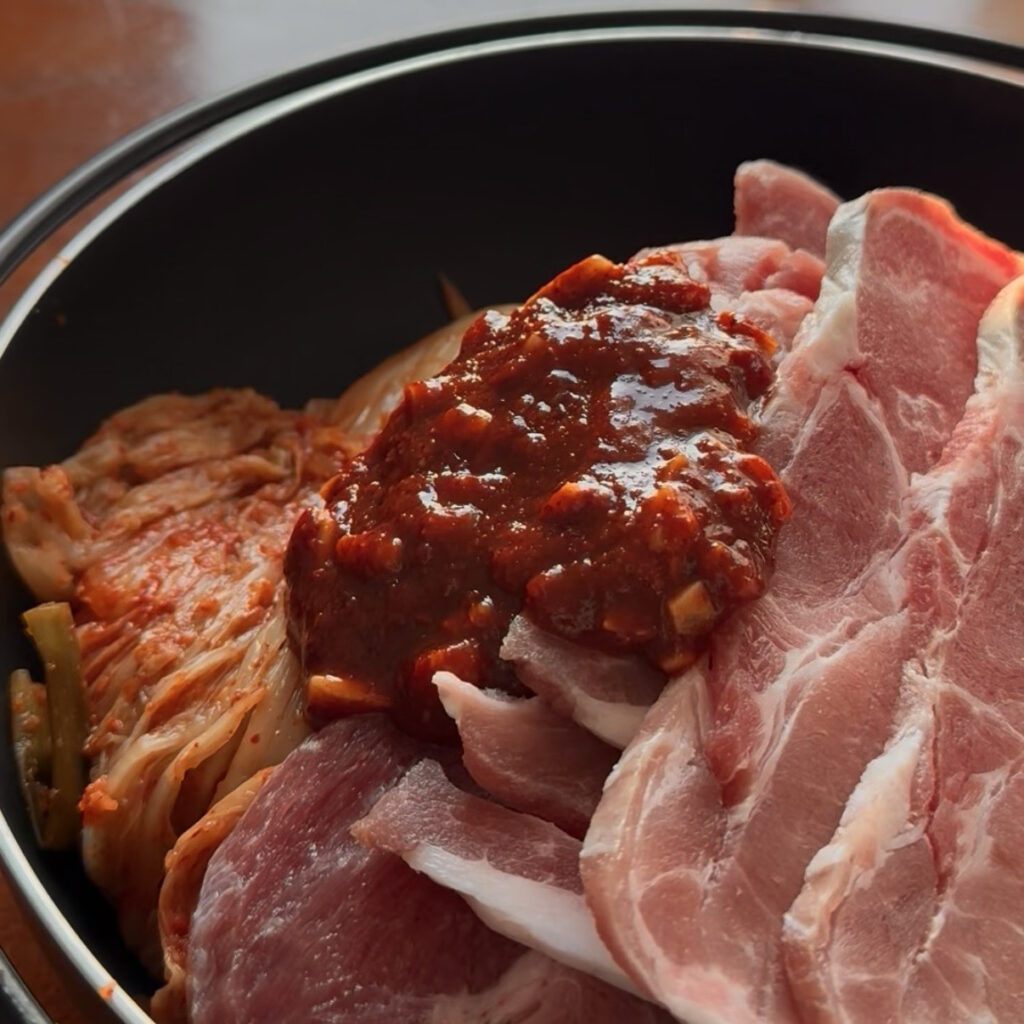
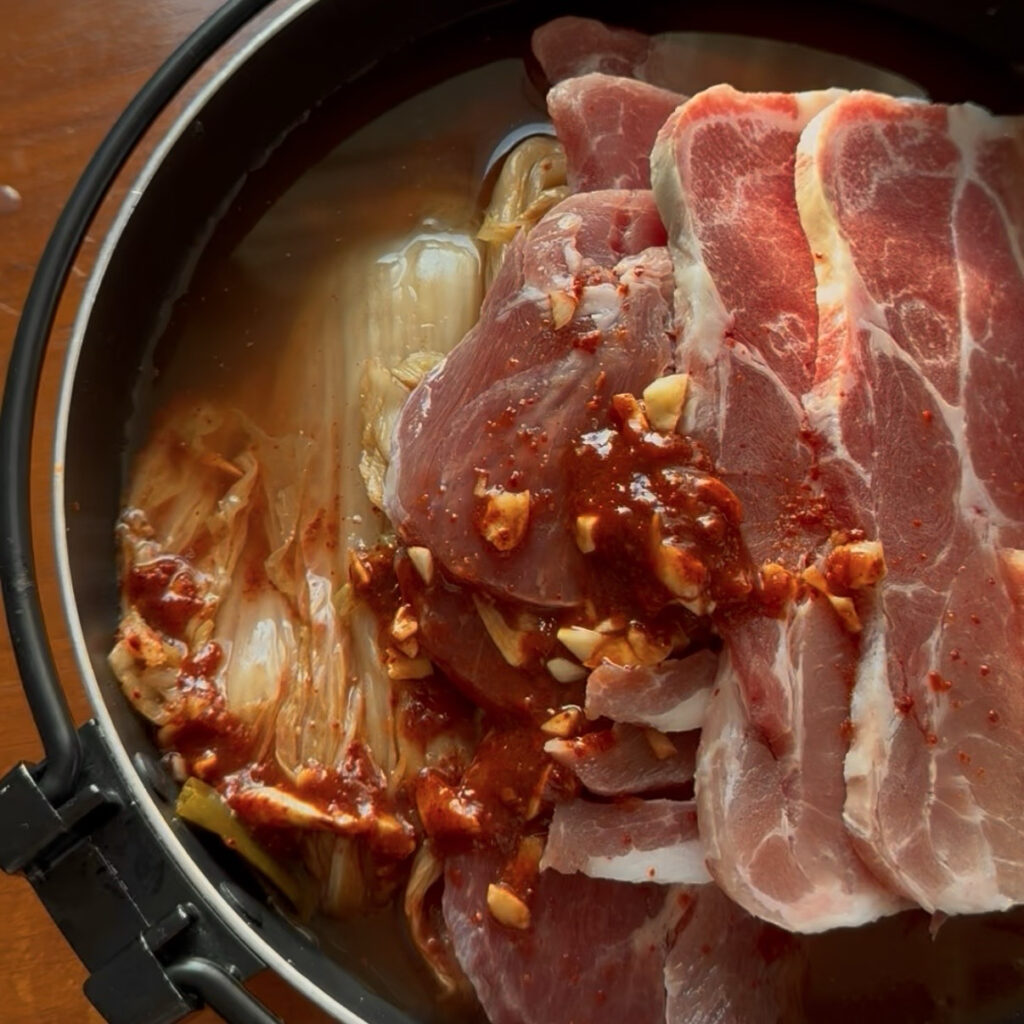
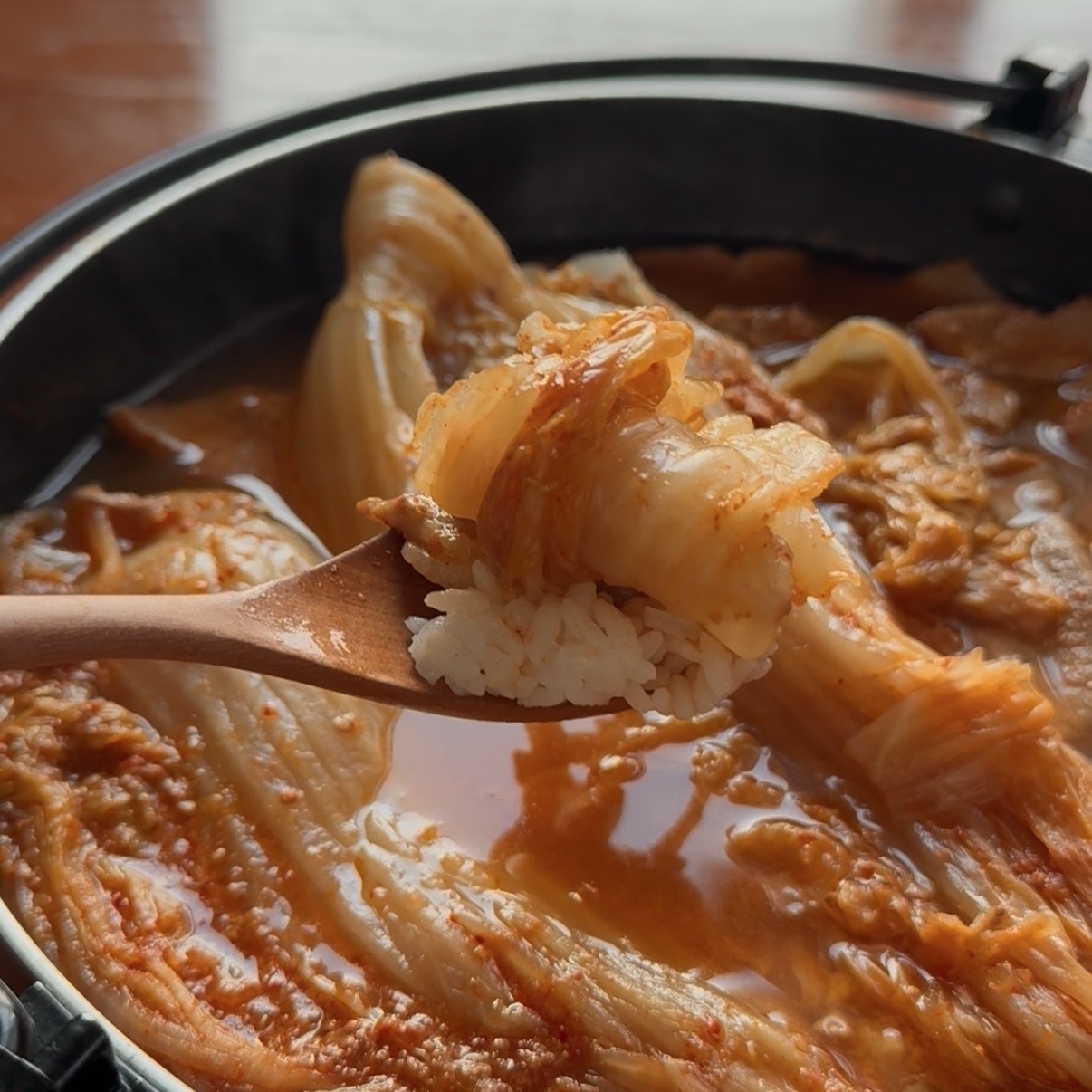
Pour the seasoning over the pork and kimchi, then add 500 ml of water around the sides of the pot. You don’t need to mix everything together. Cover the pot and let everything simmer until the pork is tender and the kimchi is soft.
step 3. Let it simmer
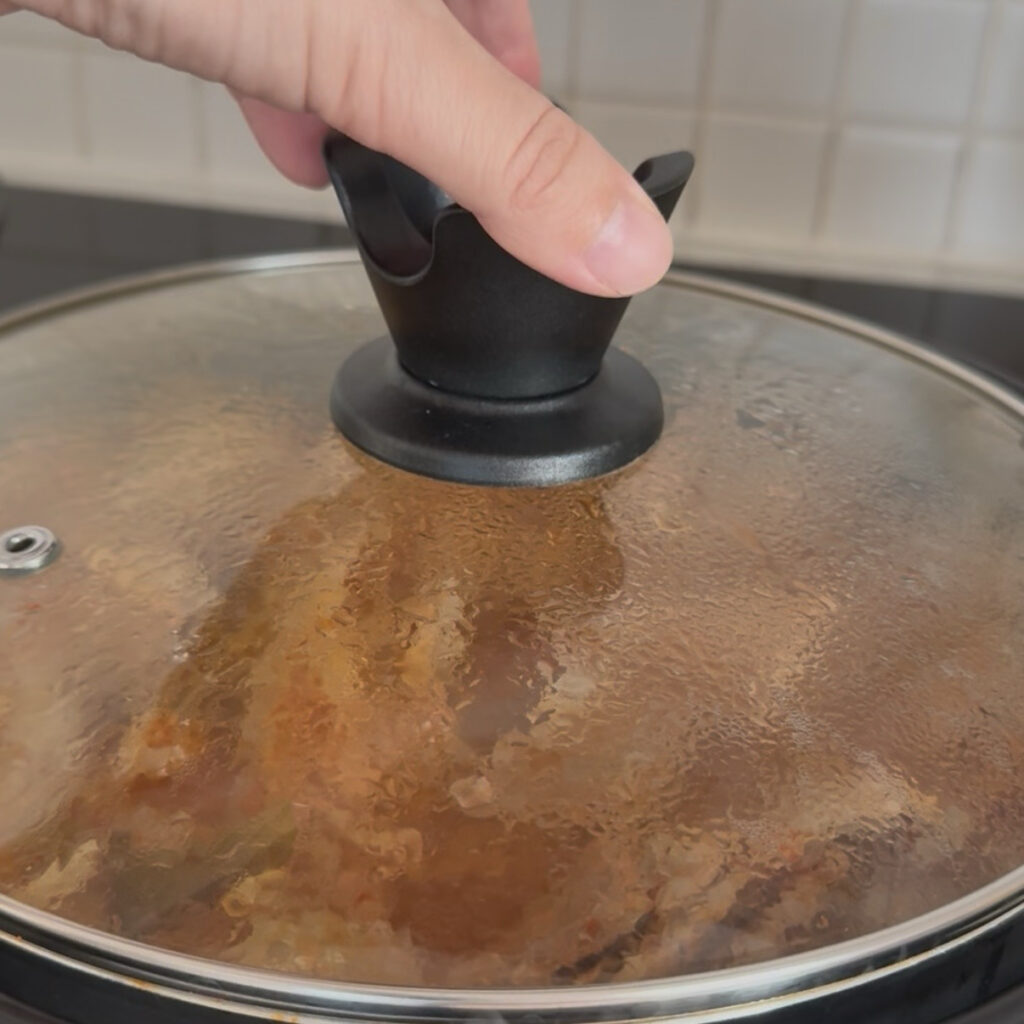
Cover the pot and bring it to a boil over high heat. Once it starts boiling, lower the heat to medium-low. If you see any foam on the surface, gently skim it off.
Cover and simmer for about 30–40 minutes, until the pork is tender and the kimchi is soft. Check the pot occasionally to make sure the liquid hasn’t evaporated too much. If it looks too dry before the pork is fully cooked, add a little more water. Keep the heat low and let everything cook slowly until the kimchi is soft and the pork is tender. The sauce should be rich and concentrated, with just a little liquid left in the pot.
Keep the heat low so the kimchi and pork can cook slowly without the liquid evaporating too quickly. Check the pot occasionally, and if it looks too dry before the pork is fully cooked, add a little more water. The goal is to have a small amount of rich, flavorful sauce left in the pot, rather than a lot of broth.
Step 4. Finish and serve
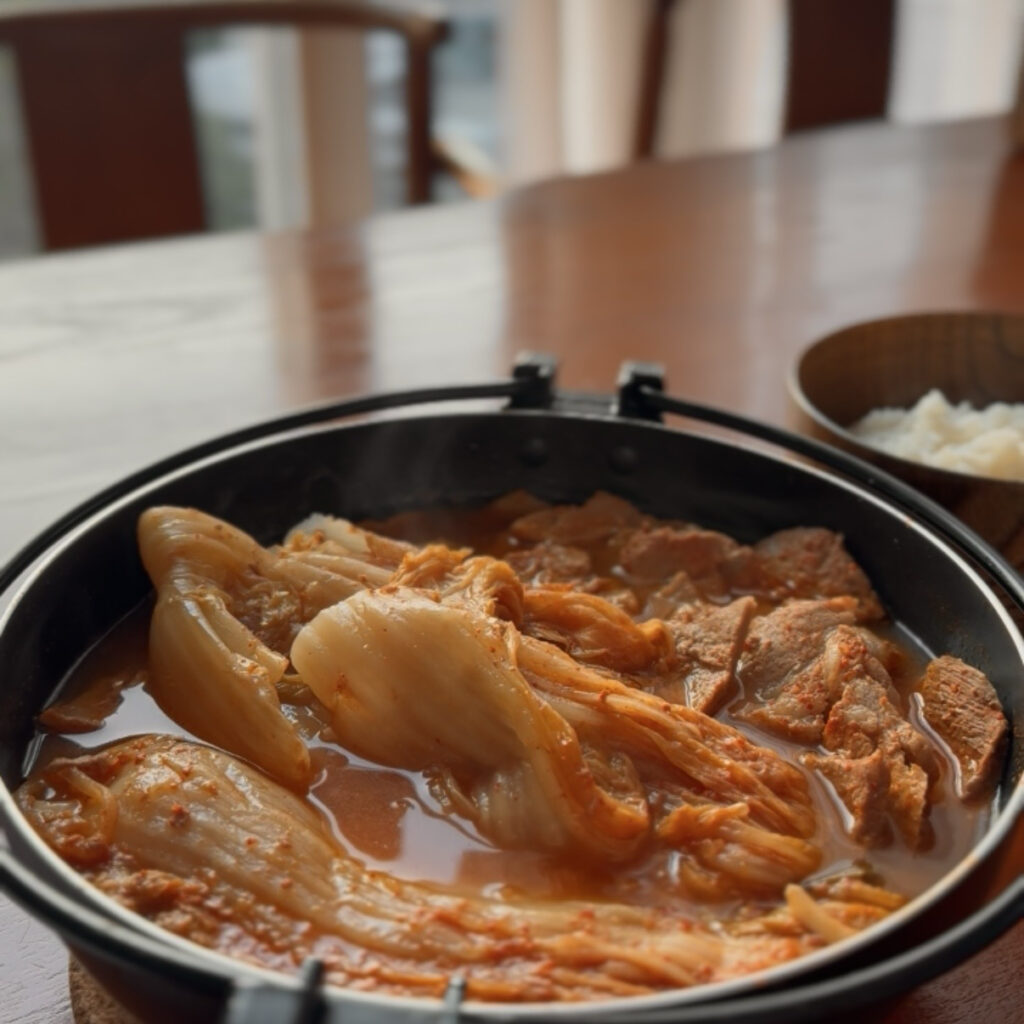
Cut the pork into large bite-sized pieces and serve with the kimchi and a spoonful of the rich sauce from the pot. Enjoy it with a bowl of warm rice.
If the kimchi is still in large pieces, cut it into smaller portions before serving. You can also spoon a little extra sauce over the pork and rice for more flavor.
🍽️ Serving Tips
Serving Tips
I usually eat kimchi jjim with a bowl of warm rice. The cooked kimchi is soft and full of flavor, so I sometimes mix it into my rice with a little sesame oil and crushed roasted seaweed. It’s a simple way to enjoy the kimchi, especially when it’s well cooked and tender.
I also like wrapping the pork, kimchi, and rice in roasted seaweed. If the kimchi tastes too sour or spicy on its own, eating it with more rice helps balance the flavor.
❓ FAQ
Q. Can I use pork belly instead of pork shoulder?
A. Yes. Pork belly makes the dish richer and more flavorful, while pork shoulder is a little leaner.
Q. Can I use fresh kimchi instead of aged kimchi?
A. Yes, but well-fermented kimchi works best for this recipe because its deeper, tangy flavor pairs well with the pork. Fresh kimchi will give you a milder flavor, so the result may taste a little different.
Q. Can I turn fresh kimchi into aged kimchi quickly?
A. Yes. Put the fresh kimchi in an airtight container and leave it at room temperature for 1–2 days. Once it becomes more sour and fermented, move it to the refrigerator and use it for the recipe. If your kitchen is warm, check it after a day since it can ferment faster.
Q. Can I use frozen pork?
A. Yes, you can. If you have time, thaw the pork in the refrigerator first. If you’re short on time, you can put the frozen pork straight into the pot. It may just need a little extra cooking time.
👉👉 You Might Also Like
🇰🇷 First time cooking Korean food?
👉 8 Essential Korean Ingredients Every Beginner Needs
👉 Korean Soy Sauce Explained: Jin Ganjang vs Guk Ganjang
👉 Gochujang vs. Gochugaru: What’s the Difference?
Korean Pork Kimchi Jjim (Pork & Kimchi Stew)
Ingredients
Method
- Place kimchi in a large pot and put the pork on top.
- Pour the seasoning over the pork and kimchi, then add 500 ml water.
- Cover and bring to a boil. Reduce the heat and simmer for 30–40 minutes, until the pork is tender and the kimchi is soft.
- If needed, simmer uncovered for 5–10 minutes. Turn off the heat, add sesame oil, and serve with warm rice.

Hi, I’m Vella, a Korean home cook sharing easy Korean recipes for everyday cooking. I focus on simple recipes, practical tips, and ingredients that are easy to find outside Korea.