
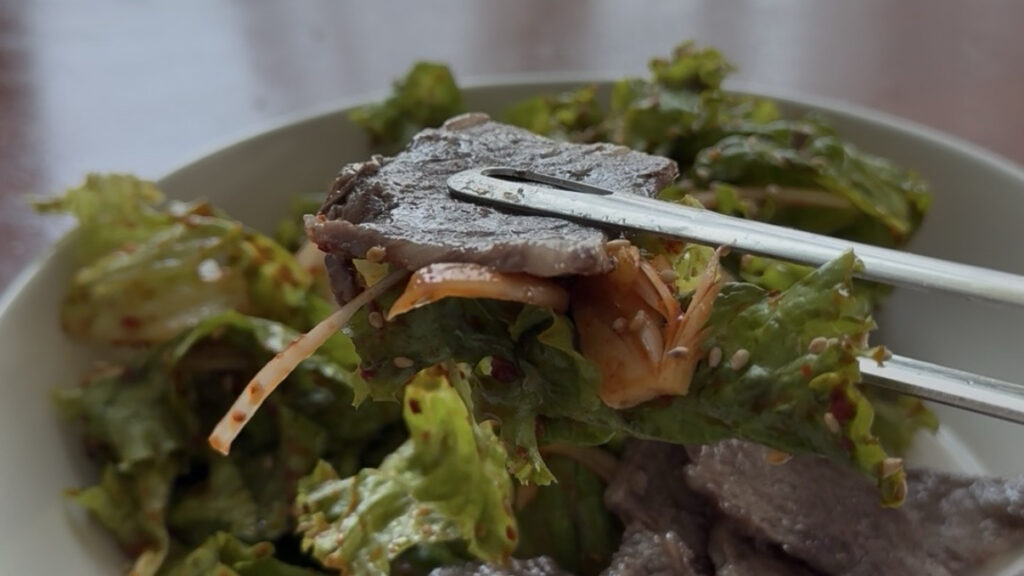
🥬 Easy Fresh Lettuce Salad at Home
I often have leftover lettuce in the fridge after using some for sandwiches or other meals. When that happens, I sometimes make sangchu geotjeori, a Korean fresh lettuce salad.
It’s easy to make and doesn’t need much preparation. I just slice the lettuce and a little onion, toss them with a sweet, tangy, and slightly spicy dressing, and it’s ready to serve.
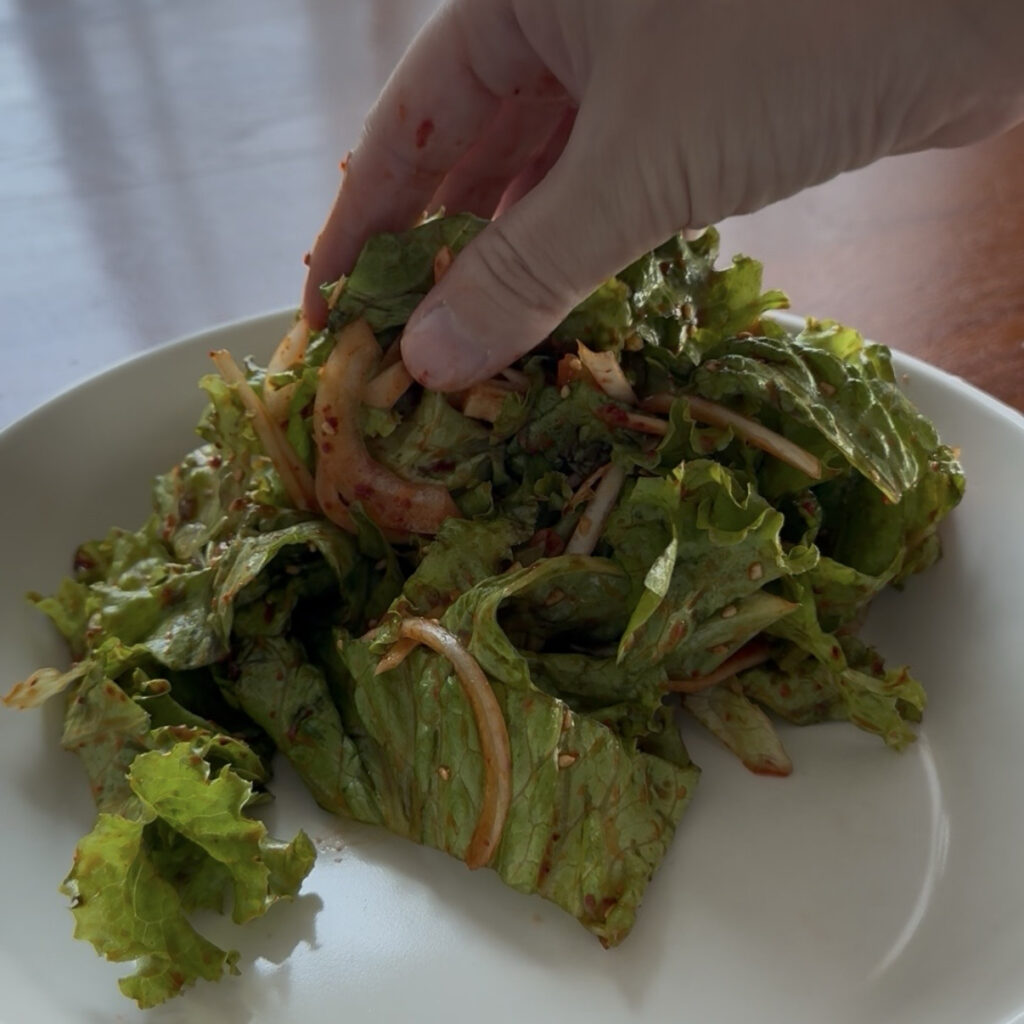
I like serving this salad with grilled meat or other Korean dishes. The crisp lettuce and tangy dressing go well with rich, savory foods, and it’s a nice way to use up leftover lettuce.
For this recipe, I used 10 lettuce leaves and 40 g of onion. It makes a small batch for one meal, which is best because the lettuce can lose its crispness after sitting in the dressing for too long.
It’s a simple side dish I make whenever I have lettuce to use up.
🛒Ingredients
✓ 10 lettuce leaves (about 60g)
✓ 40g onion, thinly sliced
✓ 1 tablespoon Korean red pepper flakes (gochugaru)
✓ 1 tablespoon Korean soy sauce(Jinhangjanj
✓ 1 tablespoon vinegar
✓ 1 tablespoon sugar
✓ ½ tablespoon minced garlic
✓ ½ tablespoon sesame oil
✓ ½ tablespoon sesame seeds
✓ 1 tablespoon water, if needed
Note: Add the water only if the dressing feels too thick. Start with 1 tablespoon and add a little more if necessary.
🍳 How to Make Korean Lettuce Salad
Step 1. Wash and Prepare the Lettuce
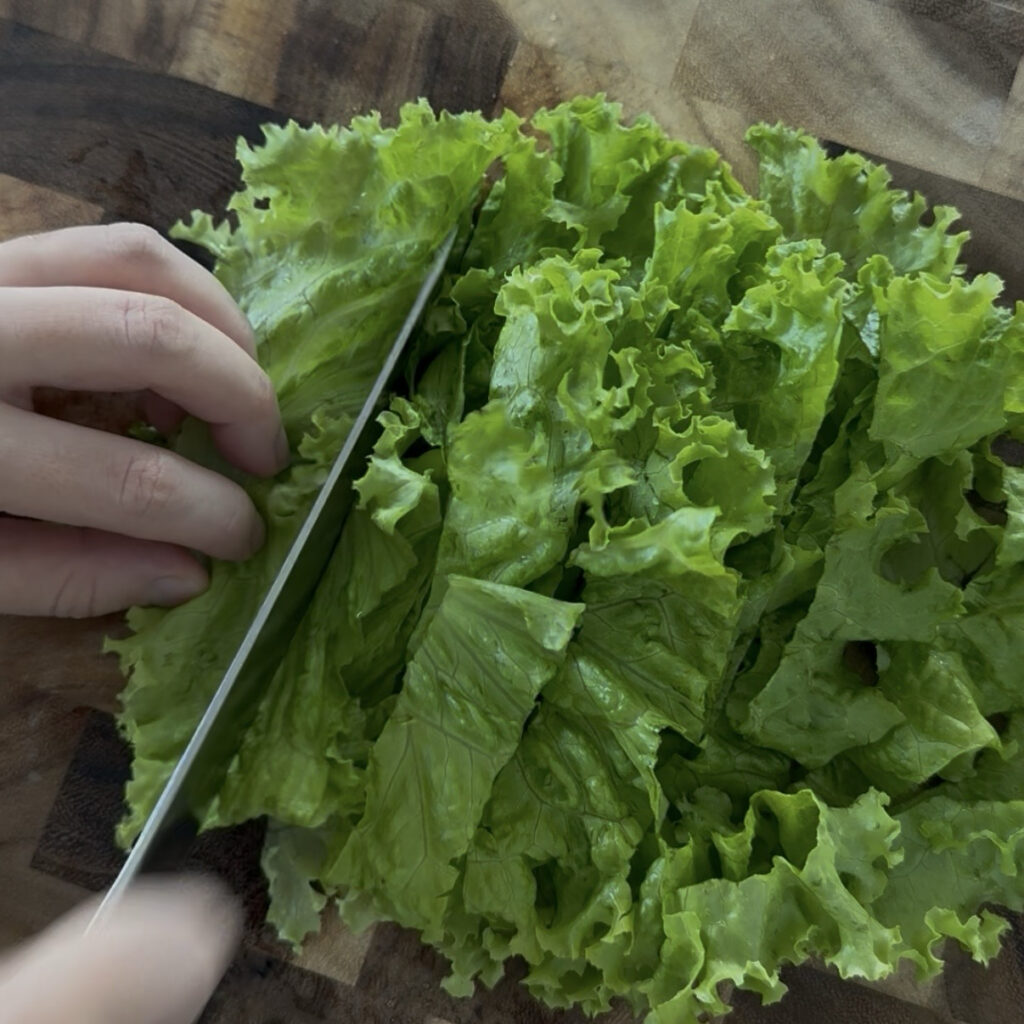
Wash the lettuce leaves thoroughly under running water to remove any dirt. Gently shake off the excess water, then use a salad spinner or clean kitchen towel to dry the leaves.
Tear the lettuce into bite-sized pieces by hand, or cut it into smaller pieces if you prefer. Make sure the leaves are well drained before adding the dressing. Too much water can dilute the dressing and make the salad less flavorful.
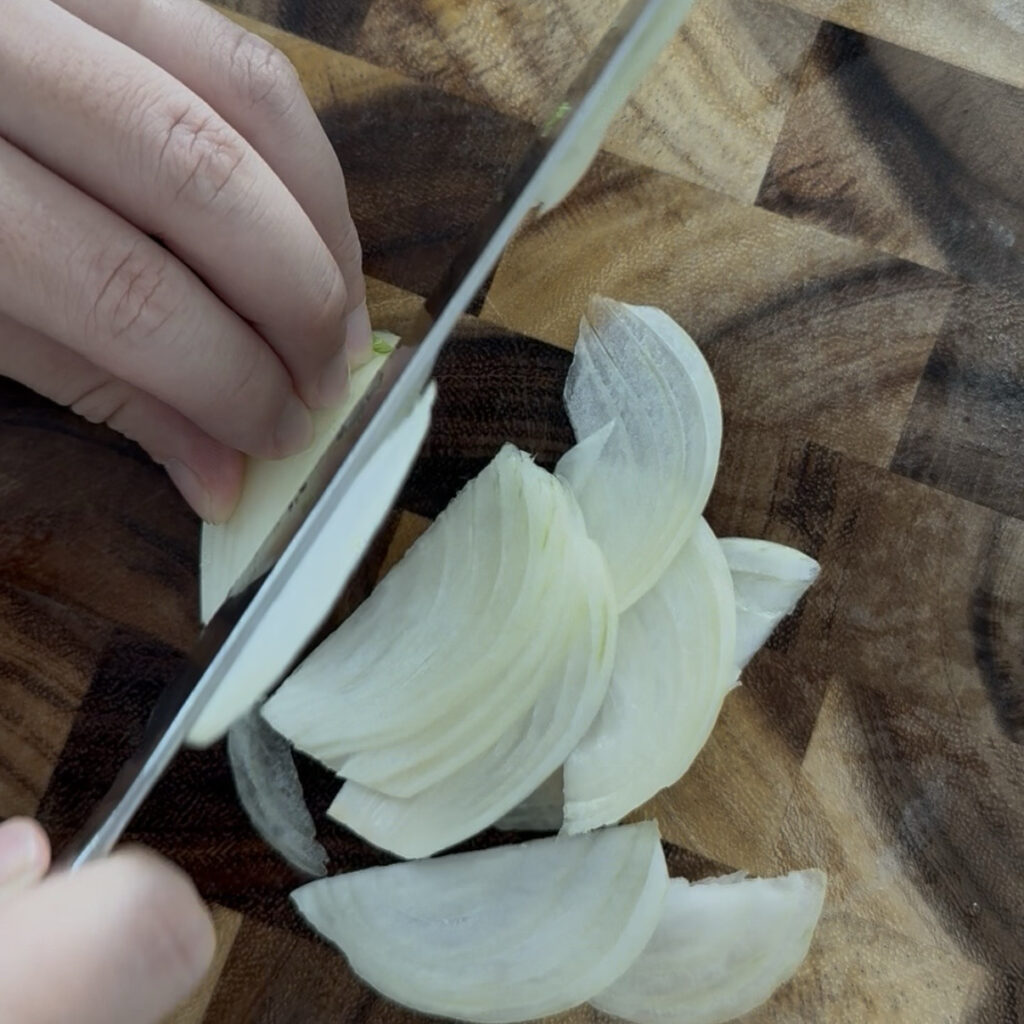
Step 2. Slice the Onion
Thinly slice 40g of onion and set it aside. I like to slice it quite thin because thicker pieces can taste pretty sharp when eaten raw.
If you don’t like that sharp, slightly bitter taste from raw onion, soak the sliced onion in cold water for about 5–10 minutes. Just make sure to drain it well before adding it to the salad. I usually skip this step, but my family prefers the onion this way when the flavor is too strong.
Step 3. Make the Dressing
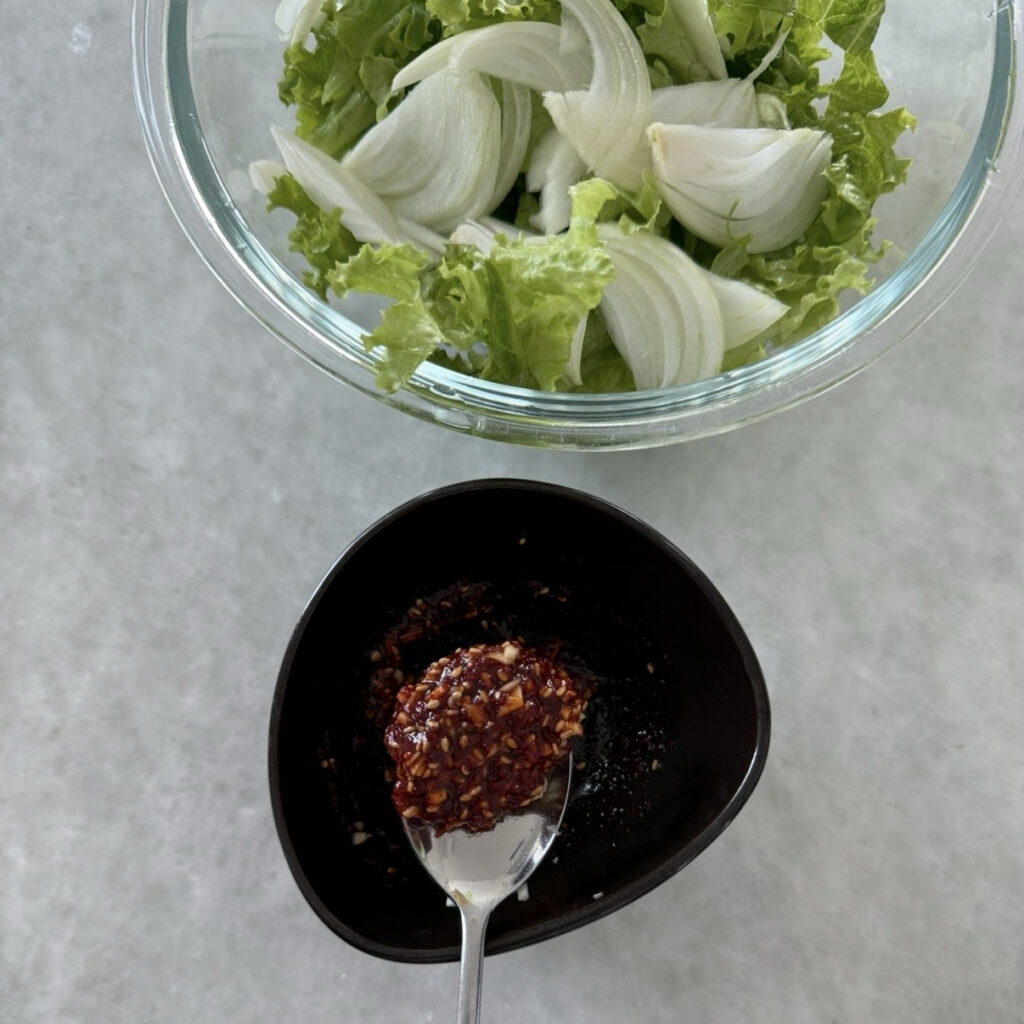
In a small bowl, mix 1 tablespoon gochugaru, 1 tablespoon soy sauce, 1 tablespoon vinegar, 1 tablespoon sugar, ½ tablespoon minced garlic, ½ tablespoon sesame oil, and ½ tablespoon sesame seeds.
Mix everything well. The dressing can look quite thick at first, especially if the lettuce is completely dry and has no moisture left on it. If it feels too thick, add a little water and mix again. I usually add it little by little rather than adding too much at once. You just want the dressing to mix easily with the lettuce without becoming watery.
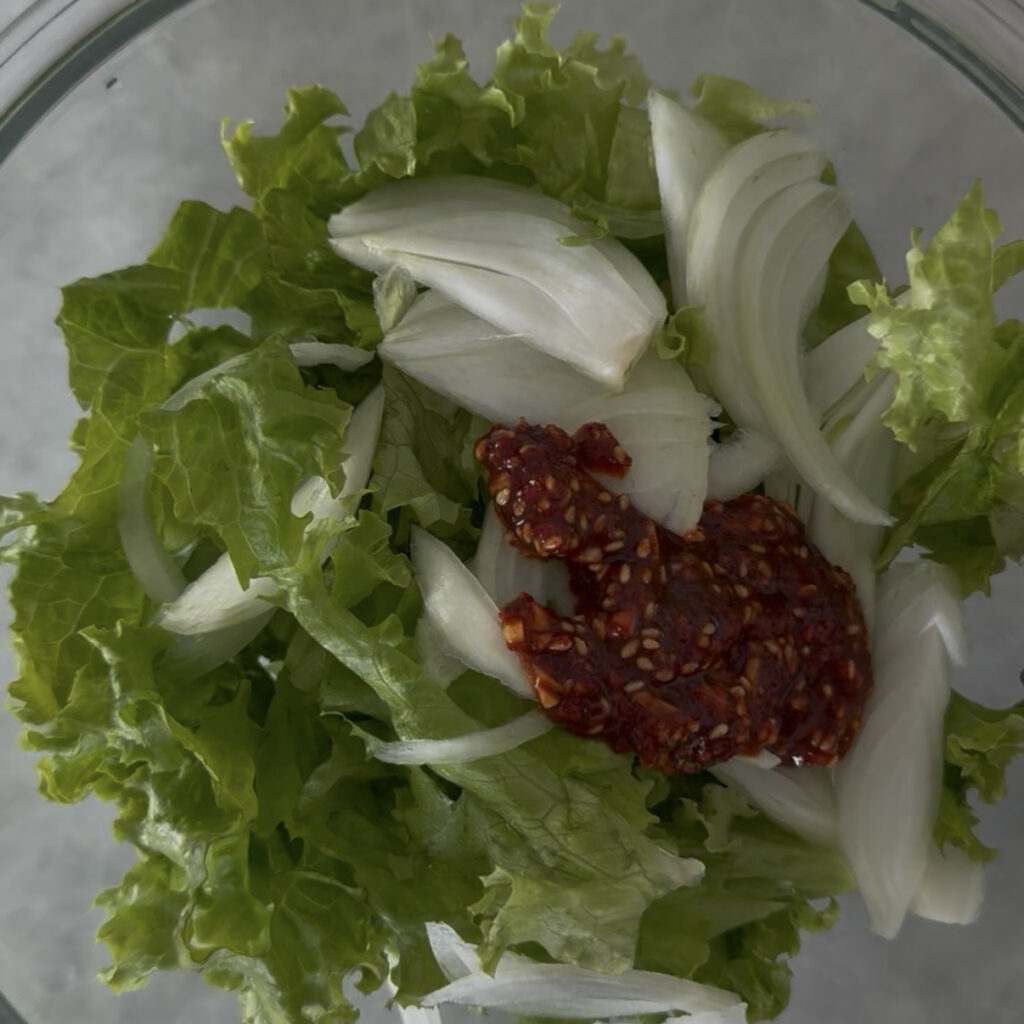
step 4. Toss Everything Together
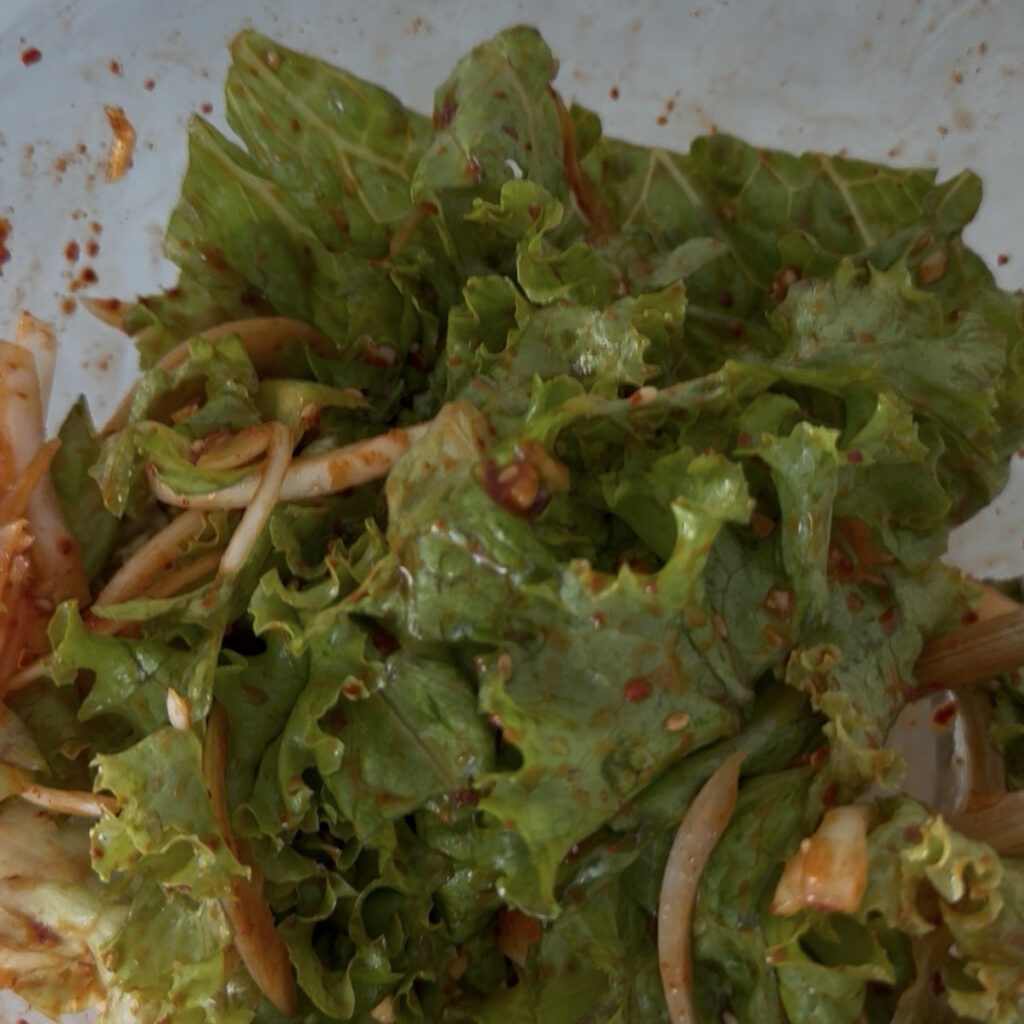
Put the lettuce and sliced onion in a large bowl. Add the dressing and gently toss everything together until the lettuce and onion are evenly coated.
I like to add the dressing a little at a time instead of pouring it all in at once. This makes it easier to control the amount and keeps the salad from getting too wet. You may not need all the dressing, depending on the size of your lettuce leaves.
Try not to mix it too far ahead of time. The lettuce will start to soften as it sits in the dressing, so it’s best to toss everything just before serving.
step 5. Serve Right Away
Korean Lettuce Salad is best served right after you make it. The longer the lettuce sits in the dressing, the softer it gets and the more liquid it releases.
I usually make this right before we sit down to eat, especially when we’re having grilled meat or a meal with lots of vegetables. The crisp lettuce and sweet, tangy dressing are a really nice match with meat and other heavier dishes.
I also make this whenever I have lettuce left in the fridge and need to use it up. Since I’m only making enough for one meal, there usually isn’t much left over.
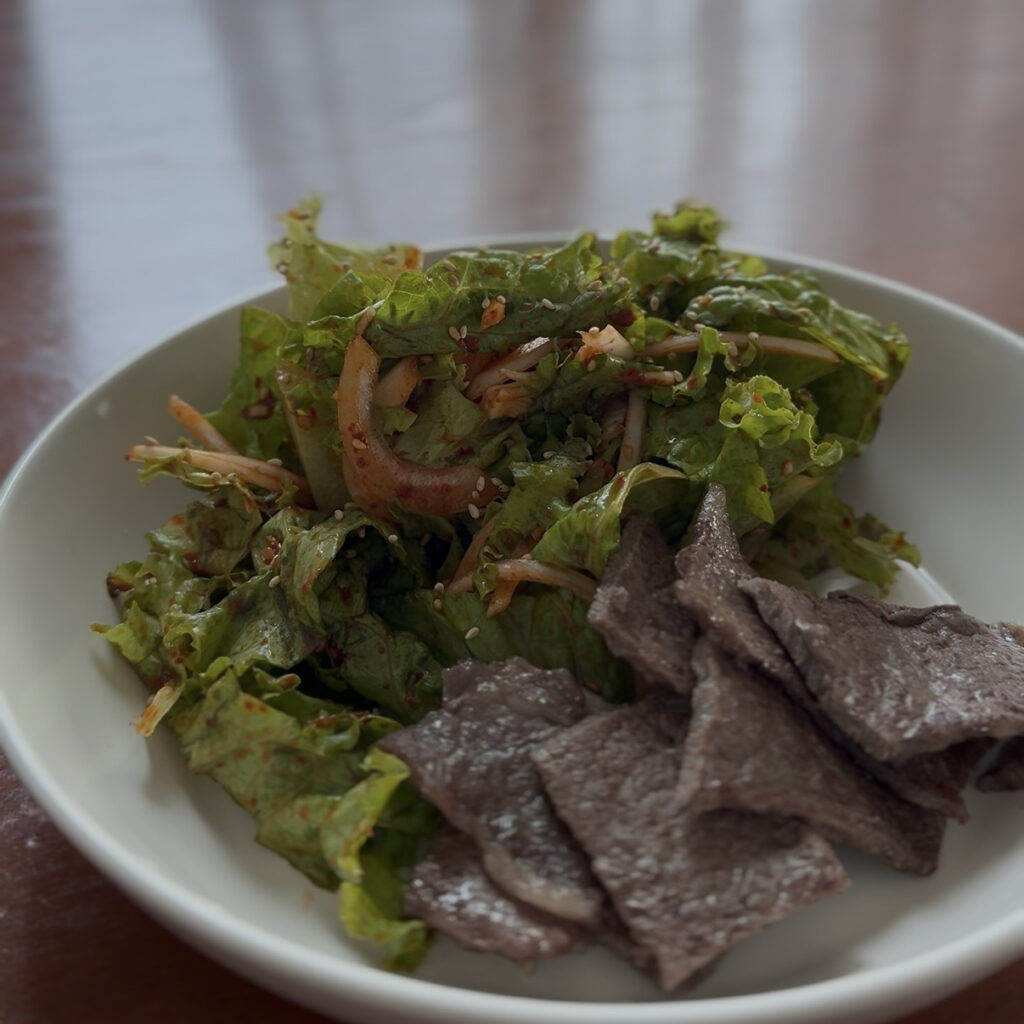
🍽️ Serving Tips
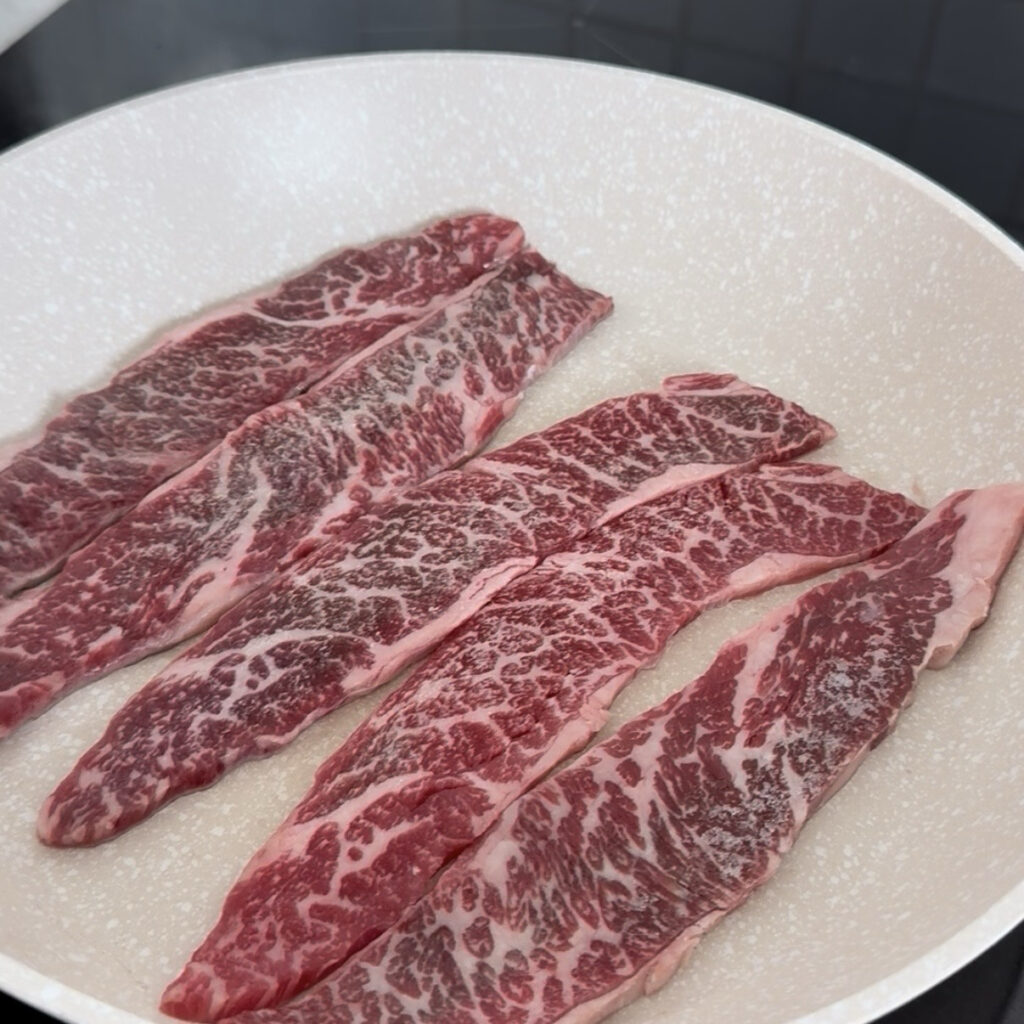
I like to serve this Korean Lettuce Salad as soon as it’s mixed, while the lettuce is still crisp. It goes especially well with grilled or seasoned meat, but honestly, it works with just about any meal. I also make it when I’m not really in the mood for vegetables. When I eat the lettuce with a bite of meat, I find myself eating much more of it without even thinking about it. The sweet and tangy dressing makes the lettuce much more enjoyable, especially with rich or flavorful dishes.
❓ FAQ
Q. What type of lettuce works best for Korean Lettuce Salad?
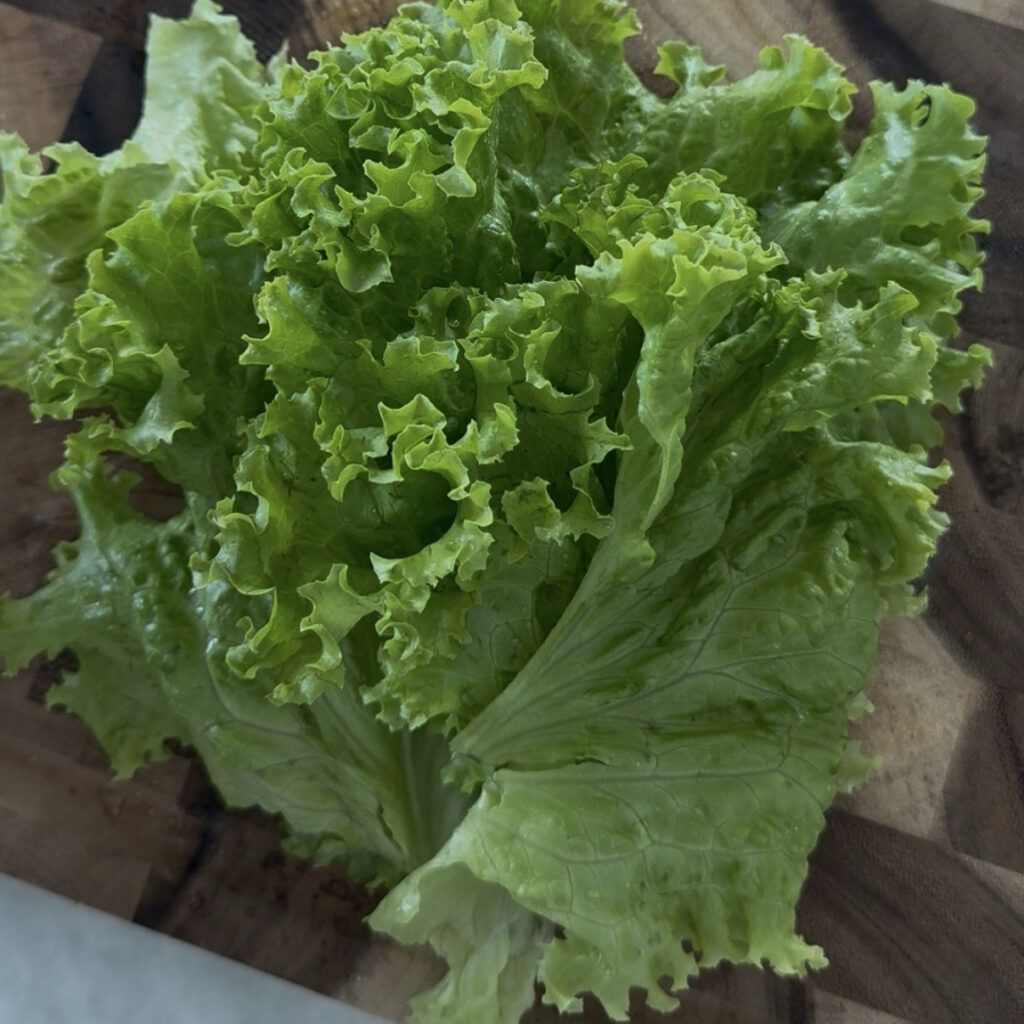
A. I recommend using fresh, crisp green leaf lettuce. You can also use other types of lettuce as long as the leaves are fresh and crisp. I prefer softer, leafy varieties because they mix easily with the dressing and are easy to eat with rice or meat.
Q. Can I make this without lettuce?
A. Yes! You can use the same dressing with just onion or just lettuce, and both are delicious.
If you’re making it with onion only, soak the thinly sliced onion in cold water for about 5–10 minutes first. This helps remove some of the sharp, raw onion flavor. Drain it well, then toss it with the dressing.
Q. How should I store leftover Korean Lettuce Salad?
A. If you have leftovers, transfer them to an airtight container and refrigerate them. Keep in mind that the lettuce will continue to soften and release water after it has been dressed, so the texture won’t be quite as crisp the next day. For the best texture and flavor, I recommend eating it as soon as possible.
🇰🇷 First time cooking Korean food?
👉 8 Essential Korean Ingredients Every Beginner Needs
👉 Korean Soy Sauce Explained: Jin Ganjang vs Guk Ganjang
👉 Gochujang vs. Gochugaru: What’s the Difference?
👉👉 You Might Also Like
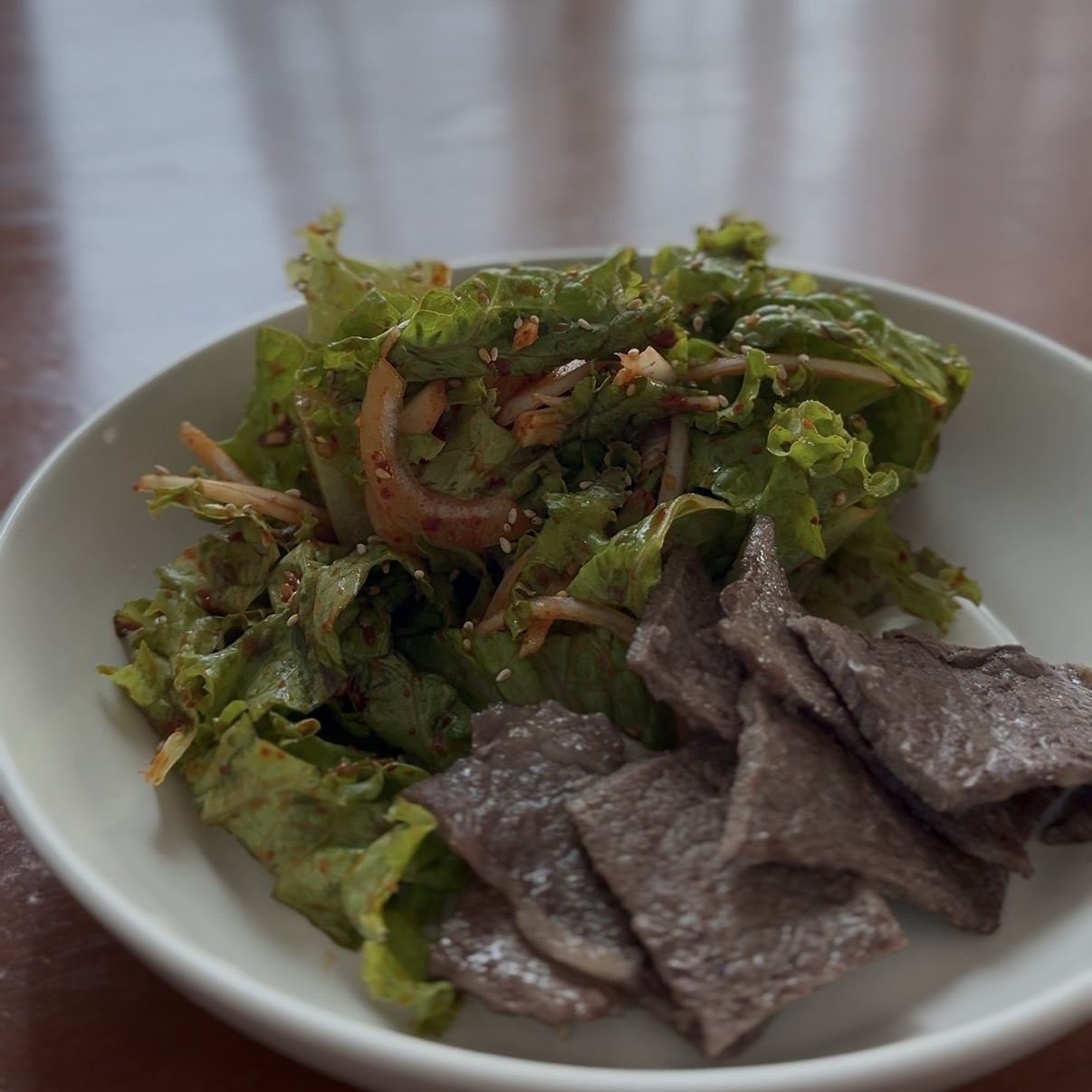

Korean Lettuce Salad (Sangchu Geotjeori)
Ingredients
Method
- Wash and drain the lettuce, then cut into bite-sized pieces.
- Thinly slice the onion.
- Mix all dressing ingredients. Add a little water if too thick.
- Add lettuce and onion, then gently toss with the dressing.
- Serve immediately.

Hi, I’m Vella, a Korean home cook sharing easy Korean recipes for everyday cooking. I focus on simple recipes, practical tips, and ingredients that are easy to find outside Korea.