
🥢 Introduction
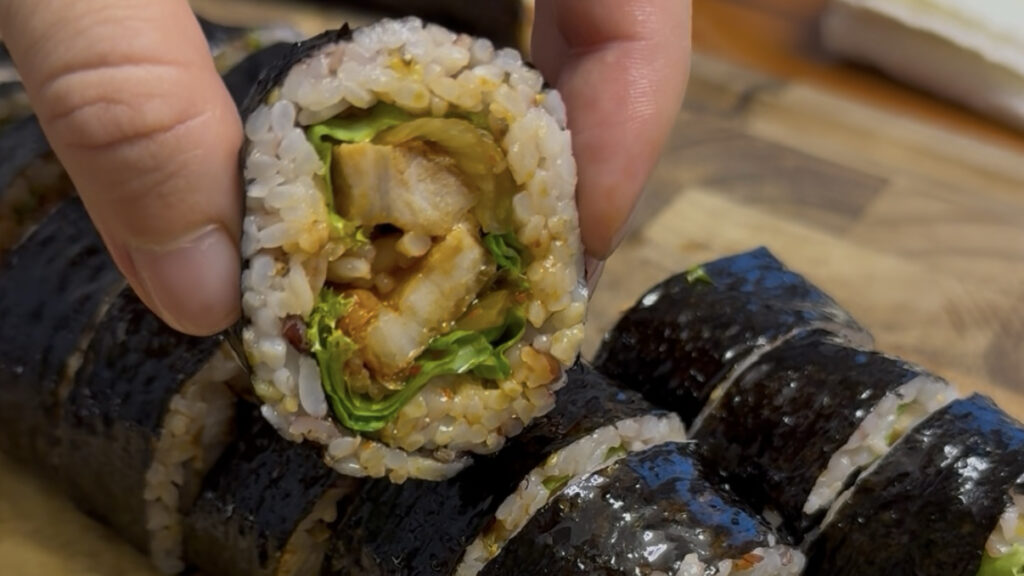
I first came across samgyeopsal gimbap when I saw someone making it online. At first, I thought it was a pretty unusual combination. I usually enjoy samgyeopsal the traditional Korean BBQ way, wrapped in lettuce with kimchi and ssamjang, so I wasn’t sure how those flavors would work in gimbap.
But it looked so good that I decided to give it a try.
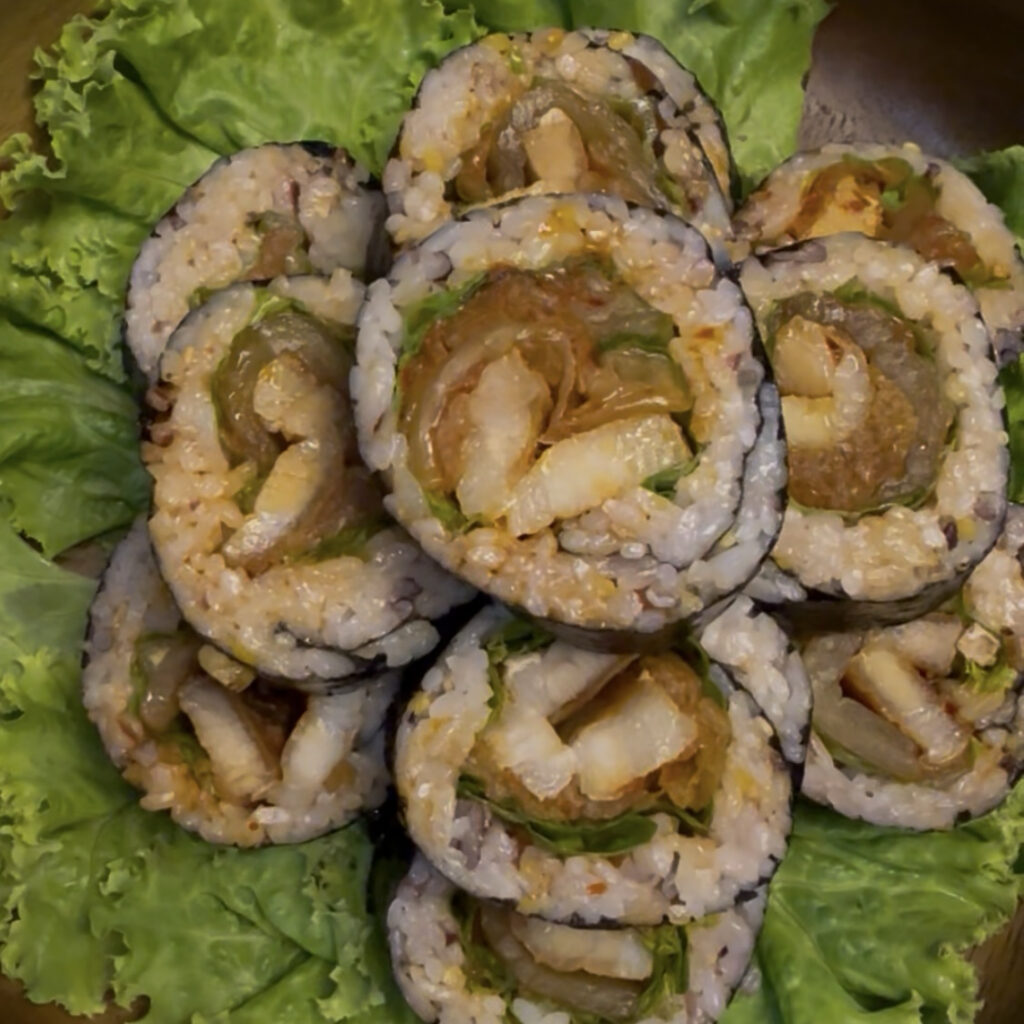
And honestly, I was surprised by how delicious it was. The combination just works. The grilled samgyeopsal is rich and savory, while the stir-fried kimchi adds a slightly spicy and tangy flavor that balances the richness of the pork. Fresh lettuce adds a light, crunchy texture, and the ssamjang gives the gimbap that familiar Korean BBQ flavor.
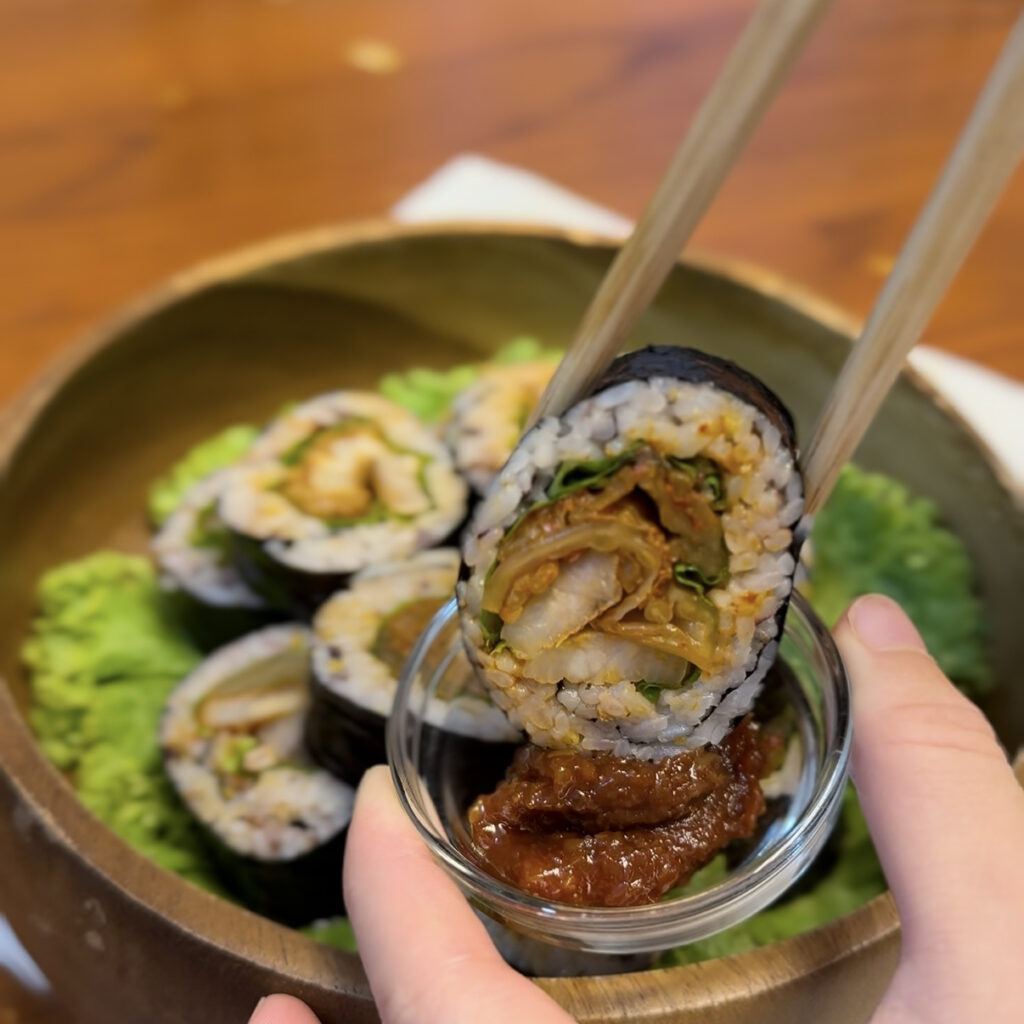
What I like about this recipe is that it doesn’t require a long list of ingredients. It takes the ingredients you would normally enjoy with samgyeopsal and puts them together in a completely different way.
The stir-fried kimchi is especially important. Instead of adding raw kimchi, I lightly stir-fry it first to remove some of the moisture and bring out a deeper, richer flavor. It also works better as a gimbap filling because it helps keep the rice and seaweed from becoming too soggy.
If you love samgyeopsal with kimchi, lettuce, and ssamjang, this is a fun recipe to try. It has all the flavors of a Korean BBQ meal, but in an easy-to-eat gimbap that works well for lunch, a picnic, or a simple meal at home.
I saw someone make this online, gave it a try, and ended up loving it. Now it’s one of those recipes I’m happy to make whenever I’m craving samgyeopsal but want something a little different.
🛒Ingredients
✓ 450 g rice – White rice or multigrain rice both work. I used multigrain rice for this recipe.
✓ 300 g samgyeopsal (Korean pork belly)
✓ 150 g kimchi – Stir-frying the kimchi gives it a deeper flavor and works especially well with the pork belly.
✓ 6–9 lettuce leaves – The amount depends on the size of the leaves. Smaller leaves may need more.
✓ 3 sheets roasted seaweed (gim)
✓ 2 tbsp sesame oil – For seasoning the rice.
✓ ½ tsp salt – For seasoning the rice.
✓ 1 tbsp sesame seeds – For seasoning the rice.
✓ Ssamjang, for dipping – Serve it on the side, just like you would with Korean BBQ.
🍳 How to Make Korean Samgyeopsal Gimbap
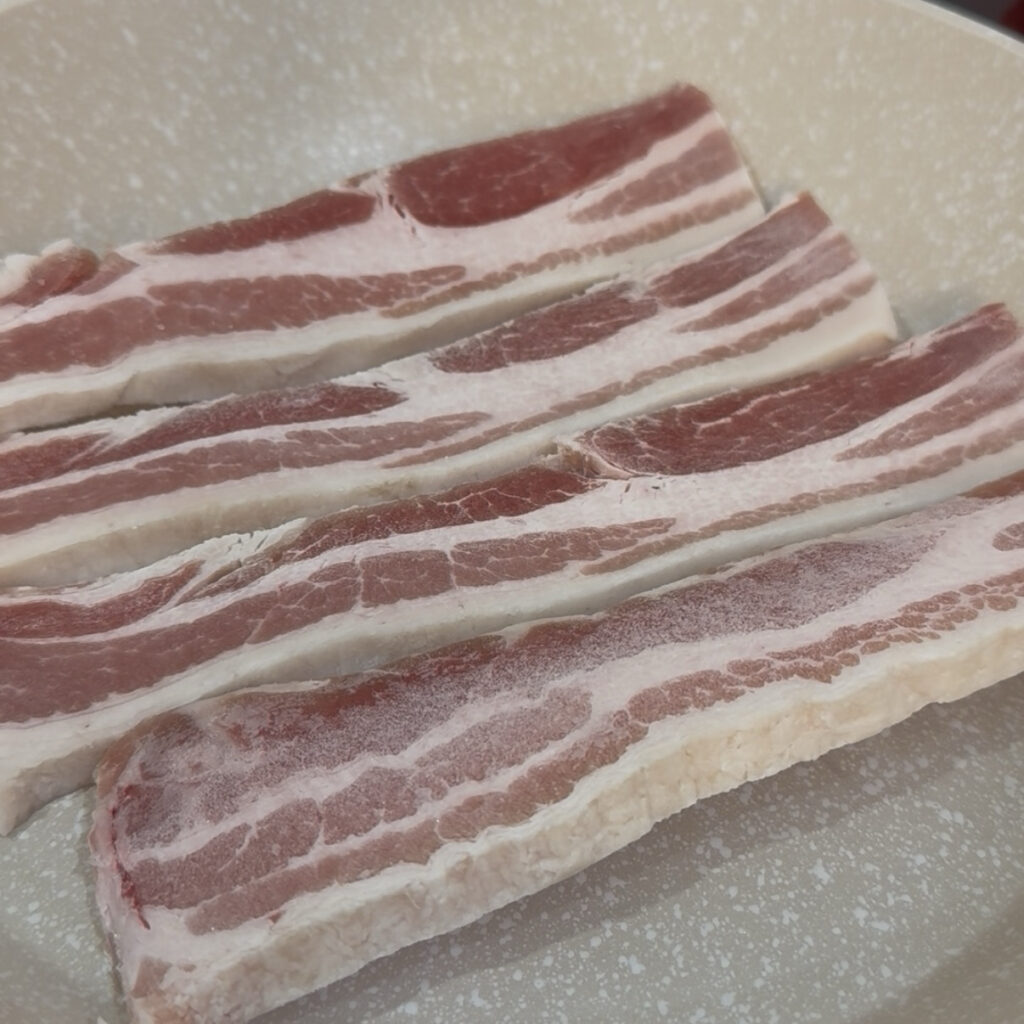
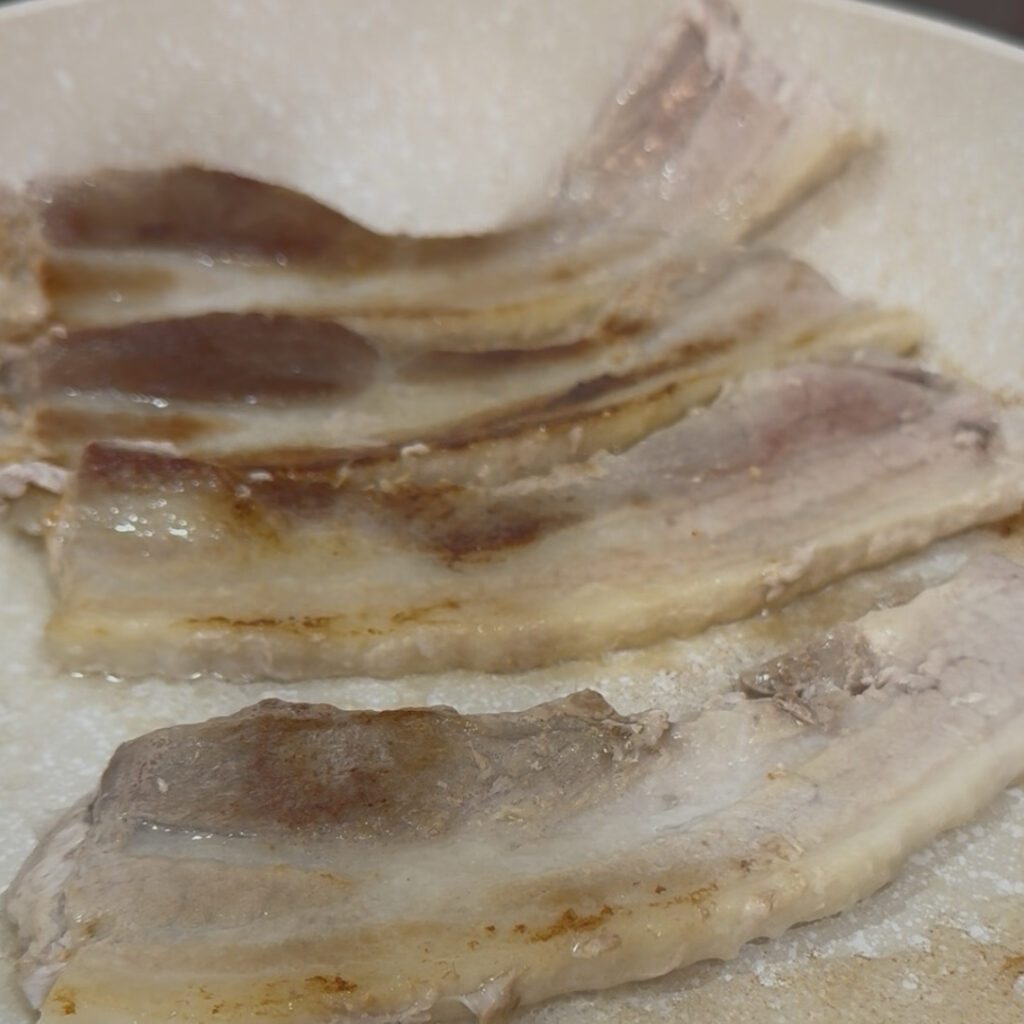
Step 1. Grill the samgyeopsal
Cook the samgyeopsal in a pan over medium-high heat until golden brown and slightly crispy. Remove the excess grease from the pork and set it aside to cool slightly.
Step 2. Stir-fry the kimchi
Using the pork fat left in the pan, stir-fry the kimchi until soft and most of the moisture has cooked off. The kimchi shouldn’t be too wet, or it can make the gimbap soggy.
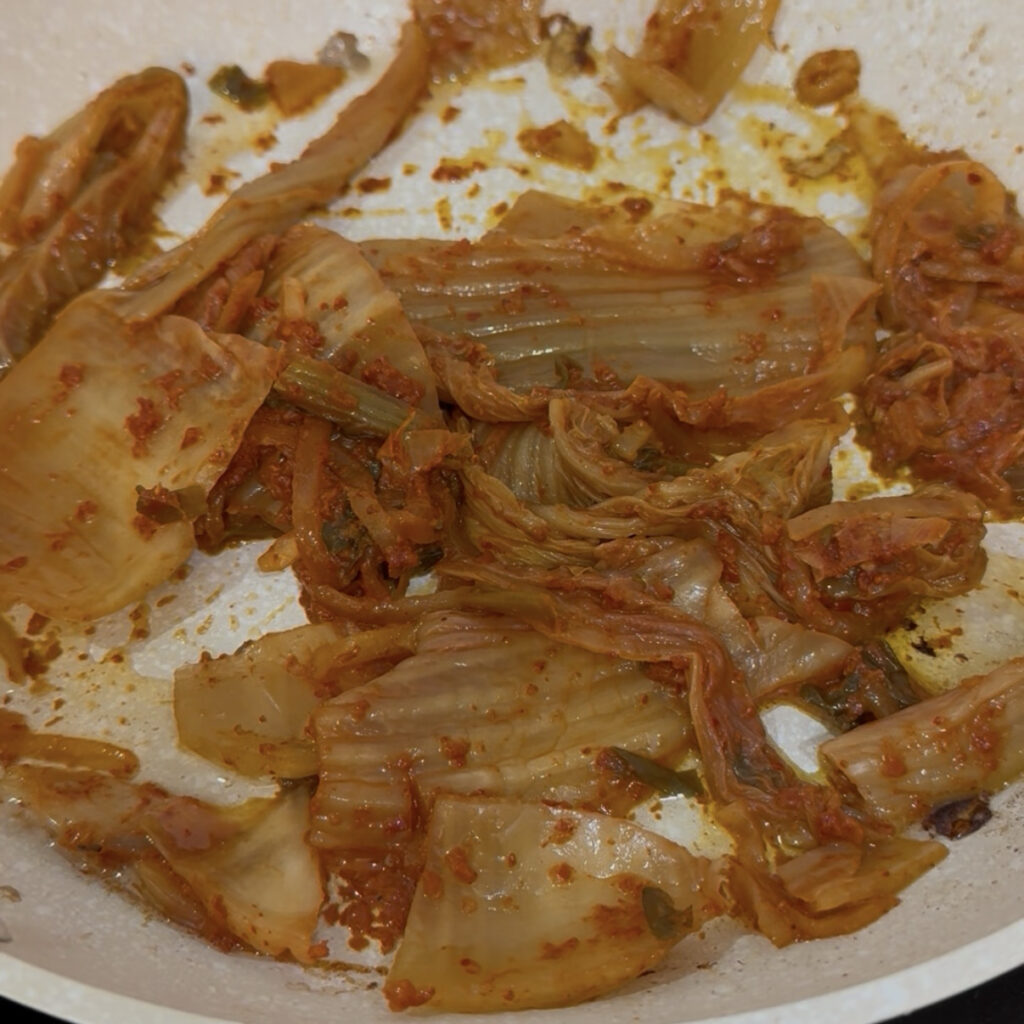
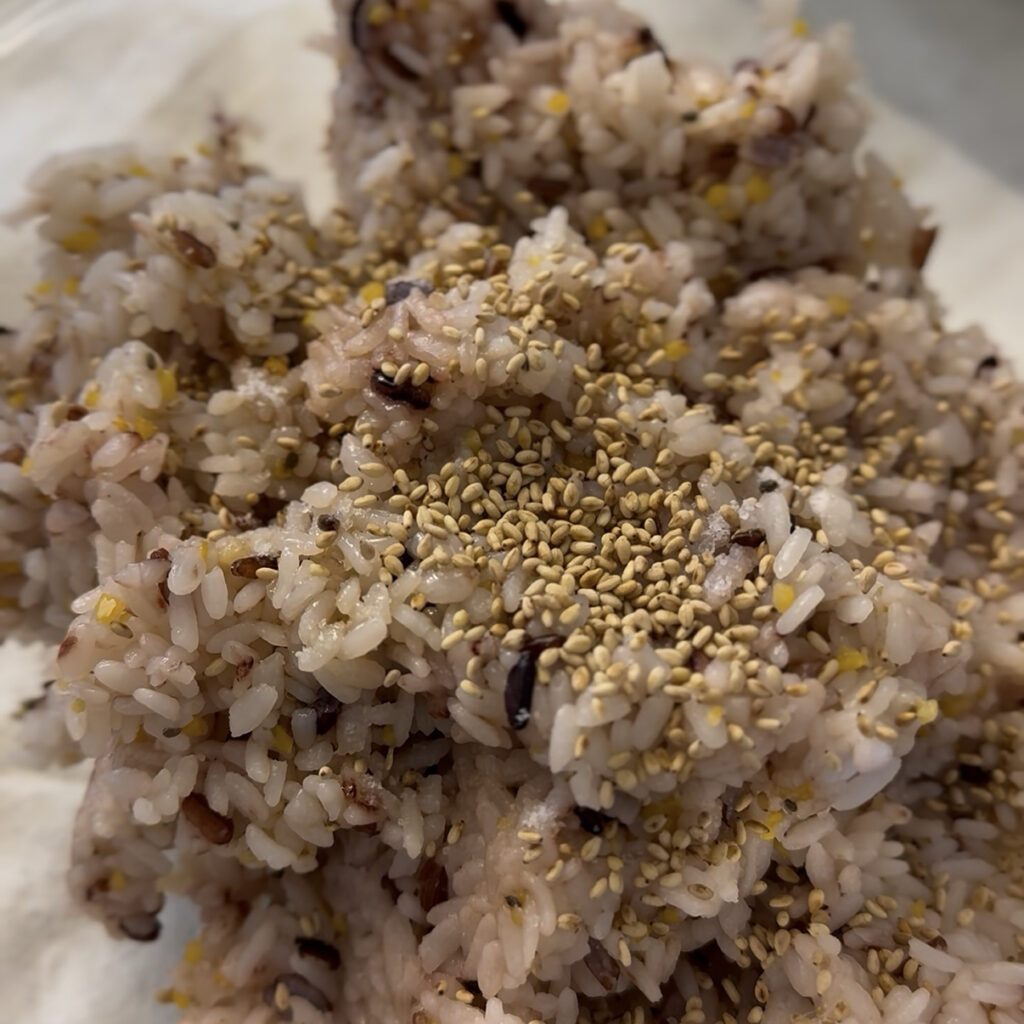
Step 3. Season the rice
Mix the rice with sesame oil, salt, and toasted sesame seeds. Set aside to cool slightly.
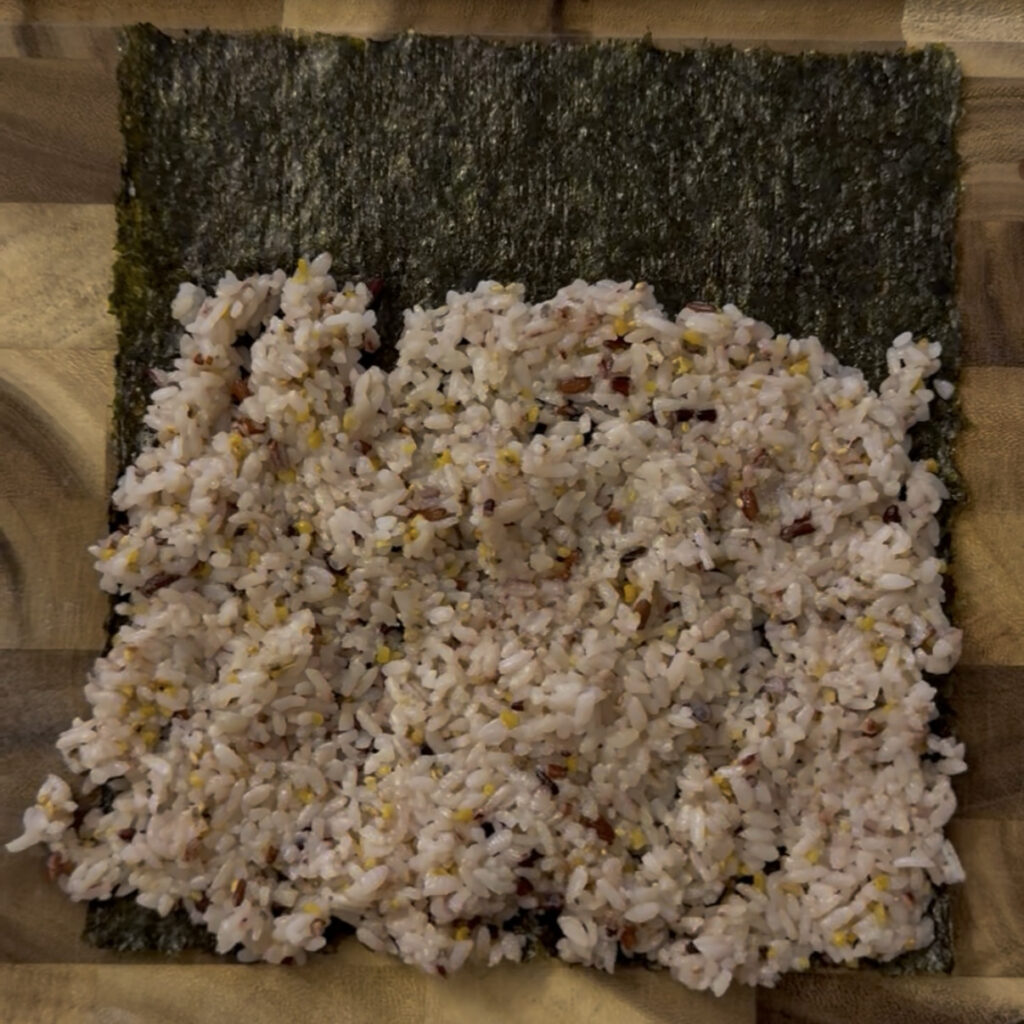
step 4. Spread the rice
Place a sheet of roasted seaweed on a bamboo mat. Spread the seasoned rice evenly over about three-quarters of the seaweed, leaving the top edge uncovered.
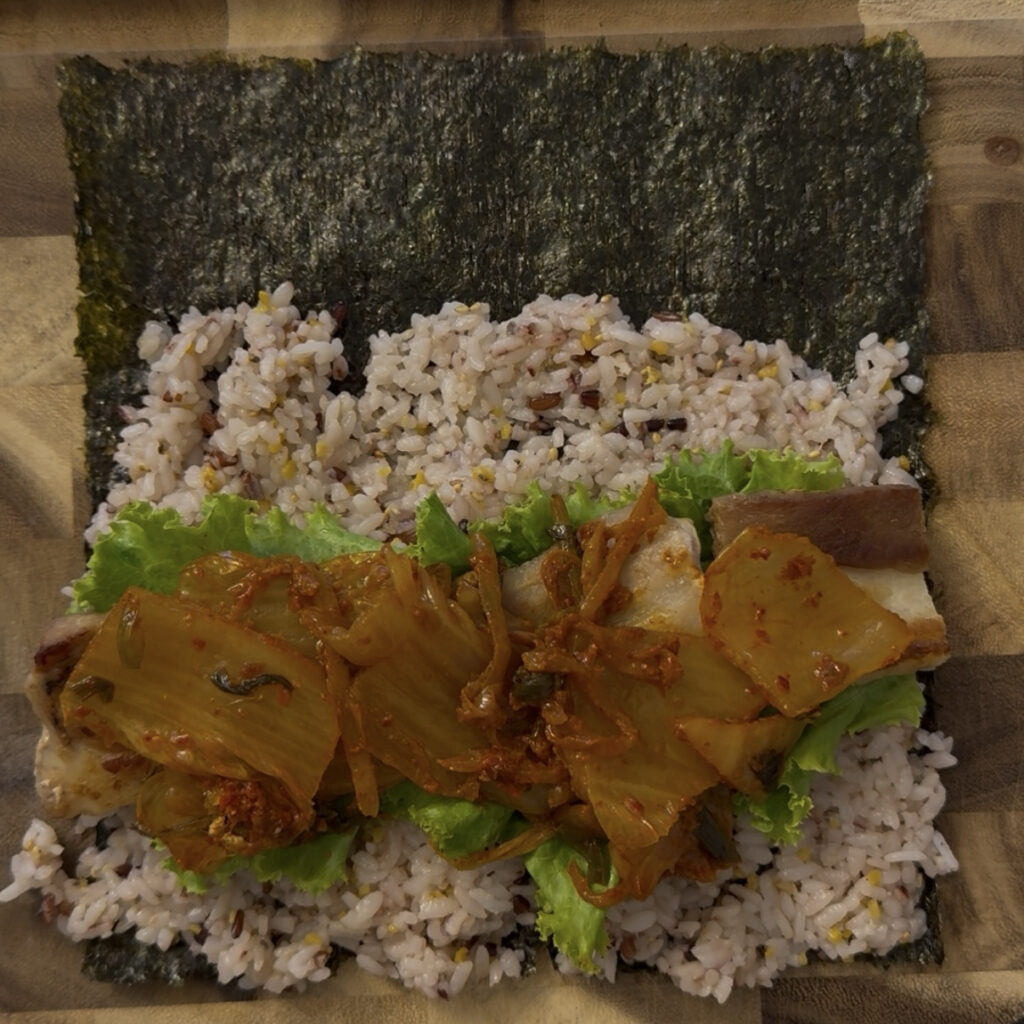
step 5. Add the fillings and roll
Place the lettuce, stir-fried kimchi, and grilled samgyeopsal over the rice. Make sure the lettuce is well dried after washing, and let the rice and all the fillings cool slightly before rolling. If the ingredients are too hot or wet, the seaweed can become soft and soggy.
Roll the gimbap firmly from the bottom, keeping all the fillings tucked inside.
step 6. Slice and serve
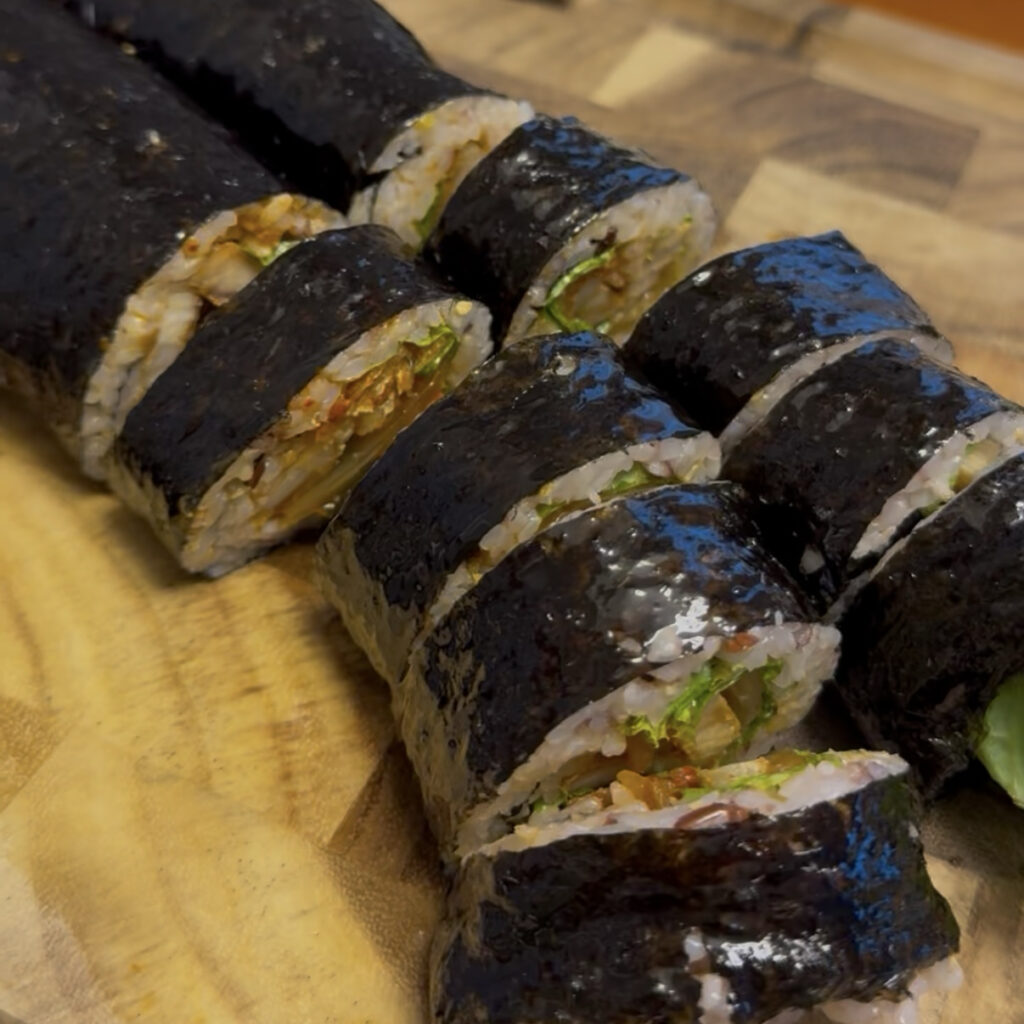
Slice the gimbap into bite-sized pieces and serve with ssamjang for dipping. It’s especially delicious with a little ssamjang on the side.
🍽️ Serving Tips
Samgyeopsal gimbap is best enjoyed fresh, while the rice is still soft and the pork and kimchi are flavorful. Since it contains grilled pork belly, I recommend not leaving it at room temperature for too long. If you need to store it, keep it refrigerated and let it come back to room temperature for a little while before eating. The rice may firm up in the fridge, so it’s best to enjoy the gimbap as soon as possible.
And don’t forget the ssamjang on the side—dipping each bite in ssamjang makes it taste even more like Korean BBQ.
For the greens, I used lettuce, but romaine lettuce or perilla leaves also work really well. Romaine adds a nice crunch, while perilla leaves give the gimbap a fresh, distinctive aroma that pairs especially well with samgyeopsal.
❓ FAQ
Q. Can I use a whole chicken instead of chicken thighs?
A. Yes! I used boneless chicken thighs for this recipe, but you can also use a whole chicken cut into pieces. Bone-in chicken can give the stew an even richer flavor. Just make sure the chicken is fully cooked before serving.
Q. Can I make it less spicy?
A. Yes. For a milder version, use less gochugaru and leave out the green chili. If you prefer more heat, add extra gochugaru or a few Cheongyang chili peppers.
Q. What can I use instead of gochujang?
A. Gochujang is an important part of Dakbokkeumtang and gives the sauce its distinctive Korean flavor, so I recommend using it if possible. There isn’t a perfect substitute, but if you can’t find it, you can use a little extra gochugaru with a small amount of miso or another fermented chili paste. Keep in mind that the flavor will be different.
Q. Can I use frozen chicken?
A. Yes, but thaw the chicken completely before cooking. Pat it dry with paper towels before adding it to the pot. This helps the chicken brown better and prevents excess water from diluting the sauce.
👉👉 You Might Also Like
🇰🇷 First time cooking Korean food?
👉 8 Essential Korean Ingredients Every Beginner Needs
👉 Korean Soy Sauce Explained: Jin Ganjang vs Guk Ganjang
👉 Gochujang vs. Gochugaru: What’s the Difference?
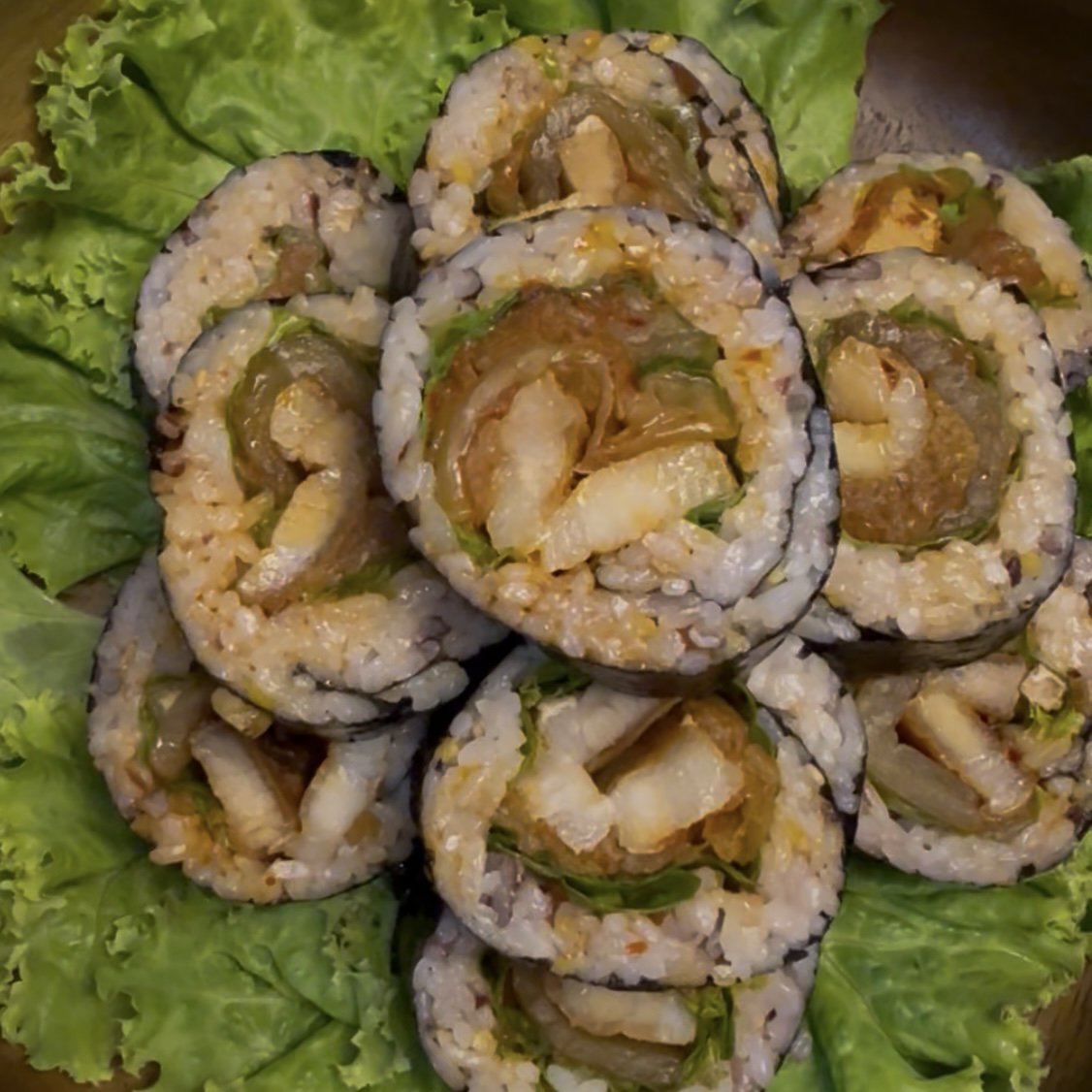

Korean Samgyeopsal Gimbap
Ingredients
Method
- Grill the samgyeopsal until golden and slightly crispy.
- Stir-fry the kimchi in the leftover pork fat until most of the moisture is gone.
- Season the rice with sesame oil, salt, and sesame seeds.
- Spread the rice over ¾ of the gim.
- Add lettuce, kimchi, and samgyeopsal, then roll tightly.
- Slice and serve with ssamjang for dipping.

Hi, I’m Vella, a Korean home cook sharing easy Korean recipes for everyday cooking. I focus on simple recipes, practical tips, and ingredients that are easy to find outside Korea.