

When I first started cooking Korean food at home, I thought I needed a different ingredient for every recipe.
My pantry quickly filled up with sauces and seasonings that I barely used. But after making Korean food regularly, I realized that most dishes rely on the same core ingredients.
In fact, the ingredients I use for kimchi stew are often the same ones I use for bulgogi, dakgalbi, and many Korean side dishes.
If you’re new to Korean cooking, these are the 8 ingredients I would recommend buying first.

1. Gochugaru (Korean Red Pepper Flakes)
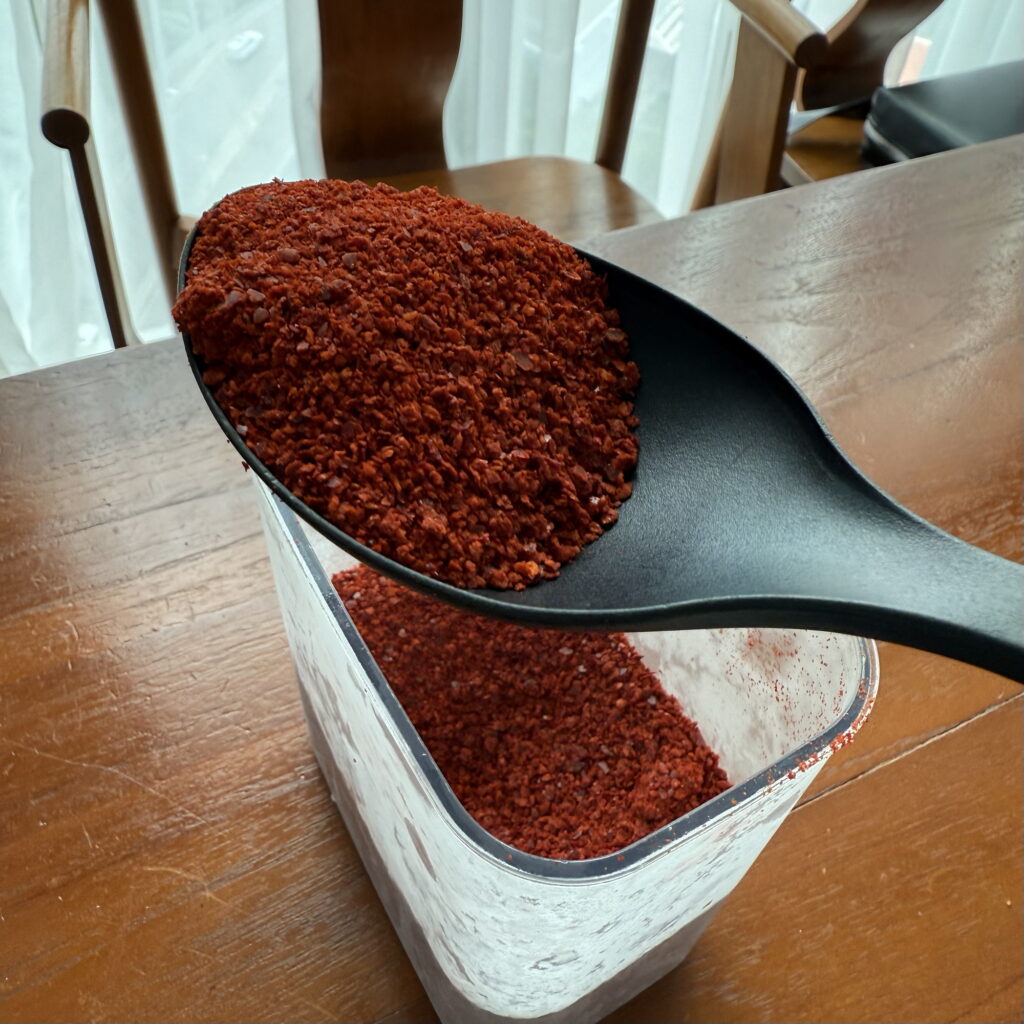
Gochugaru (고춧가루 – Korean chili flakes) is one of the most important ingredients in Korean cooking.
Compared to many chili powders used in other cuisines, gochugaru is typically coarser in texture and known for its vibrant red color. Rather than adding intense heat, it is often used to add color, depth, and balance to a dish.
Because of these characteristics, gochugaru is commonly used in Korean recipes such as kimchi, kimchi stew, cucumber salad, and dakgalbi. It helps create the flavor and appearance that many people associate with Korean food.
I use gochugaru regularly in my kitchen, and it’s one of the ingredients I reach for most often when cooking Korean dishes.
Quick Tips for Buying Gochugaru
✔ Don’t substitute with regular “Chili Powder”: If you buy standard chili powder from a Western grocery store, it often contains other spices like cumin and garlic. Cayenne pepper is also too finely ground and way too hot. For that authentic, vibrant look and balanced heat, you definitely need a bag labeled “고춧가루”.
✔ Coarse (굵은) vs. Fine (고운): When you shop at a Korean market, you’ll see two types.
✔ Coarse-cut (굵은 고춧가루): This is the one you want for everyday cooking, stews, and making Kimchi. It’s the standard choice.
✔ Fine-cut (고운 고춧가루): This is a fine powder used mainly for making Gochujang, specific cold soups, or tteokbokki when you want a completely smooth sauce without visible flakes.
Common uses:
✔ Kimchi
✔ Kimchi Stew
✔ Cucumber Salad
✔ Dakgalbi
✔ Spicy Side Dishes
2. Gochujang (Korean Red Pepper Paste)

Gochujang (고추장 – Korean chili paste) is one of the ingredients I use most often when cooking Korean food.
It has a sweet, savory, and slightly spicy flavor that works in a wide variety of dishes. I use it for everything from dakgalbi and tteokbokki to bibimbap sauce.
If you’re building a Korean pantry, gochujang is one of the first ingredients I’d recommend buying because it can be used in so many recipes.
Quick Tips for Buying Gochujang
✔ Look for the Red Tub: Just like Doenjang comes in a brown tub, traditional Gochujang (고추장) always comes in a bright red plastic tub.
✔ Paste vs. Sauce (Crucial!): When you’re at the grocery store, make sure the label says “paste” rather than “sauce” or “drizzle.” Squeezable Gochujang sauces in bottles are heavily diluted with vinegar and sugar for easy dipping on burgers or tacos. If you want to cook authentic Korean dishes like stews or rice cakes, you need the thick, concentrated paste from the traditional red tub.
Common uses:
✔ Gochujang Chicken
✔ Dakgalbi
✔ Spicy Pork Bulgogi
✔ Tteokbokki
✔ Bibimbap
3. Doenjang (Korean Soybean Paste)
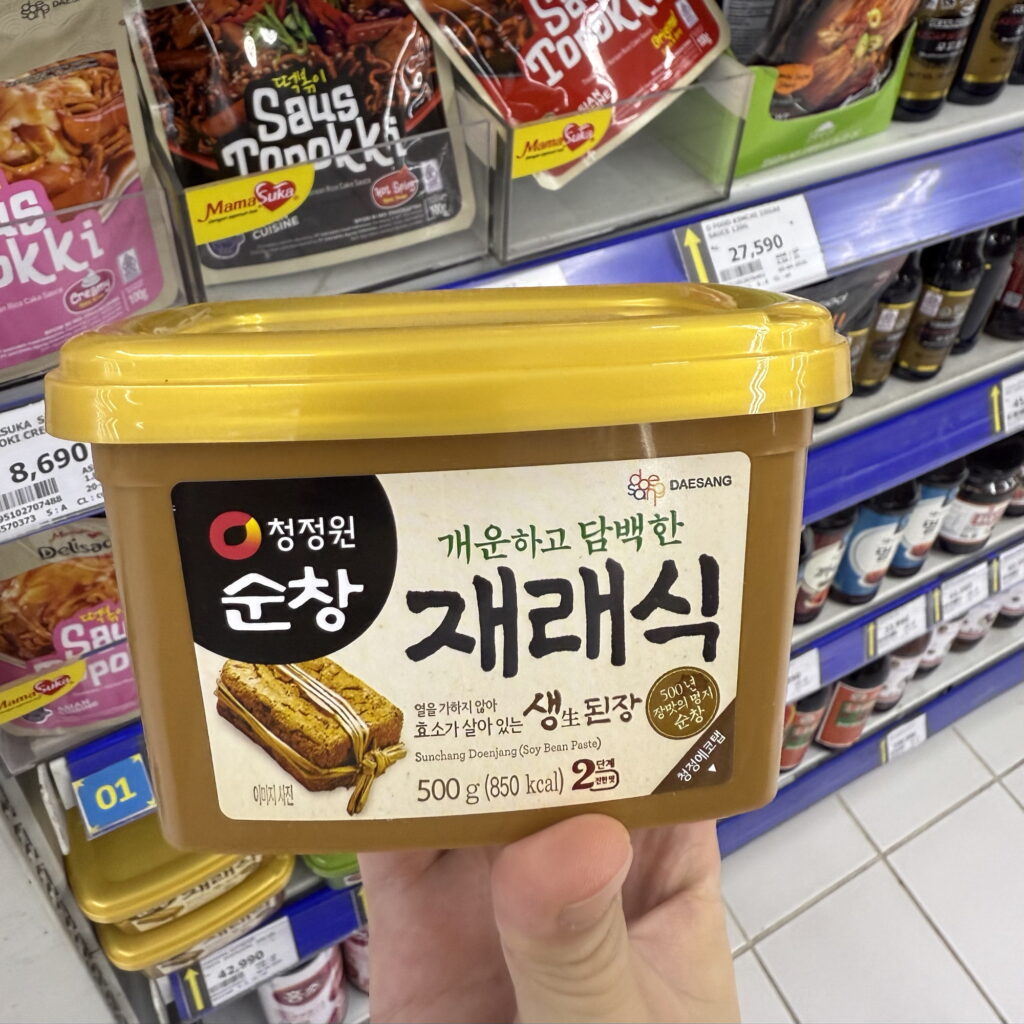
I used to think Doenjang (된장 – Korean soybean paste) was only for doenjang jjigae.
After I started cooking more Korean food at home, I realized I was reaching for it more often than I expected. Sometimes I’ll add a spoonful to a soup or stew when it feels like something is missing.
Unlike gochujang, which adds sweetness and spice, doenjang has a savory, earthy flavor that many people associate with traditional Korean home cooking.
It’s not an ingredient I use every day, but it’s one I always keep in my refrigerator. Whenever I’m in the mood for a simple Korean soup or stew, it’s usually the first thing I check for.
Quick Tips for Buying Doenjang
✔ Look for the Brown Tub: When shopping at a Korean grocery store, look for the brown plastic tubs labeled “된장”. (Green tubs are for Ssamjang, and red tubs are for Gochujang!)
✔ Doenjang vs. Miso: While both are fermented soybean pastes, Korean Doenjang has a much stronger, deeper, and chunkier texture compared to Japanese Miso. Miso is milder and sweeter, so they aren’t always a perfect 1:1 substitute, especially for traditional stews.
Common uses:
✔ Doenjang Jjigae
✔ Vegetable Soups
✔ Stews
✔ Dipping Sauces
✔ Marinades
4. Soy Sauce

If I had to choose just one ingredient from this list, soy sauce(간장) would probably be the hardest to live without.
I use it almost every time I cook Korean food. Whether I’m making a marinade for bulgogi, seasoning a soup, or preparing a simple vegetable side dish, soy sauce is usually involved.
When I first started cooking, I thought soy sauce was mainly for adding saltiness. Over time, I realized it does much more than that. It helps bring flavors together and adds depth to a dish without overpowering the other ingredients.
A bottle can last a long time, and it’s one of those ingredients you’ll find yourself reaching for again and again. If you’re building a Korean pantry from scratch, soy sauce is one of the first ingredients I would recommend buying.
Which Korean Soy Sauce Should I Buy?
When you visit a Korean grocery store, the soy sauce aisle can be overwhelming. Here are the two main types you need to know:
✔ Jin-ganjang (진간장 – Regular/Rich Soy Sauce): This is your all-purpose soy sauce. It holds its flavor well under heat, making it perfect for cooking, braising (Jorim), and marinades like bulgogi. If you can only buy one, start with this.
✔ Guk-ganjang (국간장 – Soup Soy Sauce): This is saltier and lighter in color than regular soy sauce. It’s specially used for seasoning soups and clear broths because it adds a deep, savory flavor without making the soup look dark.
👉 [Read the full guide here: Korean Soy Sauce Explained: Jin Ganjang Vs Guk Ganjang]
Common uses:
✔ Bulgogi
✔ Braised Dishes
✔ Soups
✔ Vegetable Side Dishes
✔ Marinades
5. Sesame Oil

There are plenty of Korean dishes that can be made without sesame oil, but I still keep a bottle of Sesame Oil (참기름 – Chamgireum) in my kitchen at all times.
Sesame oil has a distinctive nutty aroma that is instantly recognizable in many Korean dishes. Even a small amount can completely change the flavor of a meal.
Whenever something tastes a little plain, sesame oil is often the first thing I reach for.
One thing I’ve learned is that a little goes a long way. Using too much can easily overpower other ingredients, so I usually add just enough to bring out its aroma.
It’s especially common in Korean side dishes, bibimbap, and dipping sauces. Even simple vegetables can taste more flavorful with a touch of sesame oil.
Add it at the very end: Sesame oil has a low smoke point and loses its rich aroma when exposed to high heat for too long. To get the best flavor, always drizzle it over your dish at the very end of cooking, right after you turn off the heat.
Common uses:
✔ Bibimbap
✔ Vegetable Side Dishes
✔ Dipping Sauces
✔ Seasoned Greens (Namul)
✔ Rice Bowls
6. Aekjeot(Korean Fish Sauce)
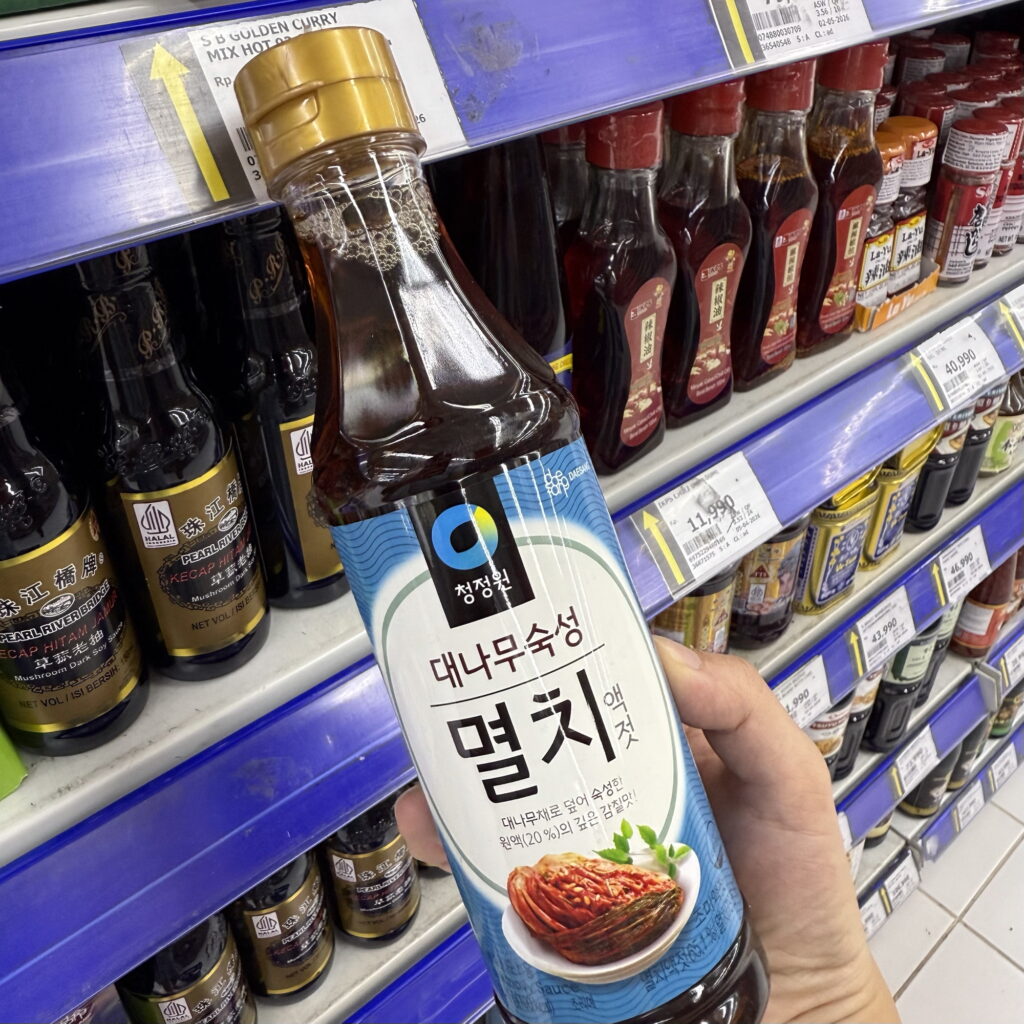
Korean fish sauce, known as Aekjeot (액젓), was one of the most unfamiliar ingredients to me when I first started cooking Korean food.
The smell can be quite strong on its own, so I was surprised to see how often it appeared in Korean recipes. But once it’s added to a dish, it doesn’t make the food taste fishy. Instead, it helps add the savory flavor that many Korean dishes are known for.
I use fish sauce most often when making kimchi, but I also add small amounts to soups, stews, and vegetable side dishes.
It’s one of those ingredients that doesn’t draw much attention to itself, but I usually notice when it’s missing.
When you shop at a Korean grocery store, you’ll mostly find two types: Anchovy Fish Sauce (멸치액젓 – Myeolchi-aekjeot) & Sand Lance Fish Sauce (까나리액젓 – Kkanari-aekjeot)
Quick Tip: If you’re new to Korean cooking and can only pick up one bottle, I highly recommend starting with Anchovy Fish Sauce
Common uses:
✔ Kimchi
✔ Kimchi Stew
✔ Soups
✔ Vegetable Side Dishes
✔ Marinades
7. Dashida(Korean soup stock powder)
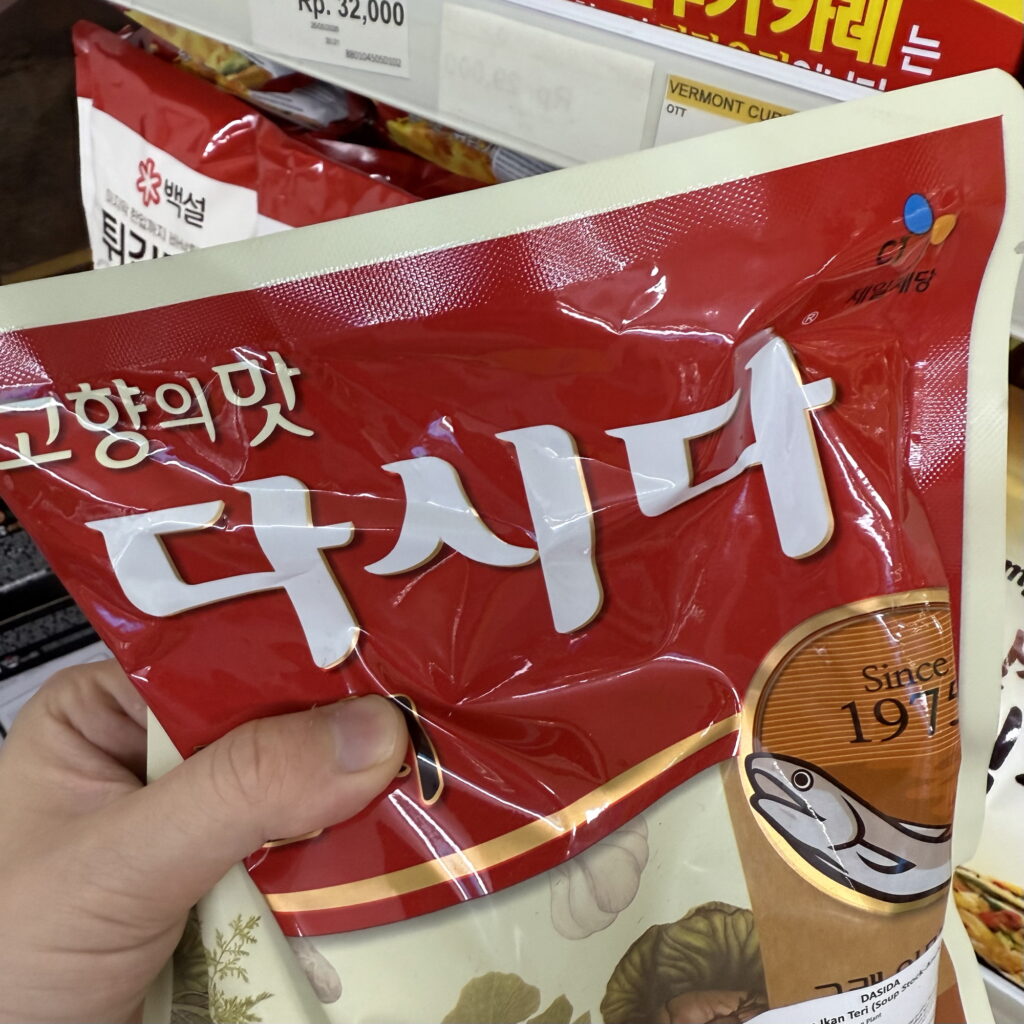
I don’t use Dashida (다시다 – Korean soup stock powder) every time I cook, but I like having it on hand for busy days.
When I have time, I prefer making broth from scratch. But on days when I need to make a quick soup or stew, Dashida can be a helpful shortcut.
A small amount adds extra flavor without much effort, which is why many home cooks keep it in their pantry. For me, it’s not a replacement for homemade broth—it’s simply a convenient option when I want to get dinner on the table faster.
Common uses:
✔ Kimchi Stew
✔ Bean Sprout Soup
✔ Vegetable Soups
✔ Stews
✔ Seasoned Rice Dishes
8. Sesame Seeds

Sesame seeds may seem like a small ingredient, but they are one of the most common finishing touches in Korean cooking.
A simple sprinkle of sesame seeds adds a subtle nutty flavor, a bit of texture, and the familiar look found in many Korean dishes.
If you’ve ever wondered why restaurant-style Korean food looks more polished and appetizing, sesame seeds are often part of the reason.
They’re inexpensive, last a long time in the pantry, and can instantly make homemade Korean food feel more authentic.
Common uses:
✔ Bibimbap
✔ Korean Side Dishes (Banchan)
✔ Bulgogi
✔ Noodle Dishes
✔ Tteokbokki Garnish
Final Thoughts
Every Korean cook has their own pantry staples, so this list may look a little different from someone else’s.
These are simply the ingredients I find myself using most often when cooking Korean food at home.
If you’re new to Korean cooking, I hope this list helps you decide where to start.

Hi, I’m Vella, a Korean home cook sharing easy Korean recipes for everyday cooking. I focus on simple recipes, practical tips, and ingredients that are easy to find outside Korea.