
🥢 Introduction
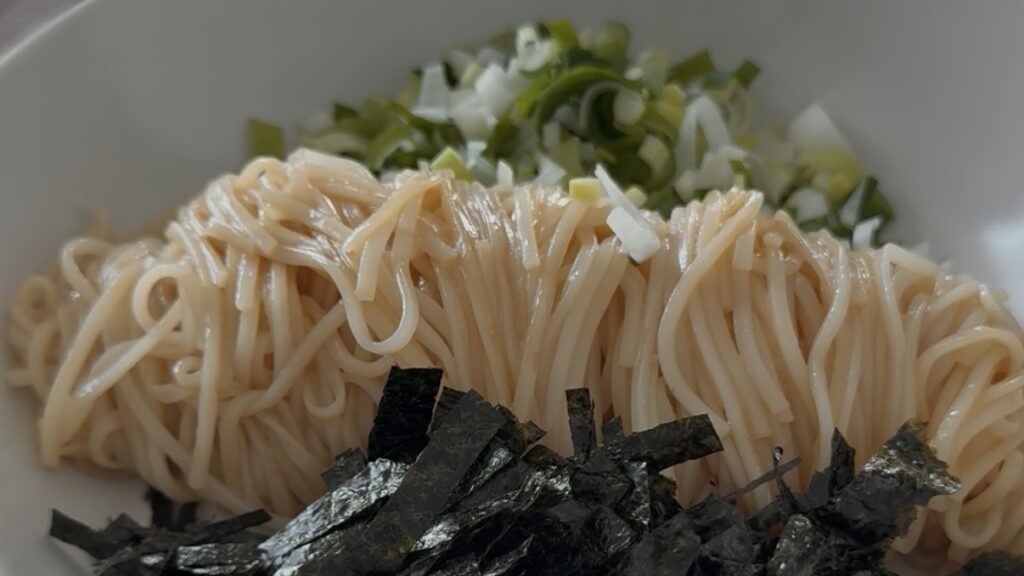
Some of the best recipes are also the simplest, and Easy Perilla Oil Noodles are a perfect example. Also known as Deulgireum Guksu, this classic Korean noodle dish comes together with just a handful of everyday ingredients. Fragrant perilla oil, soy sauce, roasted seaweed, and sesame seeds create a bowl of noodles that’s incredibly flavorful, comforting, and ready in just 10 minutes.
One of the reasons I love Perilla Oil Noodles is that they let the ingredients shine. The rich, nutty aroma of perilla oil is the star of the dish, while roasted seaweed and sesame seeds add the perfect finishing touch. I like to sprinkle a small amount of green onion for freshness, but I don’t recommend using too much. A generous handful may look beautiful, but it can easily overpower the delicate flavor of the perilla oil.
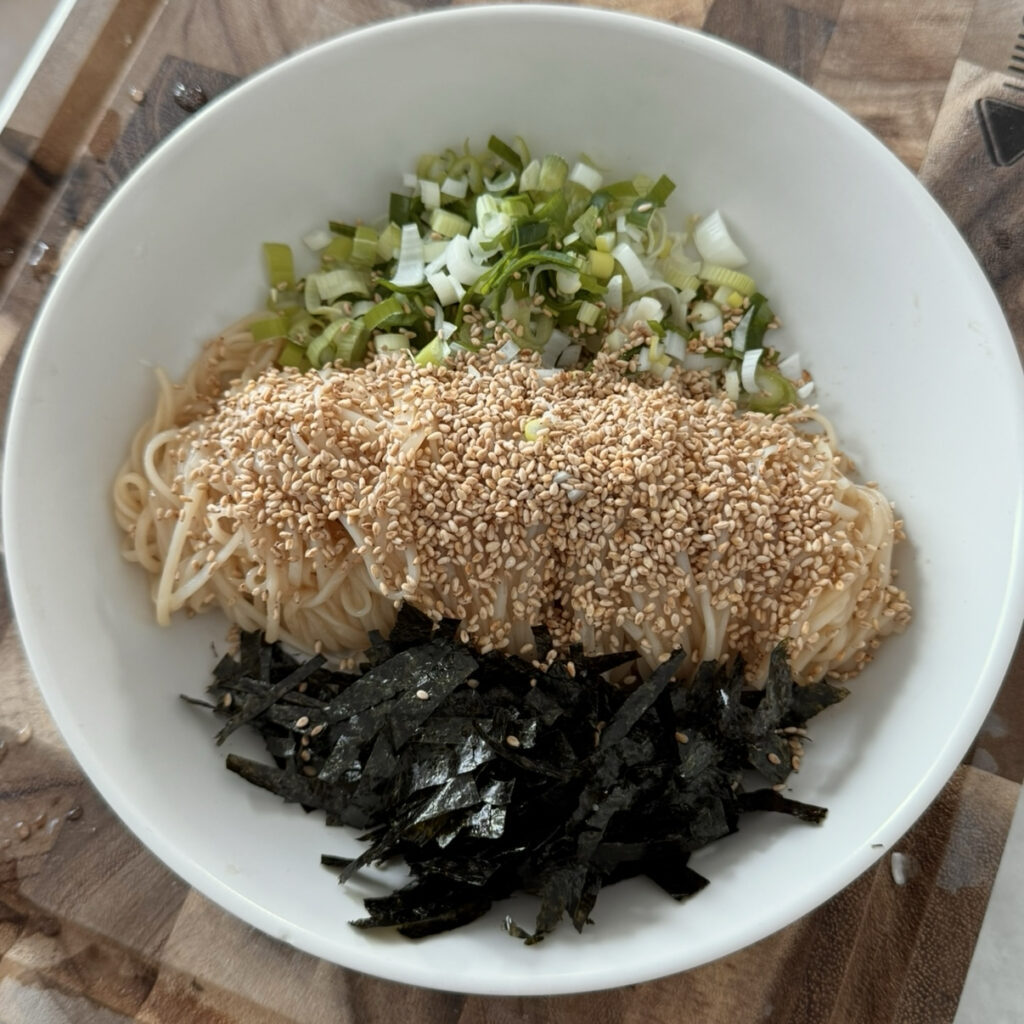
Growing up in Korea, simple noodle dishes like this were always part of everyday life. They were the kind of meals we made when we wanted something quick, comforting, and satisfying without spending hours in the kitchen. Every family has its own version of Perilla Oil Noodles, and this is the recipe I make most often because it’s simple, balanced, and lets the natural flavor of the perilla oil stand out.
If you’ve never tried Perilla Oil Noodles before, this easy recipe is the perfect place to start. Whether you’re looking for a quick lunch, a light dinner, or a cozy late-night meal, this Korean noodle recipe is one you’ll find yourself making again and again.
🛒Ingredients
Don’t let the short ingredient list fool you. Every ingredient plays an important role in creating the rich, nutty flavor of these noodles. Since perilla oil is the star of the dish, I recommend using a good-quality toasted perilla oil whenever possible.
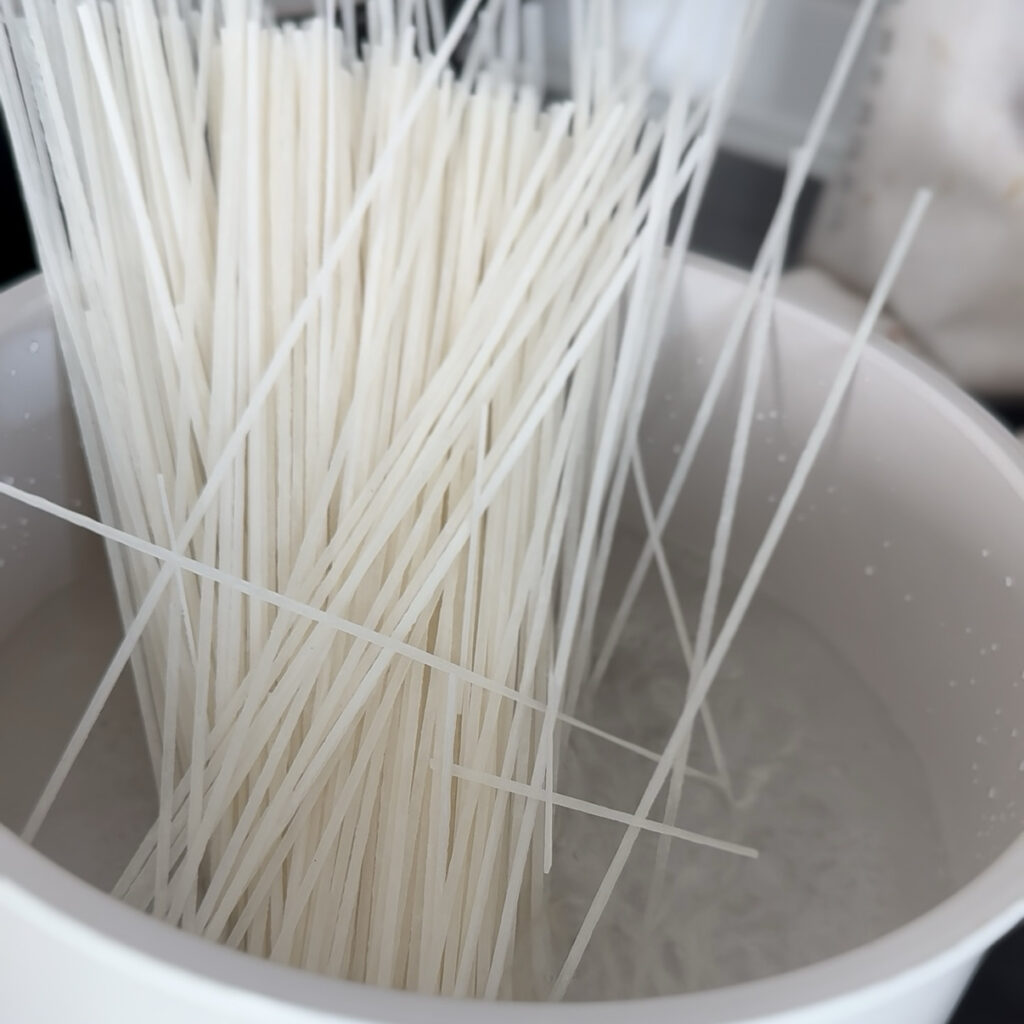
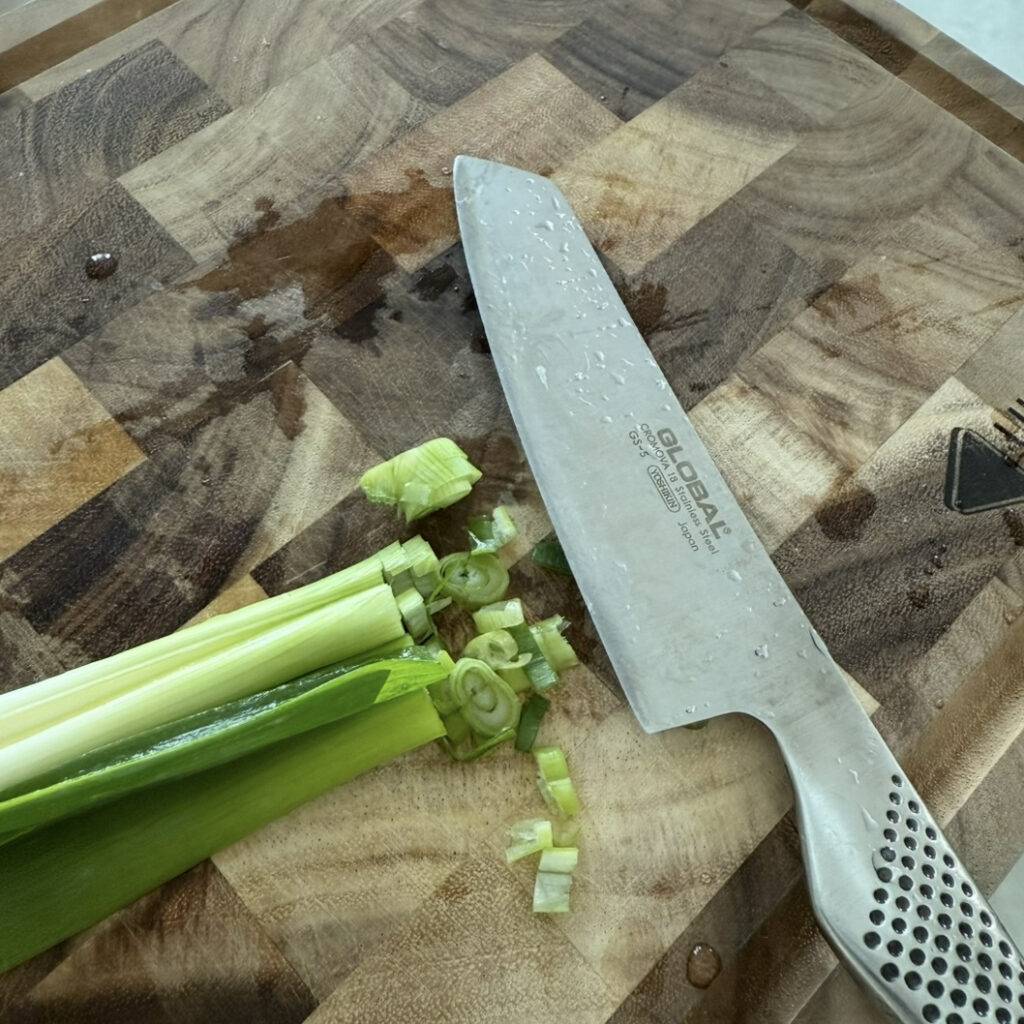
Korean somyeon is the traditional choice, but Japanese somen or any thin wheat noodles will work just as well. I also love adding plenty of finely sliced green onions for extra freshness and crunch. If you’re not a fan of their sharp flavor, simply use less or leave them out.
Here’s everything you’ll need:
✓ 120 g (4.2 oz) Korean somyeon (thin wheat noodles)
✓ 2 tbsp perilla oil
✓ 2 tbsp Korean soy sauce (jin ganjang)
✓ 1 tsp sugar
✓ 1 sheet roasted seaweed (gim), finely cut
✓ 1 tsp toasted sesame seeds
✓ 1 tbsp or more finely sliced green onions (optional)
🍳 How to Make Perilla Oil Noodles
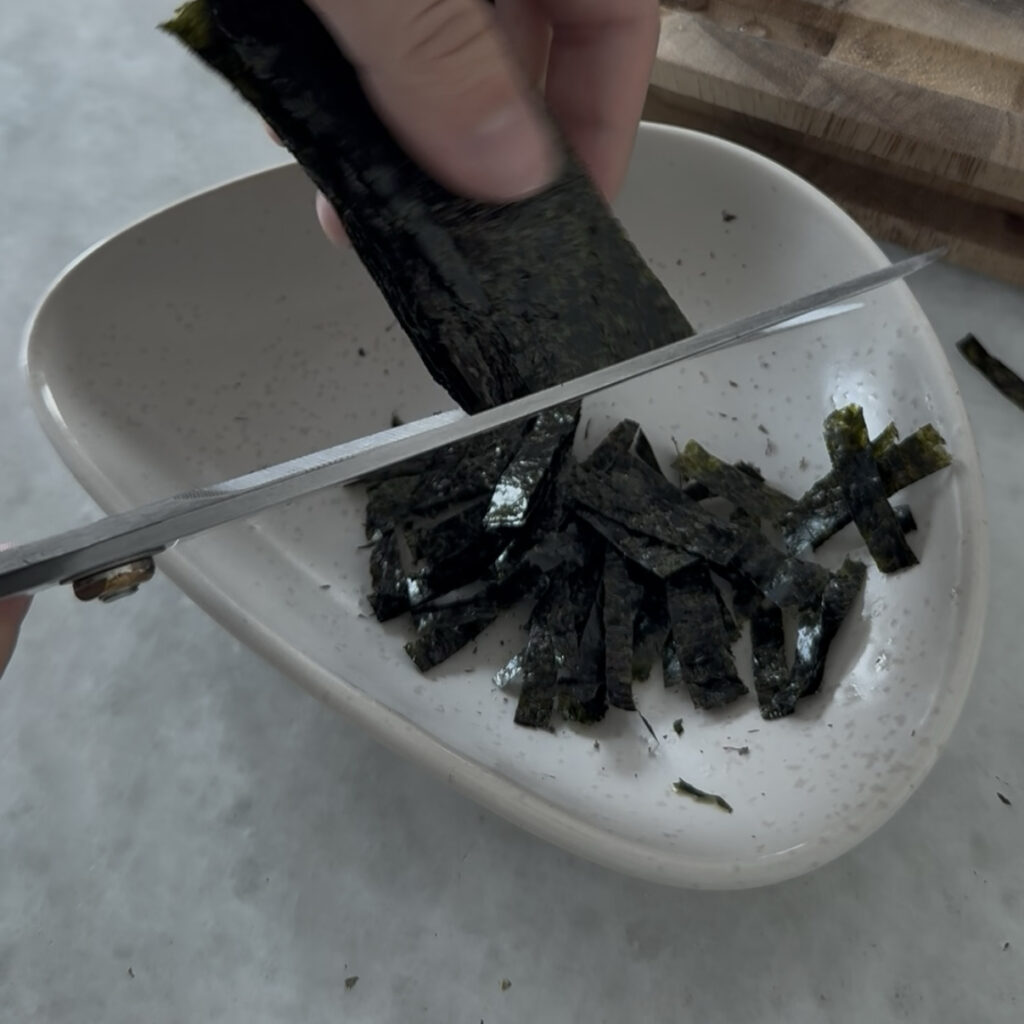
Step 1. Prepare the seaweed
If your seaweed isn’t roasted, lightly roast it over low heat until crisp. Finely cut it into thin strips with kitchen scissors and set aside. This adds a delicious savory flavor and blends more evenly with the noodles.
Step 2. Cook the noodles
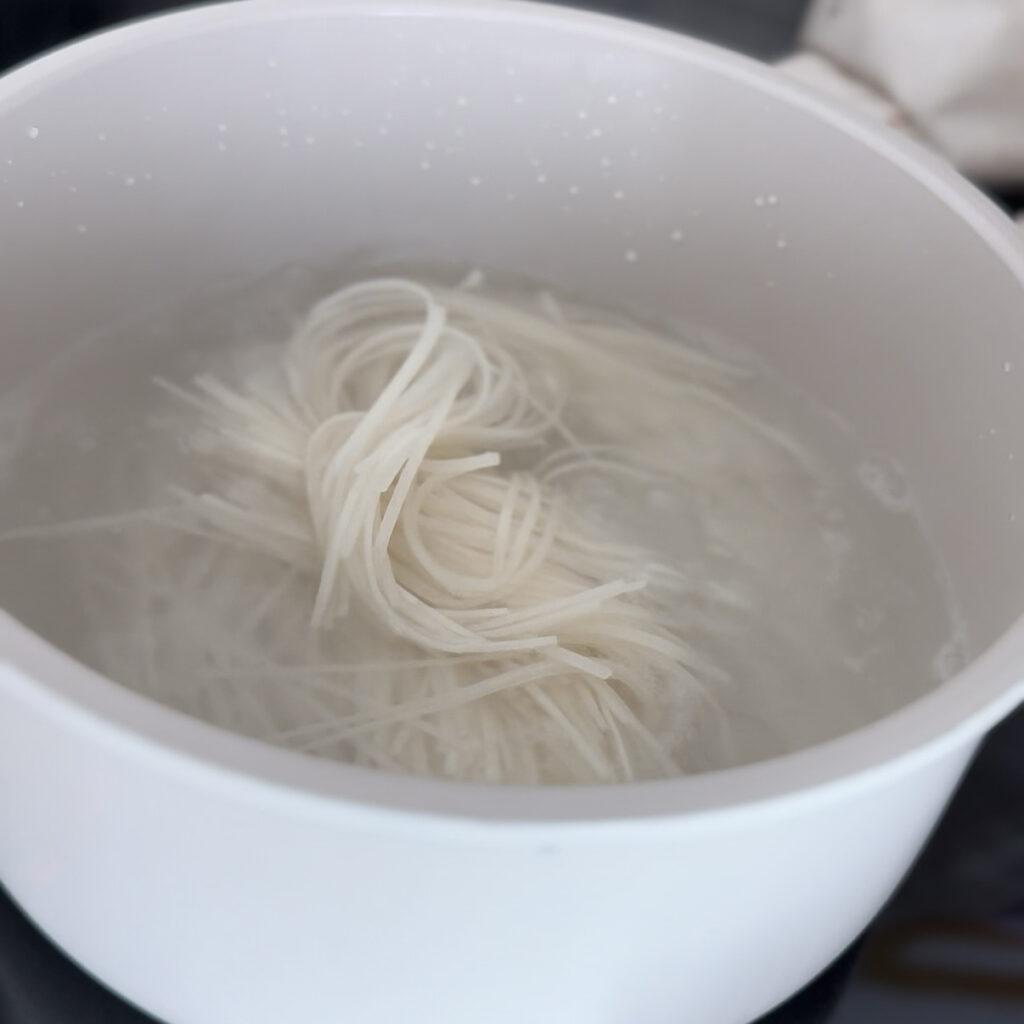
Bring a large pot of water to a boil and add the somyeon. Cook according to the package directions. When the water starts to boil over, pour in a little cold water. Repeat this once or twice until the noodles are fully cooked. The noodles should be tender but still slightly chewy, as they’ll firm up a little after rinsing.
Step 3. Rinse and drain.
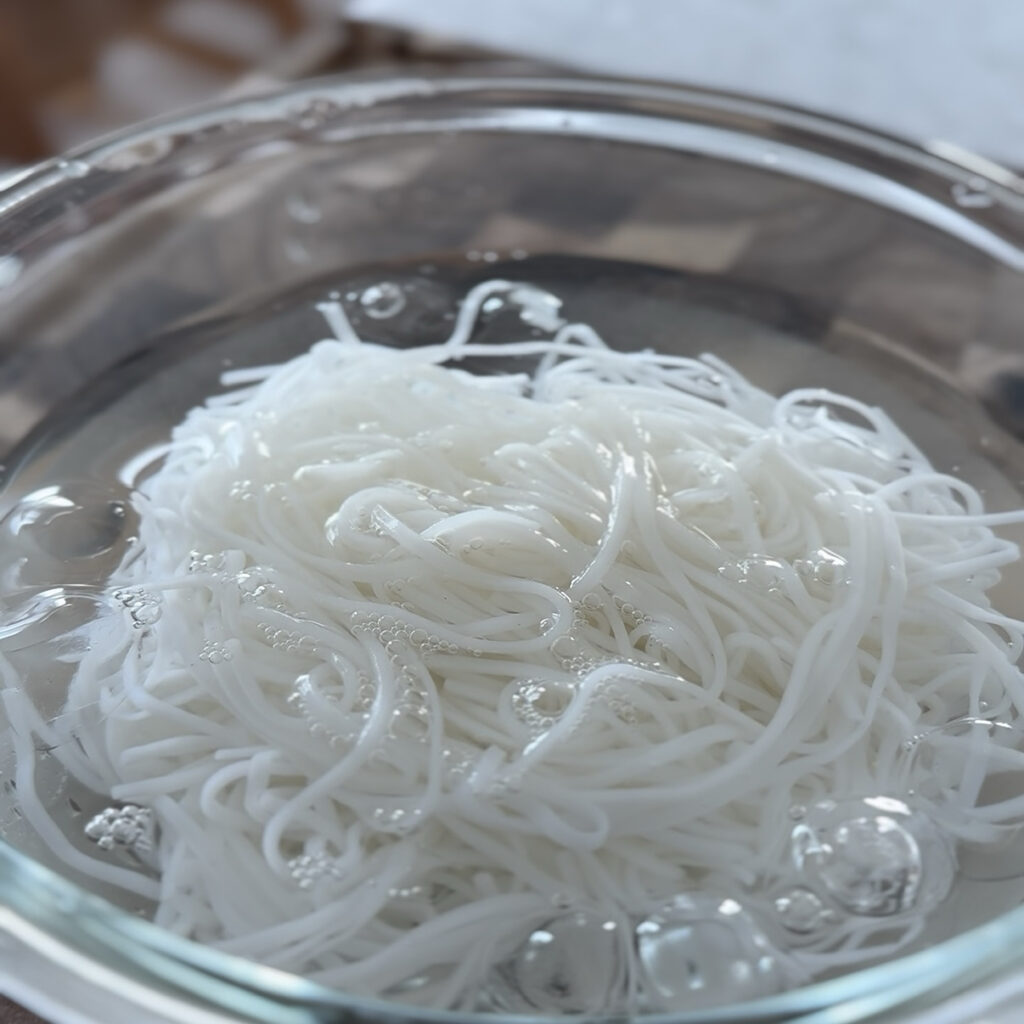
Rinse the cooked noodles several times under cold running water, gently rubbing them with your hands to remove excess starch. This helps give the noodles a smoother texture and prevents them from sticking together. Drain them well before seasoning. If the noodles still feel slightly chewy after rinsing, cook them for another 30 seconds to 1 minute.
Step 4. Season the noodles
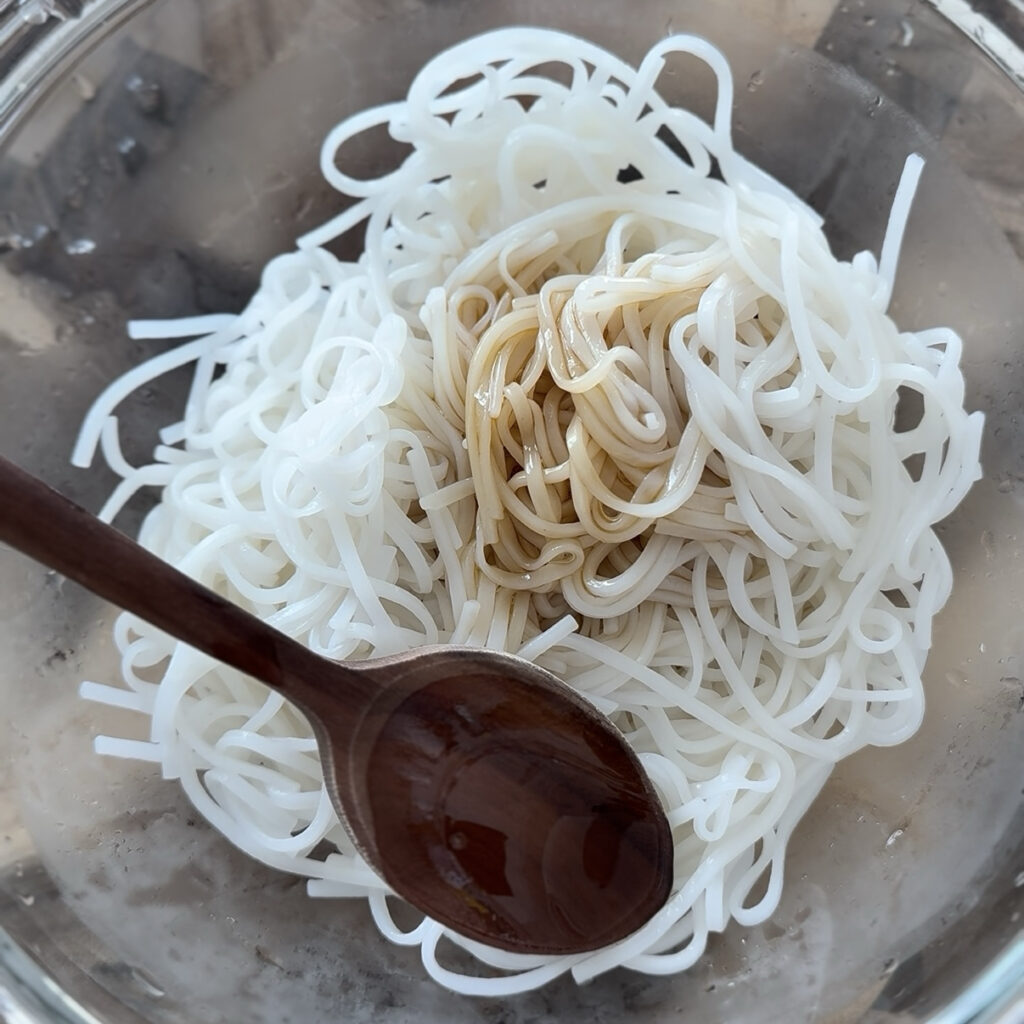
Transfer the drained noodles to a bowl. Add the perilla oil, Korean soy sauce, and sugar, then toss gently until every strand is evenly coated. Mix gently to avoid breaking the noodles and to help the sauce coat them evenly.
Step 5. Finish and serve
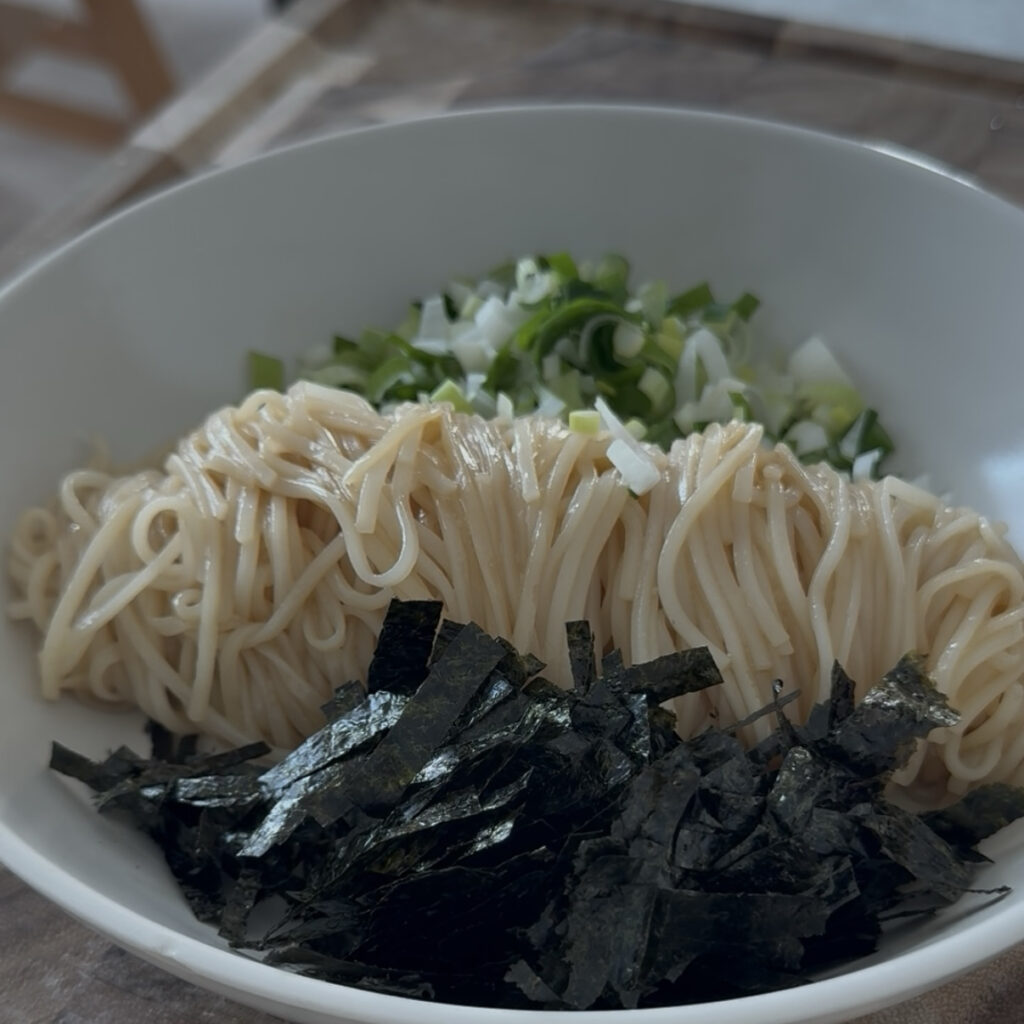
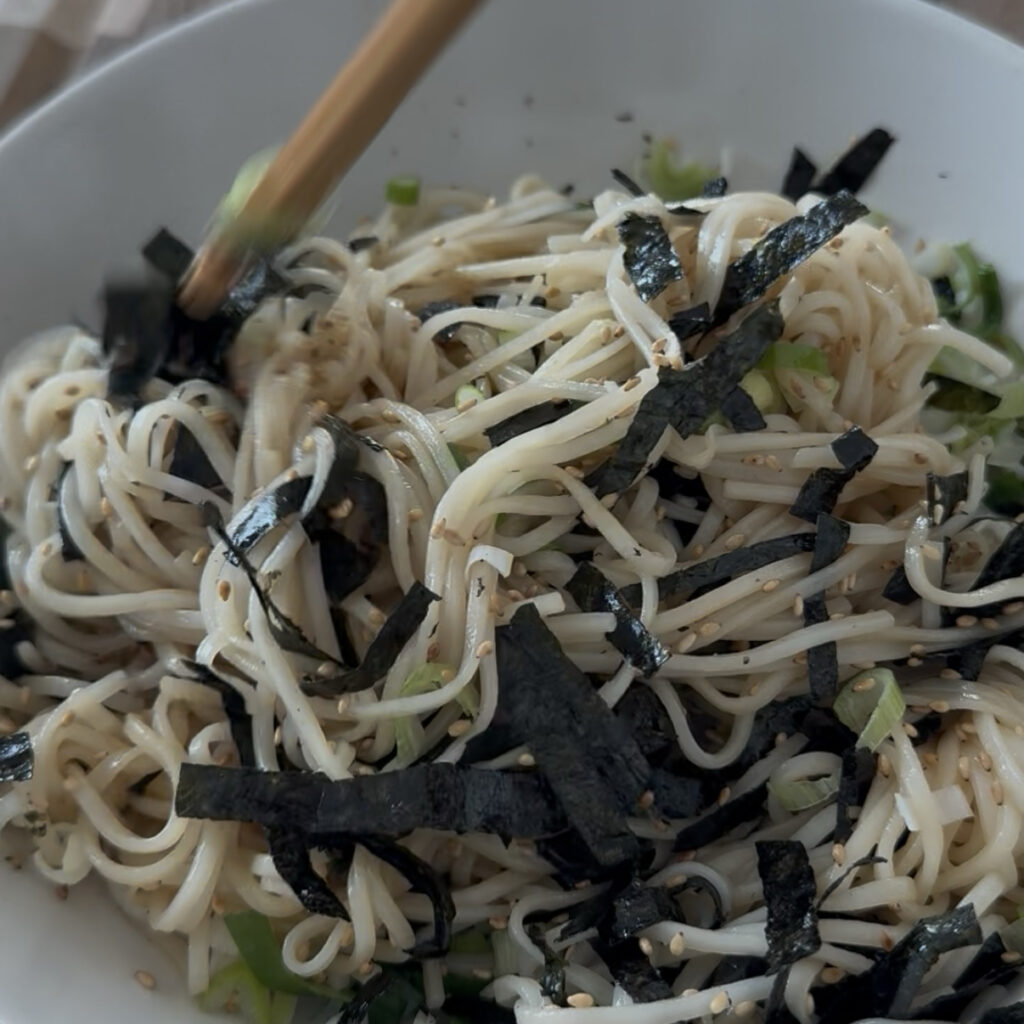
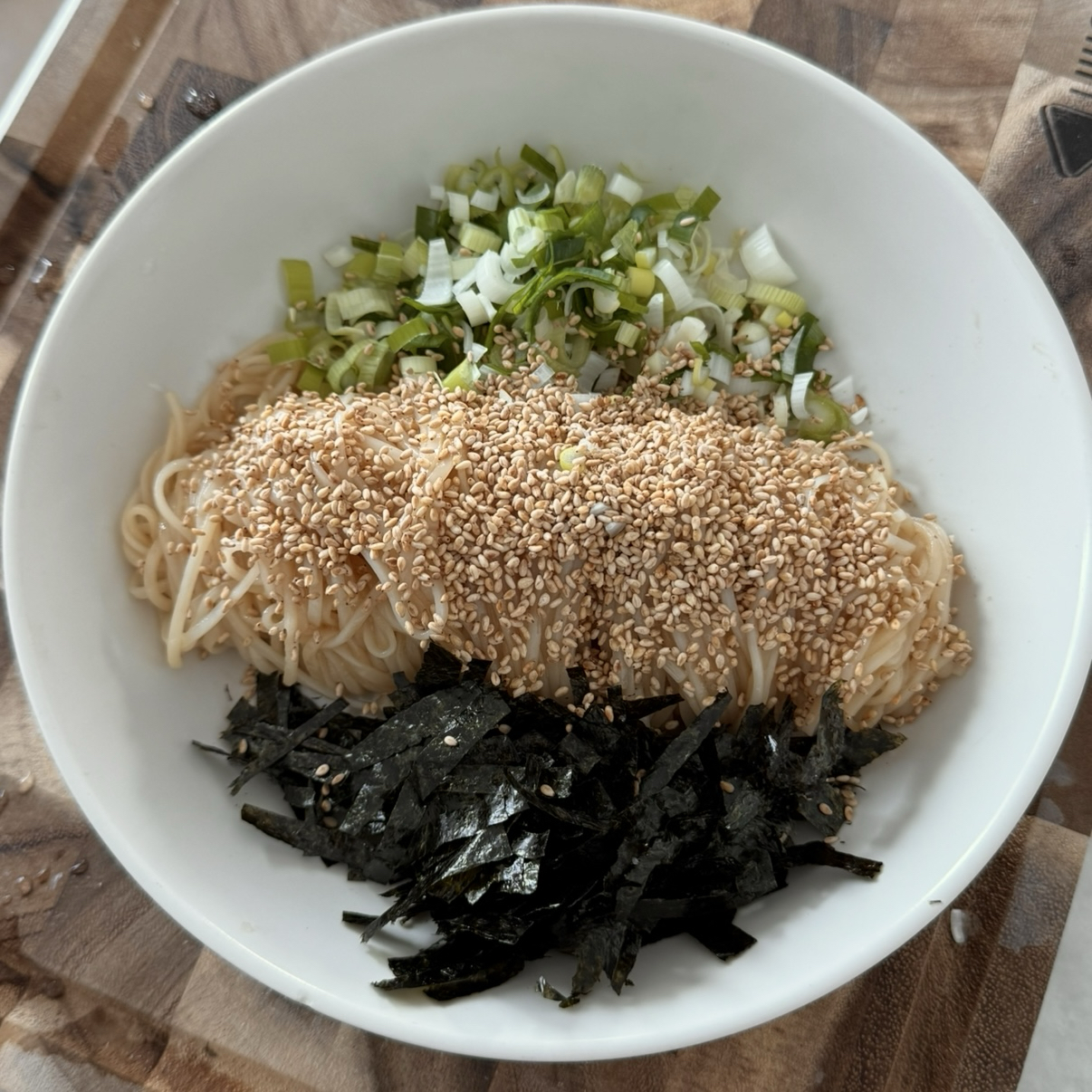
Top the noodles with the finely cut roasted seaweed, toasted sesame seeds, and as much sliced green onion as you like. Mix everything together just before eating until every strand is evenly coated. The roasted seaweed adds umami, while the green onion brings a fresh, crisp flavor that balances the richness of the perilla oil. Serve immediately for the best texture and flavor.
🍽️ Serving Tips
Perilla oil noodles are best enjoyed immediately after mixing, while the noodles are still fresh and chewy. They’re delicious on their own, but you can also top them with a fried egg, roasted seaweed, cucumber, or sliced green onion if you like.
Feel free to adjust the flavor with a little more perilla oil or Korean soy sauce to suit your taste.
Because the noodles can become firm and lose their texture over time, this dish is best enjoyed fresh rather than stored for later.
❓ FAQ
Q. Can I use a different type of noodles?
A. Yes. Thin wheat noodles such as somyeon work best, but you can also use soba, ramen noodles, or other thin noodles. The texture and flavor will be slightly different.
Q. Can I use sesame oil instead of perilla oil?
A. You can, but the flavor won’t be the same. Perilla oil has a rich, nutty aroma that gives this dish its signature taste, while sesame oil has a stronger toasted flavor.
Q. What toppings go well with perilla oil noodles?
A. Roasted seaweed, toasted sesame seeds, sliced cucumber, and a fried egg are all great options. Feel free to keep it simple or add your favorite toppings to make the dish your own.
Q. The green onion flavor is too strong. What should I do?
A. Green onion is completely optional. If its fresh, sharp flavor is too strong for your taste, simply use less or leave it out. The noodles are still delicious without it.
Q. Why should I rinse the noodles in cold water?
A. Rinsing removes excess starch, giving the noodles a smoother, chewier texture and preventing them from sticking together.
Q. Can I make perilla oil noodles ahead of time?
A. This dish is best enjoyed fresh. As the noodles sit, they can become firm and lose their chewy texture, so it’s recommended to serve them immediately after mixing.
👉👉 You Might Also Like
🇰🇷 First time cooking Korean food?
Before you start, check out these 8 essential Korean ingredients that I use in almost every recipe.
👉 Read: 8 Essential Korean Ingredients Every Beginner Needs
Easy Perilla Oil Noodles (Deulgireum Guksu)
Ingredients
Method
- Cook the noodles according to the package directions, then rinse under cold water and drain well.
- Toss the noodles with perilla oil, Korean soy sauce, and sugar.
- Top with roasted seaweed, toasted sesame seeds, and green onion. Mix well and serve immediately.

Hi, I’m Vella, a Korean home cook sharing easy Korean recipes for everyday cooking. I focus on simple recipes, practical tips, and ingredients that are easy to find outside Korea.