
🥢 Introduction
When the weather starts to warm up, I always find myself craving bibim buckwheat noodles. Buckwheat noodles have a light, earthy flavor and feel much lighter than regular wheat noodles, which makes them perfect for hot summer days when you don’t have much of an appetite.
One of the things I love most about this dish is how the chilled buckwheat noodles pair with the sweet, tangy, and spicy gochujang sauce. The bold flavors soak into every strand of noodles, while a drizzle of sesame oil adds just the right amount of nuttiness. It’s simple, but every bite is refreshing and incredibly satisfying.
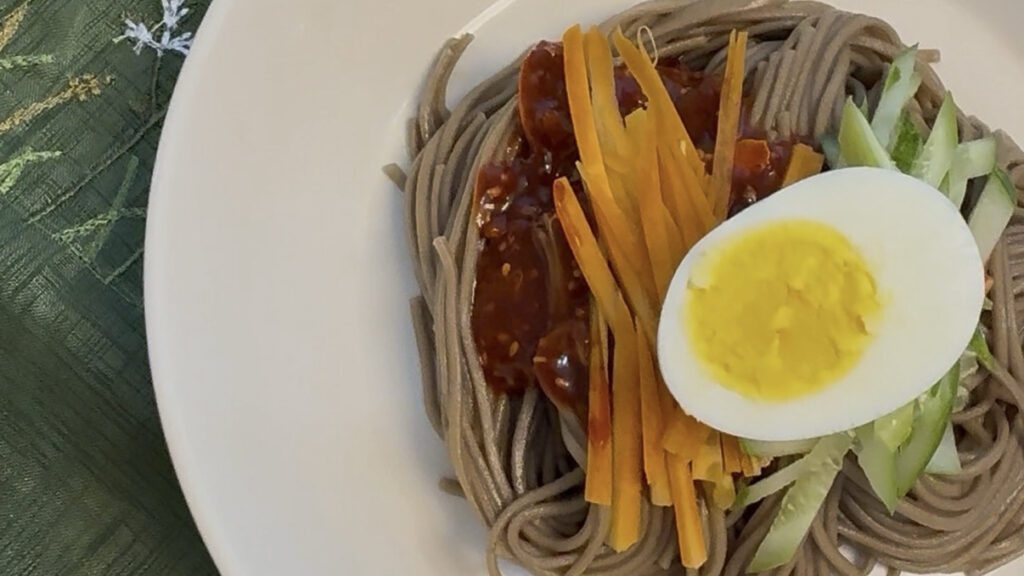
I’ve been making this recipe for years because it’s quick, easy, and always hits the spot. I usually top it with crisp cucumber, shredded carrots, and a boiled egg for a little freshness and extra texture. In less than 20 minutes, I have a colorful, balanced meal that’s perfect for busy weekdays or hot summer afternoons.
Simple ingredients, bold flavors, and a bowl that’s both refreshing and nourishing—this is one of those recipes I come back to every single summer.

⚡️ What Are Korean Buckwheat Noodles?
Korean buckwheat noodles are called memil guksu (메밀국수). They are made with buckwheat flour and sometimes wheat flour, depending on the type. Buckwheat gives the noodles a slightly nutty, earthy flavor that is different from regular wheat noodles. Their texture can range from soft and tender to pleasantly chewy.
In Korea, cold noodles are especially popular in summer. I like buckwheat noodles on hot days because they feel light and refreshing, but are still satisfying to eat. Their slightly nutty flavor also makes a nice change from regular noodles.
Japanese soba noodles are similar, so you can use them if Korean buckwheat noodles are hard to find.
🛒 Ingredients
For the noodles
✔ 2 bundles buckwheat noodles (memil guksu or soba)
✔ Cold water + ice: After boiling, the noodles are rinsed in cold water and chilled over ice to keep them firm, chewy, and refreshing.
For the sauce
✔ 2 tbsp gochujang (Korean red chili paste): This is the base of the sauce and gives bibim guksu its signature sweet and spicy Korean flavor.
✔ 2 tbsp Korean soy sauce: Adds a deeper savory flavor and balances the sweetness of the sauce.
✔ 2 tbsp mild rice vinegar: Adds the refreshing tanginess that makes cold noodles so addictive. I prefer a mild vinegar because some vinegars can taste much sharper and overpower the sauce.
✔ 2 tbsp sugar
✔ 1 tbsp sesame oil
✔ 1 tbsp minced garlic
✔ 1 tbsp gochugaru(Korean chili flakes)
✔ and 1 tbsp sesame seeds.
Toppings
✔ Thinly sliced cucumber: Adds a fresh, crunchy texture that makes the noodles even more refreshing.
✔ Thinly sliced carrot: Adds a little sweetness and color.
✔ ½ boiled egg: Makes the dish more filling and balances the spicy flavor.

🍳 How to Make Bibim Buckwheat Noodles
Step 1 – Cook the Noodles
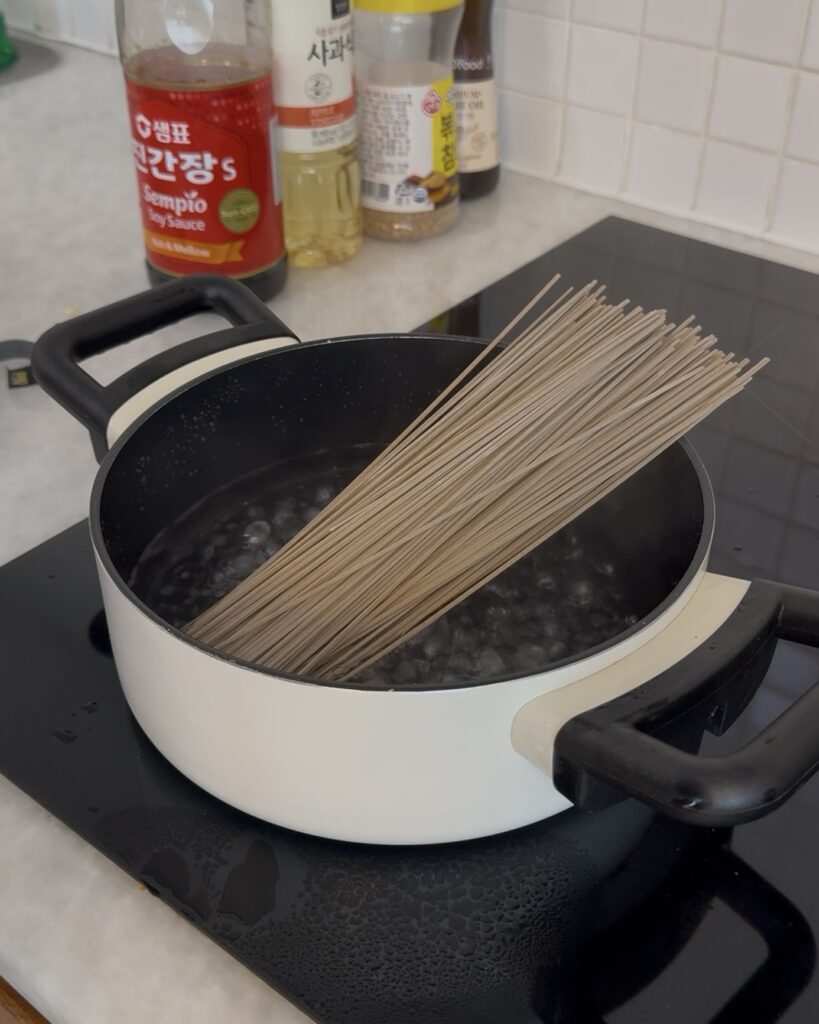
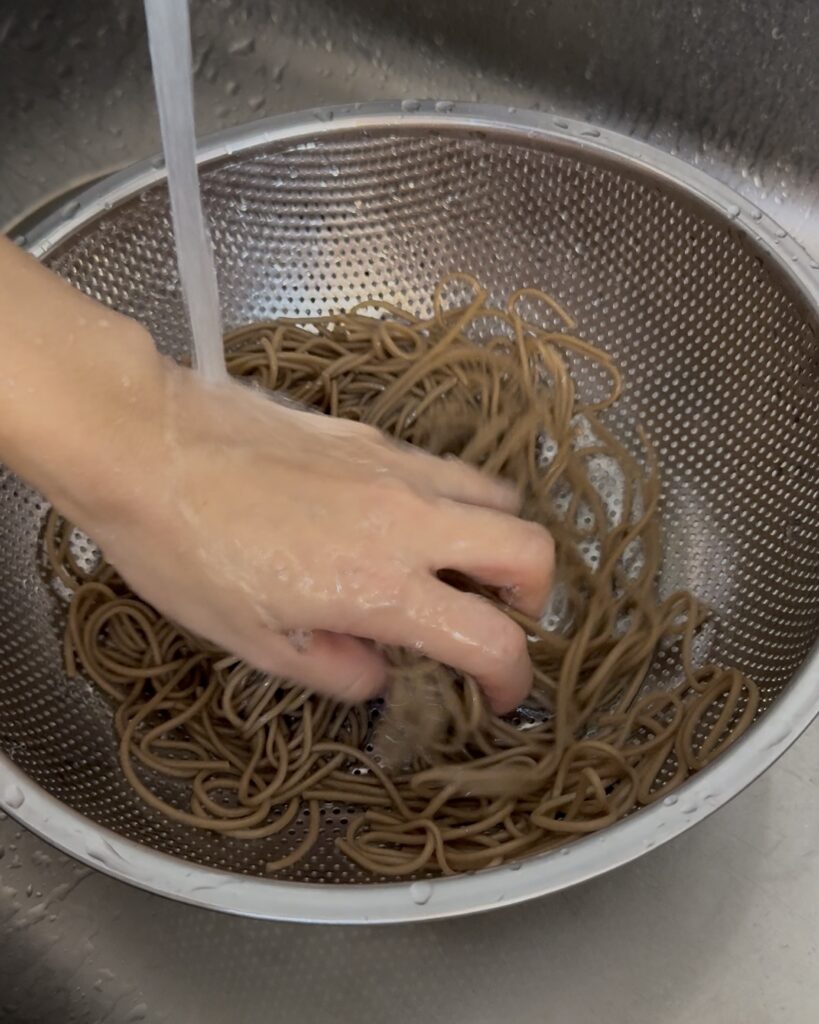
Bring a pot of water to a boil and cook the buckwheat noodles according to the package instructions, usually for about 5 minutes. Once the noodles are cooked, drain them and rinse thoroughly under cold running water.
Gently rub the noodles with your hands while rinsing to remove any excess starch. This helps prevent the noodles from sticking together and gives them a cleaner, chewier texture.
Step 2. Chill the Noodles
For the best refreshing and chewy texture, I like to chill the noodles in an ice water bath for a few minutes. The ice-cold water helps firm up the noodles and gives them that extra refreshing bite that makes this dish perfect for warm days.
Once the noodles are completely chilled, drain them well and set them aside while you prepare the sauce.
Step 3. Make the Spicy Gochujang Sauce
While the noodles are cooling, prepare the sauce. In a small bowl, mix together:
✓ 2 tbsp gochujang (Korean red chili paste)
✓ 2 tbsp Korean soy sauce
✓ 2 tbsp sugar
✓ 2 tbsp mild rice vinegar
✓ 1 tbsp sesame oil
✓ 1 tbsp minced garlic
✓ 1 tbsp gochugaru (Korean chili flakes)
✓ 1 tbsp sesame seeds
Stir well until the sugar is fully dissolved and all the ingredients are combined. The sauce should taste balanced—sweet, spicy, tangy, and savory.

Step 4. Assemble the Bowl
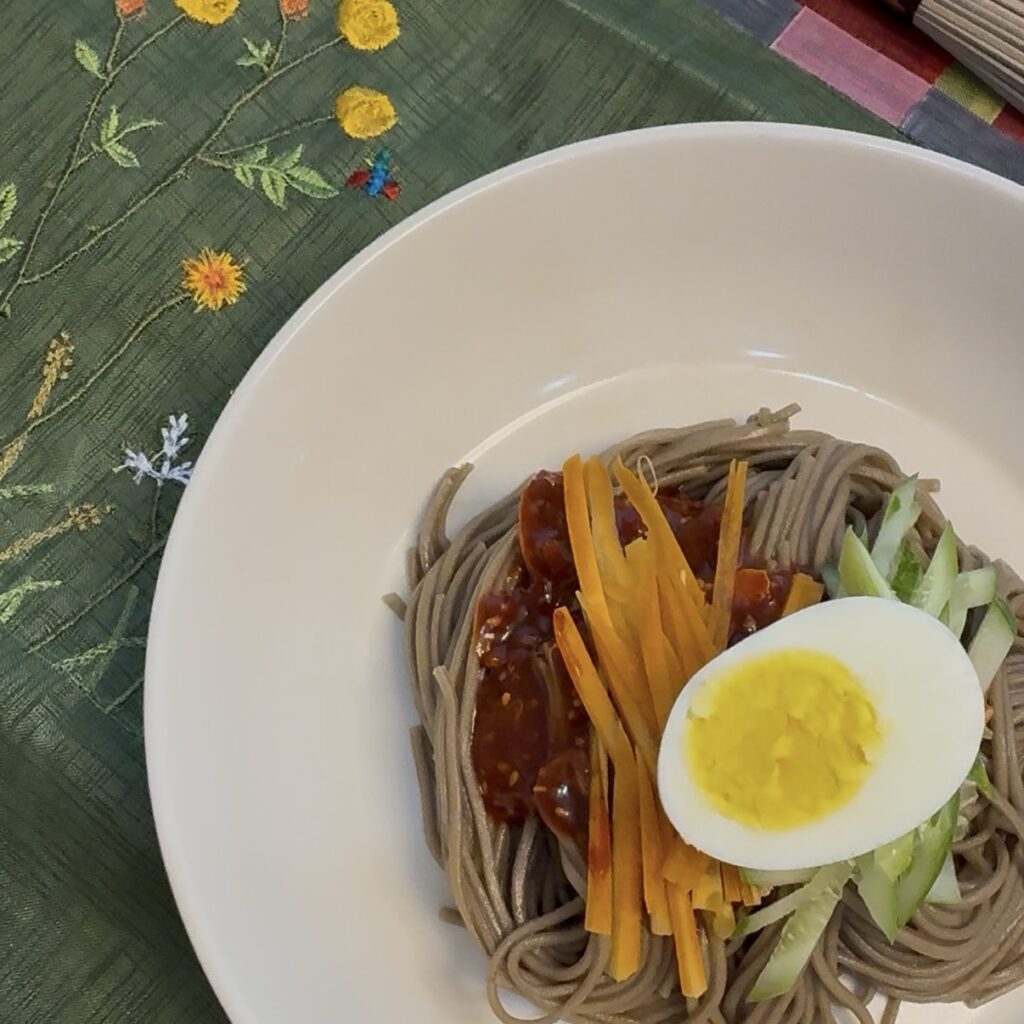
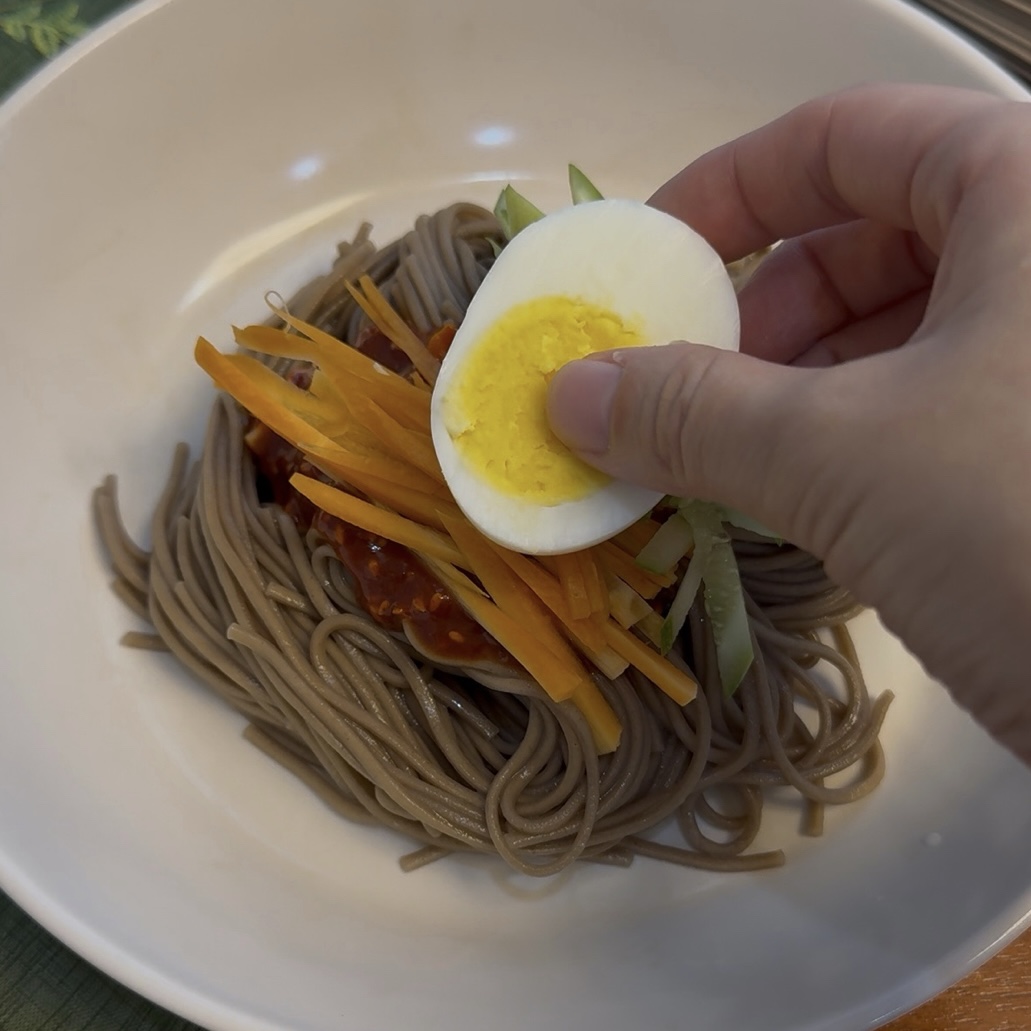
Add the chilled buckwheat noodles to a bowl and pour the sauce over the top. Finish with your toppings: thinly sliced cucumber, carrot, and half a boiled egg.
I like to keep the toppings simple because the noodles and sauce already have so much flavor. The fresh vegetables add a nice crunch and make the dish feel even more refreshing.
Step 5. Mix Right Before Eating
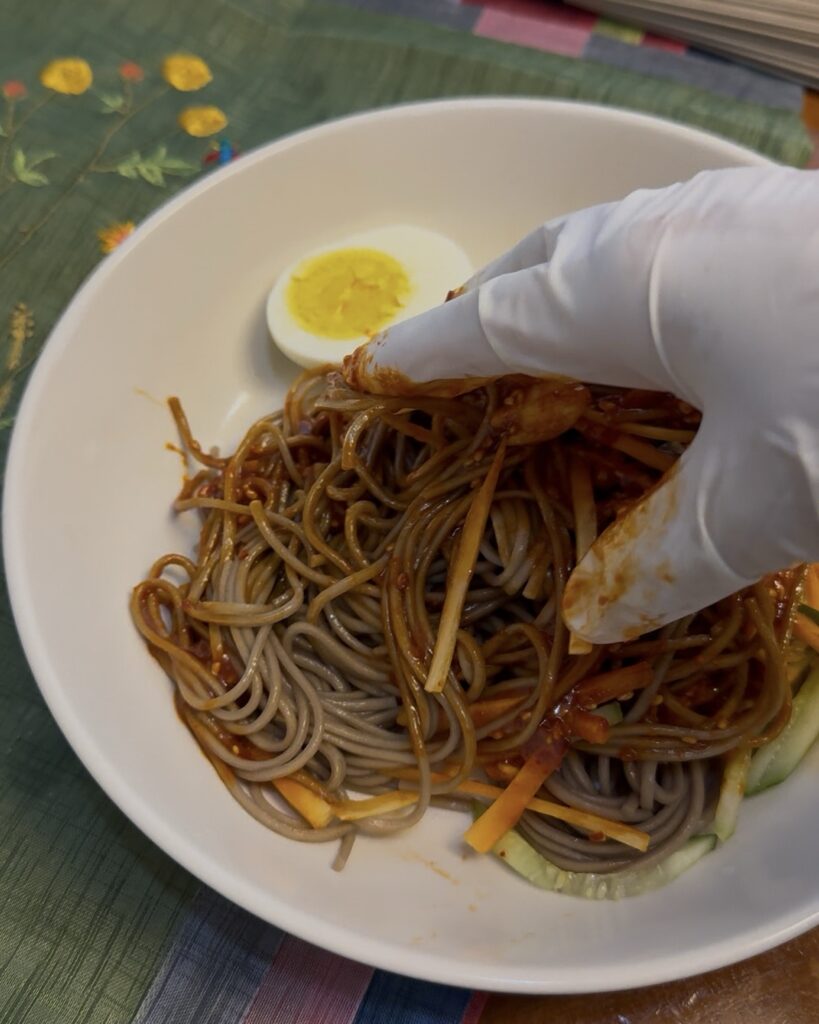
Just before you eat, mix everything together really well so the sauce coats every strand of noodles. This is when all the flavors come together—the spicy sauce, chewy noodles, and fresh toppings in every bite.
Mix right before serving to keep the vegetables crisp and prevent the noodles from becoming too soft.
🍽️ Serving Tips
Bibim buckwheat noodles are best when enjoyed right away. I don’t recommend making them ahead of time because the noodles will absorb the sauce as they sit, which can make them softer and less chewy.
✔ Mix just before eating — Keep the noodles and sauce separate until you’re ready to serve. This helps keep the noodles cold, springy, and full of texture.
✔ Add more cucumber if you like extra crunch — The fresh cucumber balances the spicy sauce and makes each bite feel more refreshing.
✔ Adjust the sweetness to your preference — Add a little more sugar if you enjoy a sweeter, more classic bibim sauce.
✔ Want more heat? Add extra gochugaru — A little more Korean chili flakes will give the sauce a deeper spicy flavor.
❓ FAQ
Q. I can’t find Korean buckwheat noodles (memil guksu). What can I use instead?
A. Japanese soba noodles are the closest substitute and work best for this recipe. Thin wheat noodles or somen noodles are also good options. If you don’t have any of those, angel hair pasta can work in a pinch, but the texture will be different from traditional bibim buckwheat noodles.
Q. What is gochujang, and can I substitute it?
A. Gochujang is a Korean fermented red chili paste that gives this dish its signature spicy, sweet, and savory flavor. It’s the key ingredient in the sauce, so I recommend using it if possible. If you cannot find it, you can use another chili paste, but the flavor will not be quite the same.
Q. What kind of vinegar should I use for bibim buckwheat noodles?
A. Korean vinegar or mild rice vinegar works best for this recipe. I recommend avoiding very strong vinegars, as they can make the sauce taste too sharp and overpower the balance of sweet, spicy, and tangy flavors.
Q. Can I make bibim buckwheat noodles ahead of time?
A. I don’t recommend it. Once mixed with the sauce, the noodles will continue to absorb the sauce and lose their fresh, chewy texture. For the best result, keep the noodles and sauce separate and mix them right before eating.
Q. Can I make this recipe less spicy?
A. Yes. Reduce the amount of gochujang or gochugaru for a milder version. You can also add a little extra sugar to balance the heat while keeping the sweet and spicy flavor.
👉👉 You Might Also Like
🇰🇷 First time cooking Korean food?
Before you start, check out these 8 essential Korean ingredients that I use in almost every recipe.
👉 Read: 8 Essential Korean Ingredients Every Beginner Needs
👉 Gochujang vs. Gochugaru: What’s the Difference?

Spicy Korean Buckwheat Noodles (Bibim Memil Guksu)
Ingredients
Method
- Cook buckwheat noodles for about 5 minutes. Rinse under cold water and rub gently to remove excess starch.
- Chill noodles in ice water, then drain well.
- Mix all sauce ingredients together.
- Toss noodles with the sauce and top with cucumber, carrot, and boiled egg.
- Mix well before eating and enjoy immediately.

Hi, I’m Vella, a Korean home cook sharing easy Korean recipes for everyday cooking. I focus on simple recipes, practical tips, and ingredients that are easy to find outside Korea.