
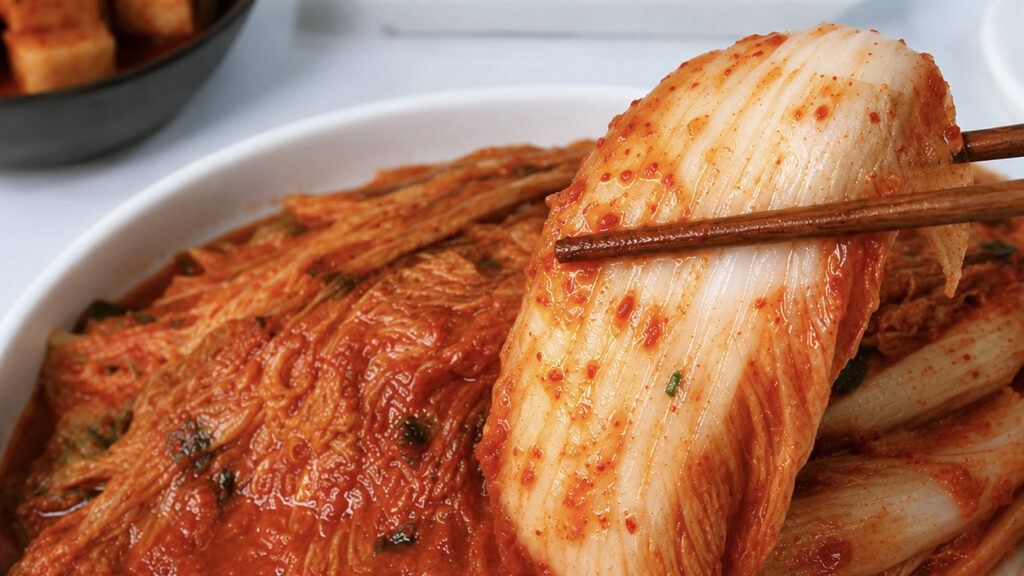
How Long Does Kimchi Last?
If you’ve ever found a container of kimchi tucked away in the back of your refrigerator, you’re probably wondering one thing: Is it still good to eat?
The short answer is yes—kimchi lasts much longer than many people expect.
Unlike fresh salads or cooked side dishes, kimchi is a fermented food. That means it doesn’t simply sit in the refrigerator waiting to spoil. Instead, it continues to ferment slowly, changing in flavor and texture over time. As long as it’s stored properly, kimchi can stay safe to eat for months.
Here’s a general guide to how long kimchi lasts:
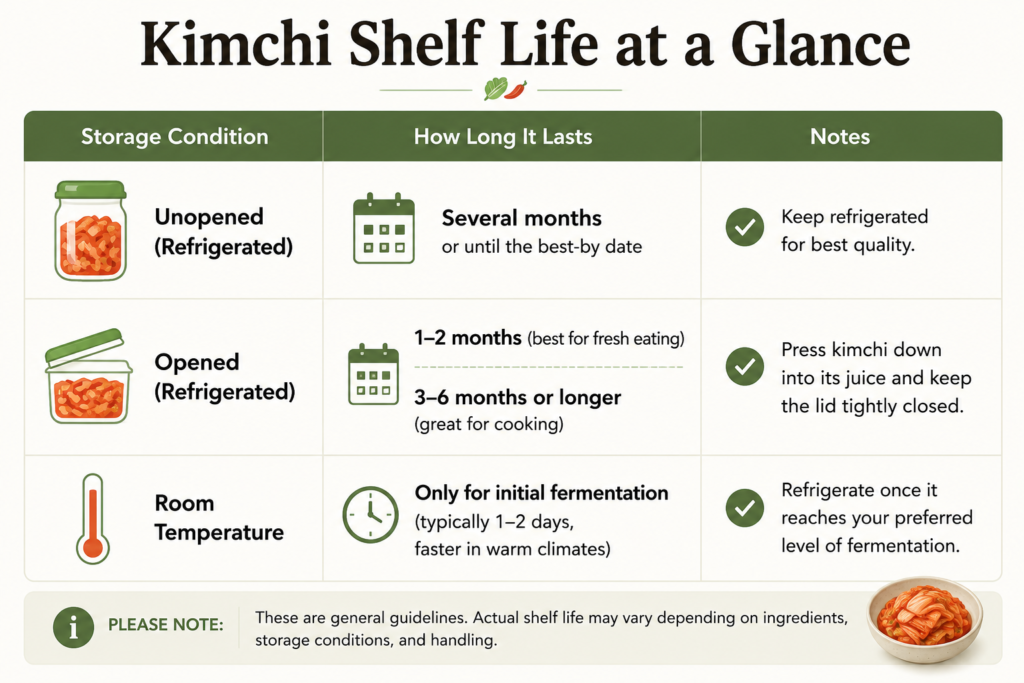
Keep in mind that these are general guidelines rather than strict expiration dates. The exact shelf life depends on factors such as how fresh the kimchi was when you bought or made it, how often the container is opened, and whether it’s stored consistently in the refrigerator.
As someone who grew up eating kimchi, I can tell you that many Korean families keep kimchi for months. In fact, older kimchi is often preferred for dishes like kimchi stew or kimchi fried rice because its deeper, tangier flavor adds more richness to the finished dish.
So if your kimchi tastes more sour than it did when you first opened it, that doesn’t automatically mean it’s gone bad. Fermentation is exactly what gives kimchi its unique flavor.
The real question isn’t “Is it sour?” It’s “Has it actually spoiled?” Let’s look at the signs that tell the difference.
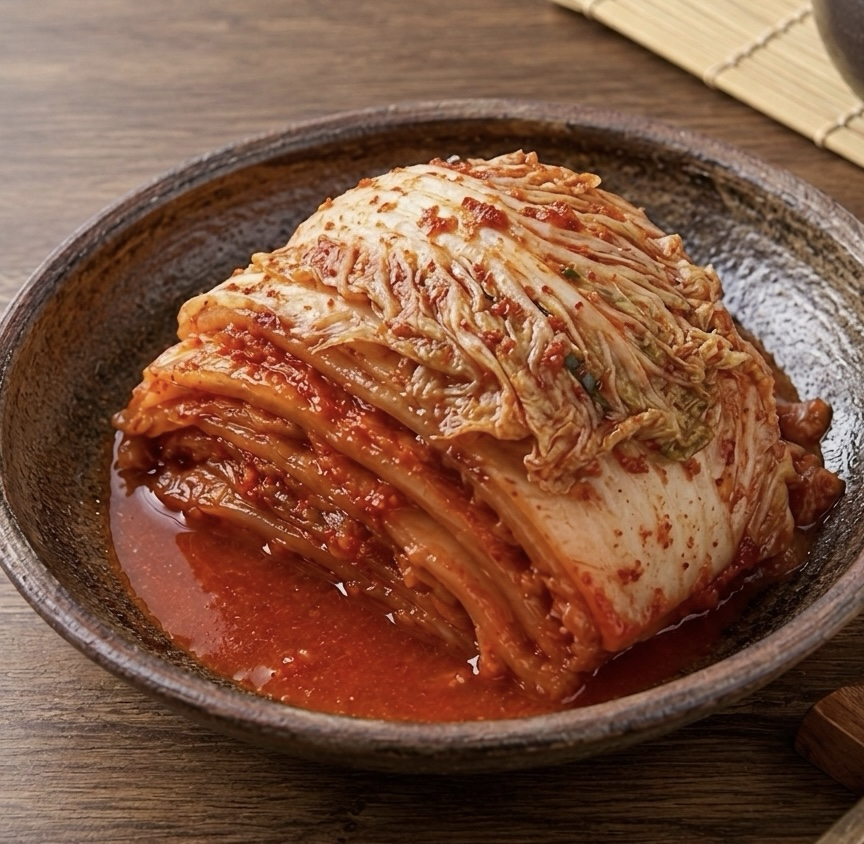
How to Tell If Kimchi Has Gone Bad
It’s easy to assume that sour kimchi has gone bad, but that’s usually not the case.
The good news is that kimchi rarely spoils before it simply becomes too sour for your taste. Most of the time, it keeps fermenting rather than going bad.
Kimchi is a fermented food, so it naturally becomes more sour as it ages. The vegetables gradually soften, the flavor becomes tangier, and the aroma gets stronger over time. These changes are completely normal and don’t necessarily mean the kimchi is unsafe to eat.
Instead of judging your kimchi by its sourness, look for these signs that it has actually spoiled:
✓ Visible mold, especially fuzzy spots that are green, blue, black, or pink
✓ A rotten or unpleasant smell that’s noticeably different from kimchi’s normal fermented aroma
✓ An unusually slimy texture
✓ Strange discoloration that doesn’t look like normal fermentation
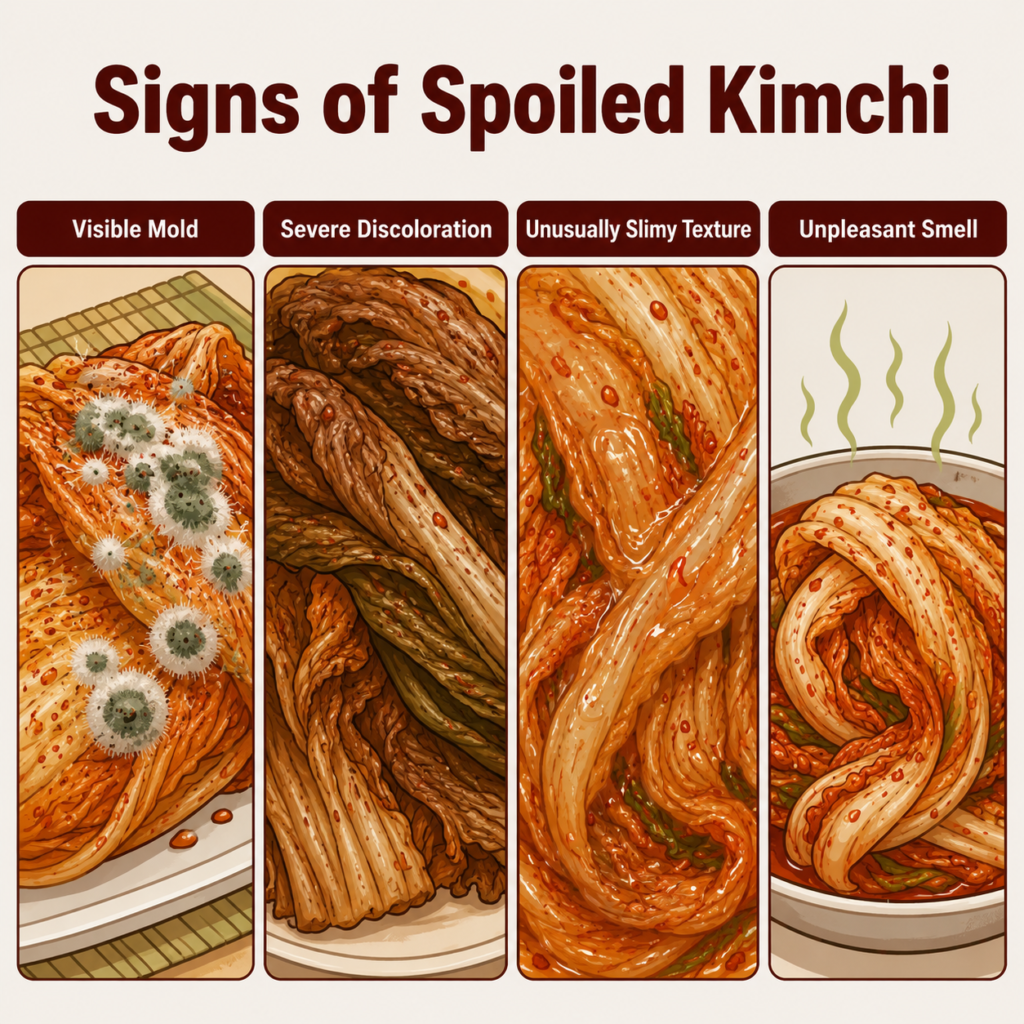
If you notice any of these signs, it’s best to throw the kimchi away.
On the other hand, if your kimchi is simply more sour, softer, or has a stronger fermented smell than before, it’s usually still safe to eat. In fact, many Koreans prefer well-fermented kimchi for dishes like kimchi stew or kimchi fried rice because it adds a deeper, richer flavor.
As a general rule, don’t judge kimchi by its sourness—judge it by signs of spoilage.
Is White Stuff on Kimchi Normal?
Finding white spots on kimchi can be alarming, but they aren’t always a sign that the kimchi has gone bad.
In many cases, the white film that appears on the surface is kahm yeast. Kahm yeast is a harmless yeast that can develop on fermented foods when they’re exposed to air. It isn’t harmful, although it may give the kimchi a slightly off flavor.
If you’re confident it’s kahm yeast, you can simply skim it off, make sure the kimchi is submerged in its brine, and continue storing it in the refrigerator.
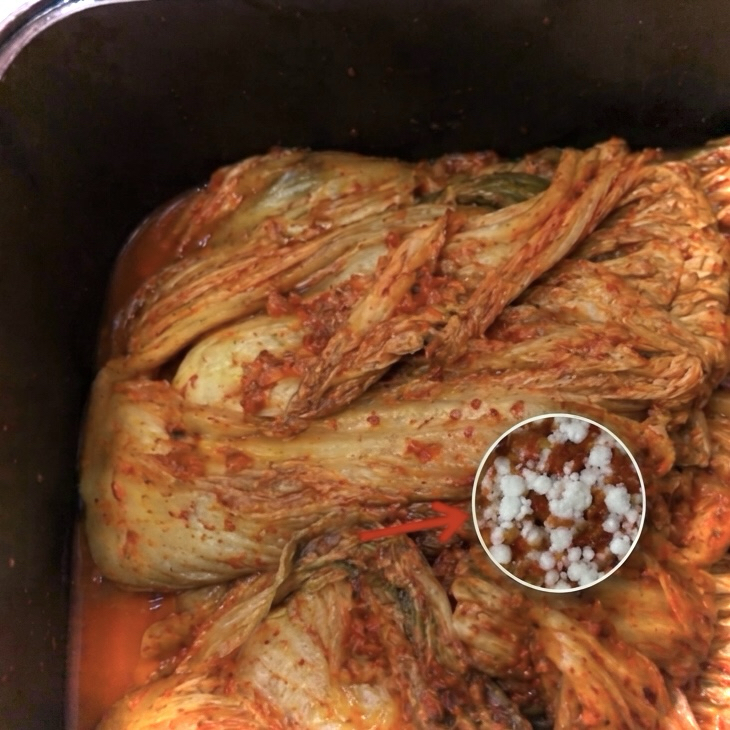
However, if the white growth looks fuzzy or hairy, or if you notice green, blue, black, or pink spots, it’s most likely mold. Unlike kahm yeast, mold can spread beyond what you can see, so it’s safest to discard the entire container.
To help prevent kahm yeast and mold, keep your kimchi submerged in its brine, close the lid tightly after each use, and always use clean utensils when serving.
If you’re ever unsure whether it’s kahm yeast or mold, it’s better to play it safe and throw the kimchi away.
Why Is My Kimchi So Sour?
If your kimchi tastes much sourer than it did when you first bought or made it, don’t worry. That’s exactly what kimchi is supposed to do.
Even in the refrigerator, kimchi doesn’t stop fermenting—it just slows down. As it ferments, it naturally develops more acidity, giving it the tangy flavor that makes kimchi so unique. Over time, the cabbage also becomes softer, which is another normal part of the fermentation process.
Some people prefer fresh kimchi because it’s crisp and mildly tangy. Others love well-fermented kimchi for its bold, deep flavor. In Korea, older kimchi is often the first choice for dishes like kimchi stew, kimchi fried rice, and kimchi pancakes because it adds extra richness to the dish.
So if your kimchi has simply become more sour, there’s usually no reason to worry. In most cases, it’s just a sign that fermentation is doing exactly what it’s supposed to do.
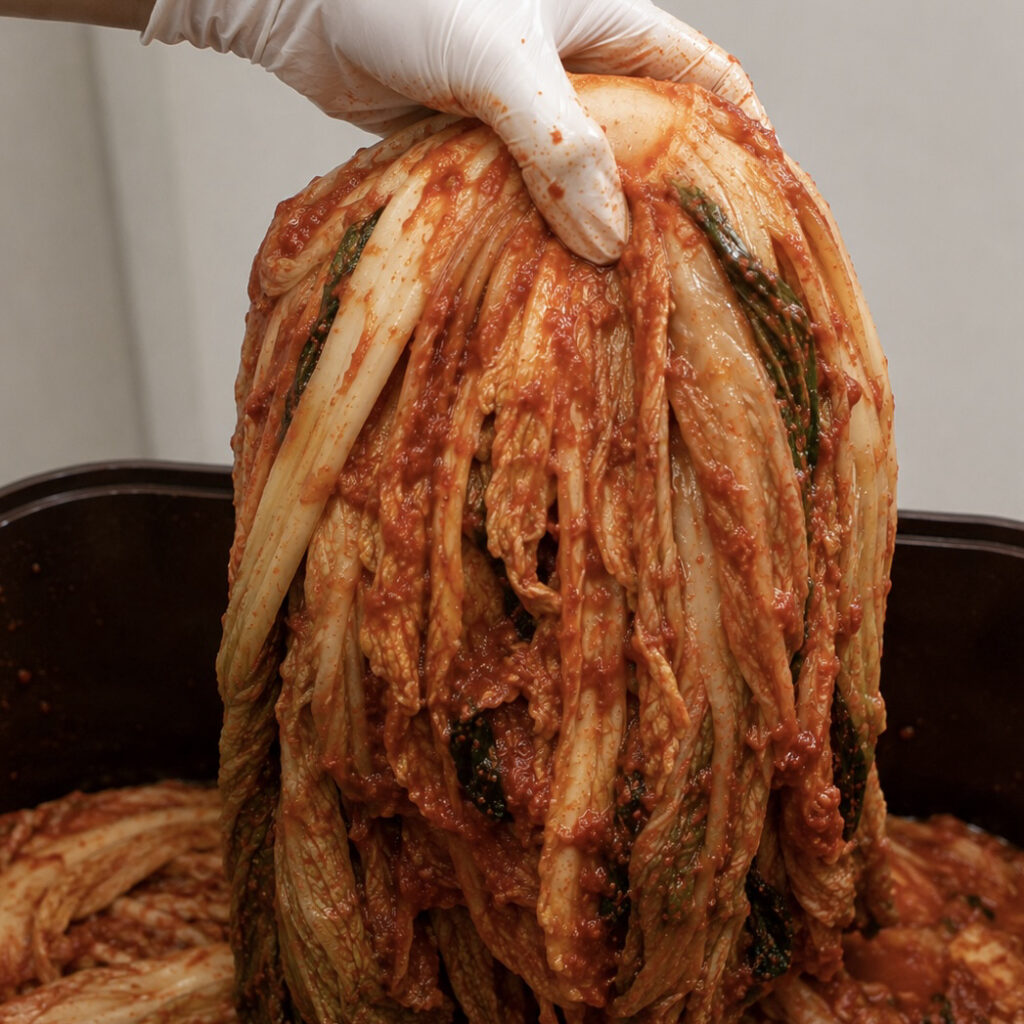
How to Store Kimchi Properly
The good news is that kimchi is easy to store. A few simple habits can help it stay fresh and flavorful for months.
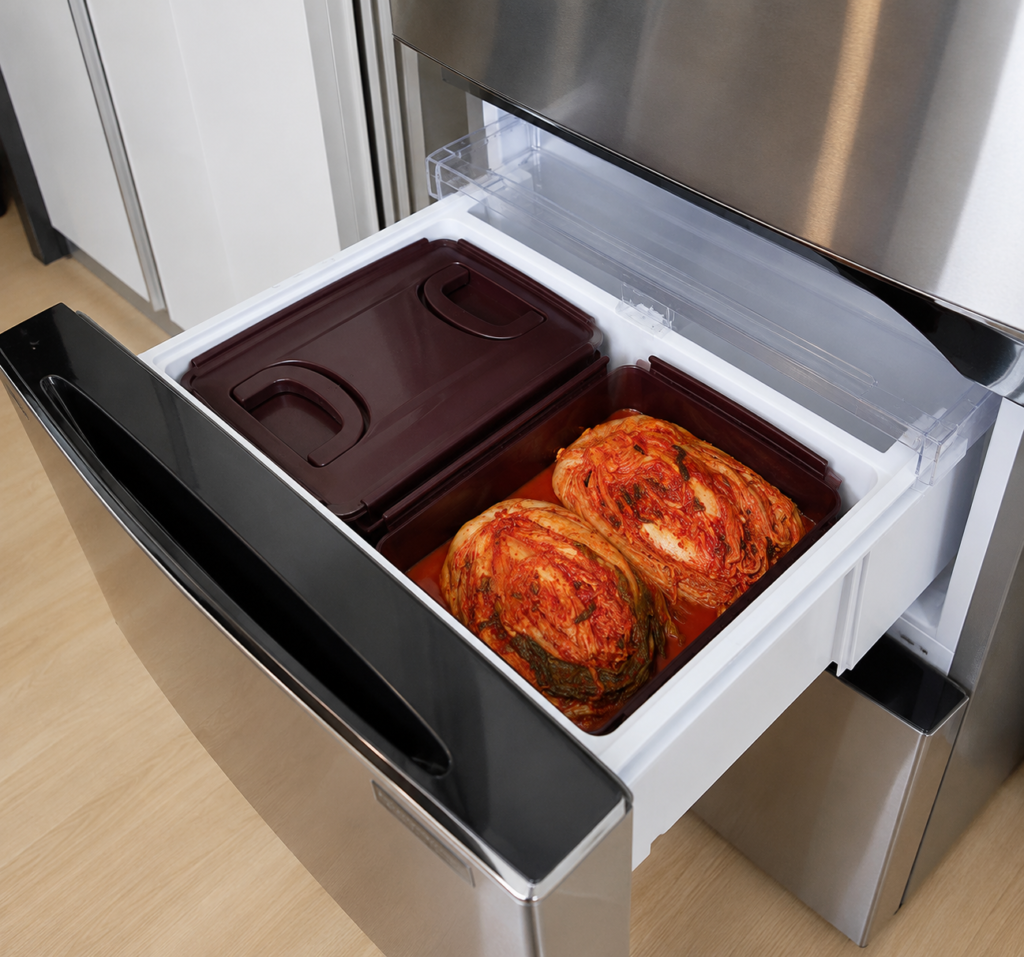
Always keep kimchi in the refrigerator. While it’s fine to leave it at room temperature for a short time to start fermentation, refrigerate it once it reaches your preferred level of sourness.
If you’re using a regular refrigerator, store the container toward the back rather than in the door. The temperature is more consistent there, which helps slow fermentation.
Keep the kimchi covered with its brine whenever possible. After taking some out, gently press the remaining kimchi back into the liquid, seal the container tightly, and put it back in the fridge. Always use clean utensils to help prevent unwanted bacteria from getting into the container.
Fun fact: Many households in Korea have a separate refrigerator just for kimchi. It’s kept at a colder, more stable temperature than a regular refrigerator, which helps slow fermentation and keeps kimchi tasting fresh for longer.
Stored properly, kimchi can last for months—and many people think it actually tastes better as it continues to ferment.
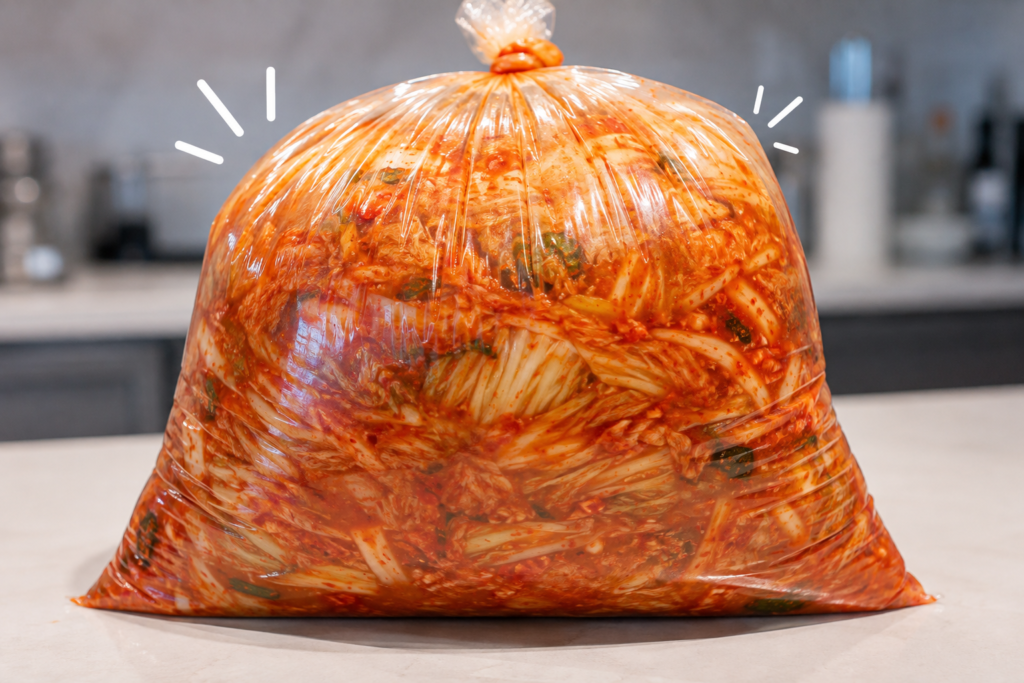
Why does my kimchi container puff up?
This can happen because kimchi continues to ferment after it’s packaged. As it ferments, it naturally produces carbon dioxide. When that gas builds up inside a tightly sealed container, the container can puff up or make a little “psst” when you open it.
This is especially common with freshly made kimchi or kimchi that has been kept somewhere warm before you bought it. Once you bring it home, keep it refrigerated to slow down the fermentation.
If the container is very swollen, don’t shake it or open it quickly. Place it in the sink, keep your face away from the opening, and slowly loosen the lid to release the pressure. If it’s in a plastic pouch, carefully open a small corner over the sink instead. Some kimchi juice may bubble up, so be prepared for a little mess.
After opening, gently press the kimchi down so it stays covered with its juices, then close the container and keep it refrigerated.
So if your kimchi container suddenly looks unusually puffy, don’t panic. It’s often just a sign that the kimchi is still actively fermenting.
Frequently Asked Questions
Q. Can you eat expired kimchi?
A. Often, yes. Kimchi is a fermented food, so the best-by date isn’t always the point when it becomes unsafe to eat. If it has been refrigerated properly and doesn’t have mold, a rotten smell, or an unusually slimy texture, it’s usually still fine. When in doubt, trust your senses.
Q. Can kimchi go bad in the refrigerator?
A. Yes, but it’s less common than people think. Kimchi usually keeps fermenting and becomes more sour instead of spoiling. As long as it has been stored properly, sourness alone doesn’t mean it’s gone bad. Throw it away only if you notice signs of spoilage, such as mold, a rotten smell, or an unusually slimy texture.
Q. Why does kimchi become fizzy?
A. A little fizz is completely normal. It’s a natural part of fermentation as gases build up inside the container. If your kimchi smells fresh and doesn’t have mold, a little bubbling is usually nothing to worry about.
Q. Can I eat kimchi every day?
A. For most people, yes. Kimchi is rich in probiotics, vitamins, and fiber, making it a healthy addition to your diet. Since it’s relatively high in sodium, it’s best enjoyed in moderation as part of a balanced diet.
Q. Can you freeze kimchi?
A. Technically, yes—but most Koreans don’t freeze kimchi. Kimchi already lasts a long time in the refrigerator, so there’s usually no need. Every winter, many Korean families make kimjang, the traditional practice of preparing large batches of kimchi to enjoy throughout the year. The kimchi is typically stored in a kimchi refrigerator, where it continues to ferment slowly. It’s common for well-made kimchi to be enjoyed for many months, and some people even keep it for over a year if it has been stored properly and still smells and tastes good. If you do freeze kimchi, expect a softer texture after thawing, so it’s best used in cooked dishes like kimchi stew or fried rice rather than served as a side dish.
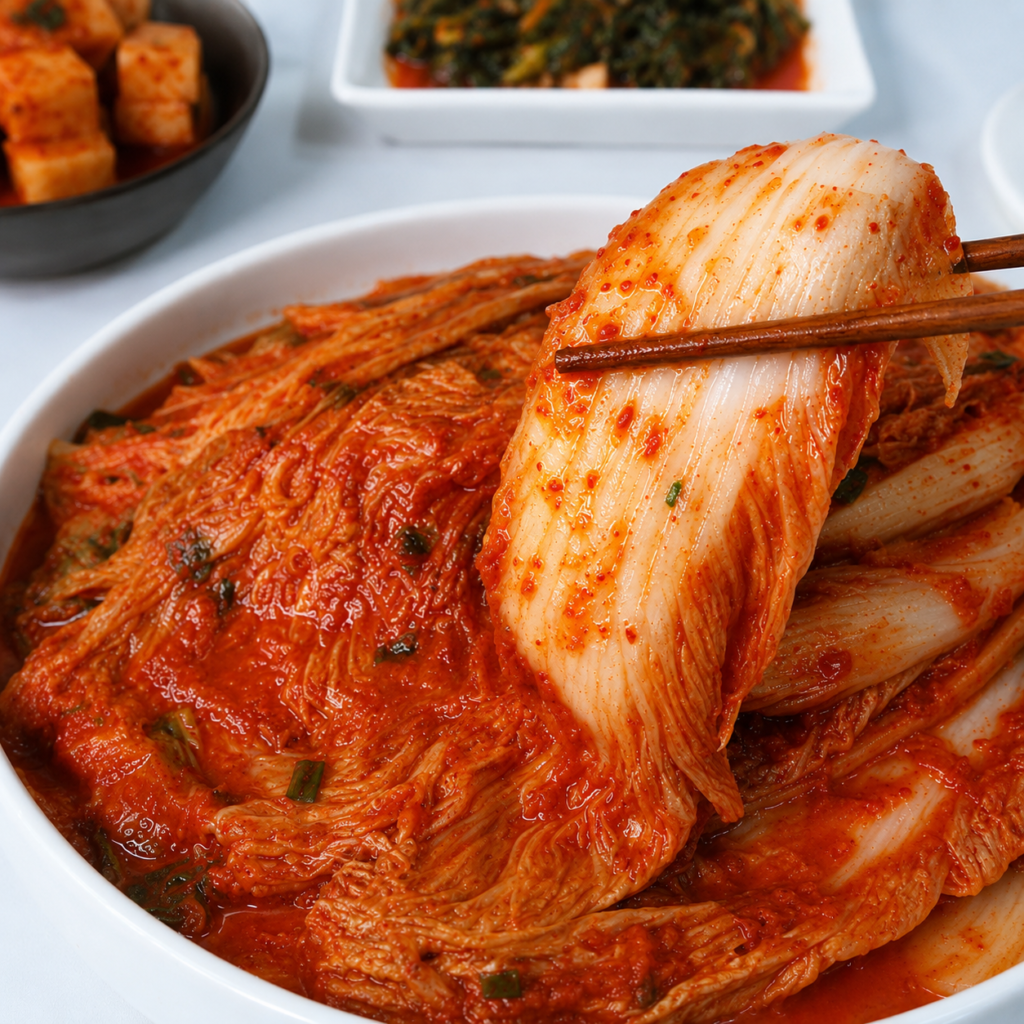
Kimchi is one of those foods that actually changes over time, and that’s part of what makes it so special. Whether you enjoy it fresh and crunchy or deeply fermented and tangy, knowing how to store it properly will help you get the most out of every jar.
If you’re ever unsure whether your kimchi is still good, remember that sourness is usually a sign of fermentation—not spoilage. As long as it has been stored properly and doesn’t show signs of going bad, you can continue to enjoy it in countless ways, from serving it as a side dish to cooking it into soups, fried rice, and pancakes.
👉👉 You Might Also Like

Hi, I’m Vella, a Korean home cook sharing easy Korean recipes for everyday cooking. I focus on simple recipes, practical tips, and ingredients that are easy to find outside Korea.