
🥢 Introduction
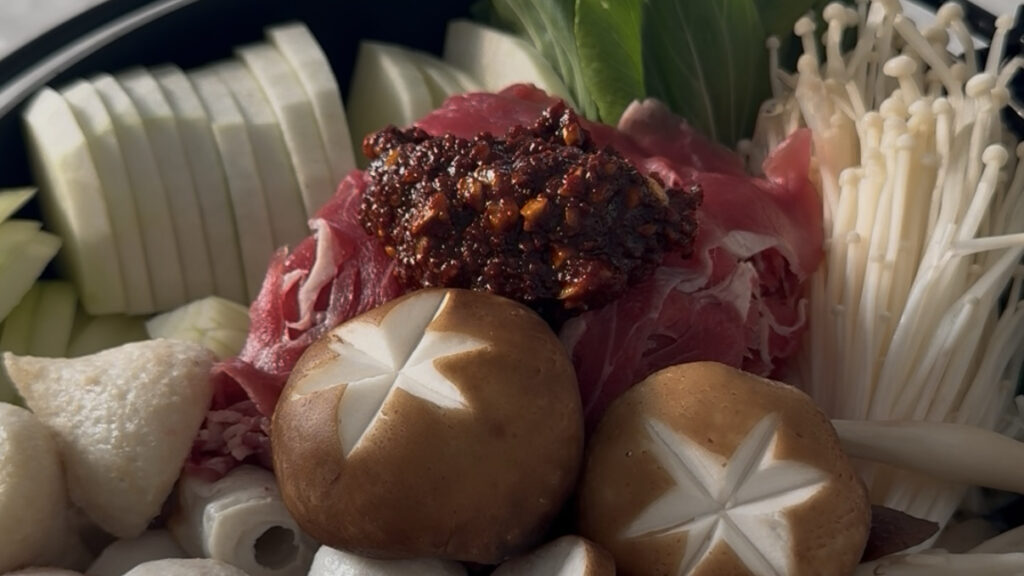
When people hear “shabu shabu,” they usually think of a light Japanese hot pot. But in Korea, there’s also a spicy version that’s just as popular. Instead of a clear broth, it’s made with a rich red broth that’s packed with flavor from Korean chili, garlic, mushrooms, and vegetables.
Growing up in Korea, spicy shabu shabu was one of those meals that always felt special. My family didn’t make it every week, but whenever we did, everyone naturally gathered around the table. We would slowly cook beef, mushrooms, and vegetables together, chatting while the broth became richer with every ingredient we added. It wasn’t just about the food—it was about enjoying the meal together.
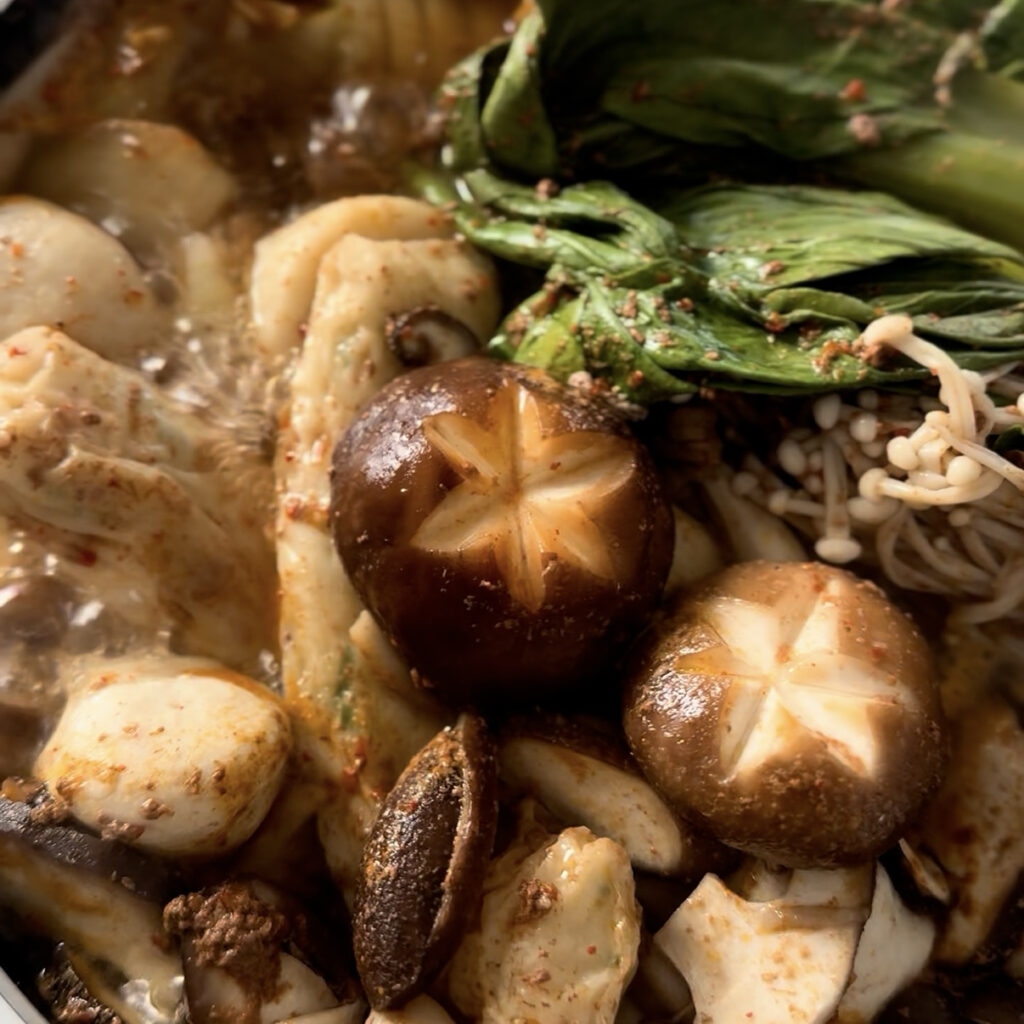
That’s exactly why I love making this recipe at home. It’s simple enough for a weeknight dinner, but it also feels special when friends or family come over. You don’t need any fancy ingredients, and you can easily swap in whatever vegetables or mushrooms you have on hand.
If you’ve never tried Korean-style spicy shabu shabu before, I hope this recipe inspires you to make it at home. It’s warm, comforting, and one of my favorite Korean meals to share with the people I love.
🛒Ingredients
For the Hot Pot
✓ 300 g (10.5 oz) thinly sliced beef – Thinly sliced beef cooks quickly and adds rich flavor to the broth.
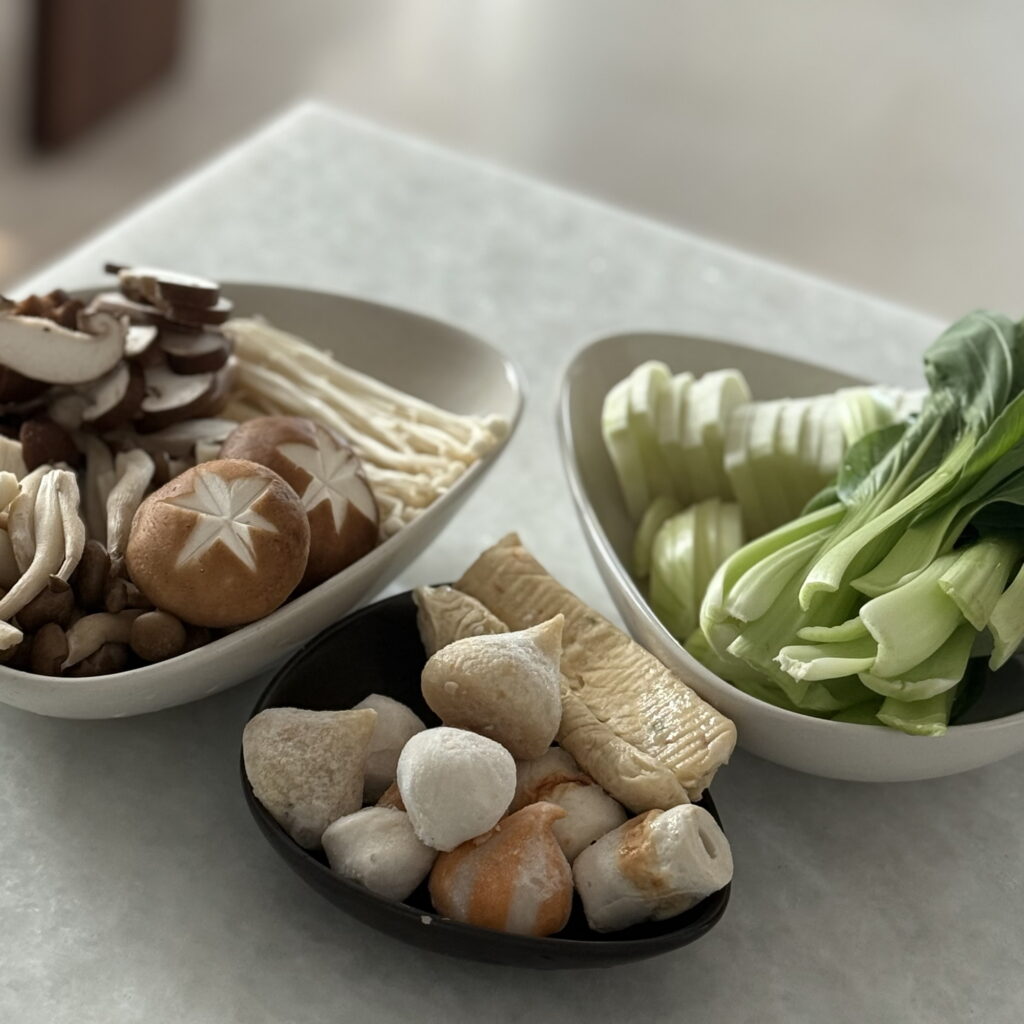
✓ 500–600 g (1–1.3 lb) mixed mushrooms – I used enoki, shiitake, and brown shimeji. Mushrooms are the star of this dish and give the broth its rich, savory flavor.
✓ 300–400 g (10–14 oz) leafy vegetables – I used bok choy, but napa cabbage, spinach, chrysanthemum greens, or any leafy vegetables work well. Add more if you like.
✓ 1 onion, sliced – Adds natural sweetness and depth to the broth as it simmers.
✓ 100–150 g (3.5–5 oz) Korean radish (or daikon), sliced – Gives the broth a cleaner, slightly sweet flavor.
✓ 6–8 fish balls (optional) – Adds extra texture and makes the hot pot more filling, but you can skip them if you prefer.
For the Spicy Broth
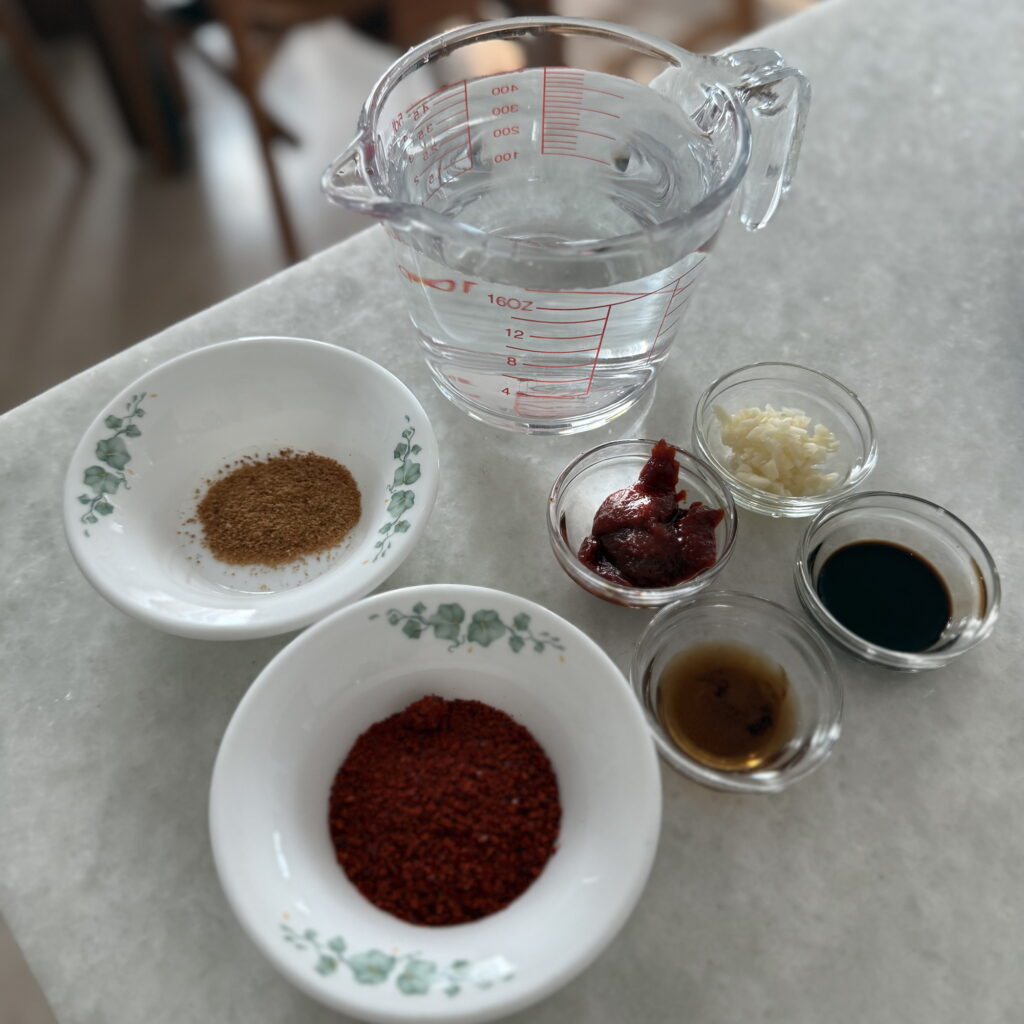
✓ 800 ml water – The base of the broth.
✓ 1 tbsp tuna sauce – Adds a deep, savory umami flavor that makes the broth taste like it has simmered for hours.
✓ 1 tbsp beef bouillon powder – Creates a rich, beefy broth without making homemade stock.
✓ 1 tbsp gochujang (Korean chili paste) – Adds body, mild sweetness, and authentic Korean flavor.
✓ 2.5 tbsp gochugaru (Korean chili flakes) – Gives the broth its signature spicy kick and vibrant red color.
✓ 1 tbsp soup soy sauce (guk-ganjang) – Adds authentic Korean flavor and enhances the broth’s savory depth.
✓ 1 tbsp minced garlic – Adds a bold, aromatic Korean flavor.
✓ Black pepper, to taste – Adds a subtle hint of warmth and balances the overall flavor.
🍳 How to Make Spicy Korean Shabu Shabu
Step 1. Arrange the ingredients.
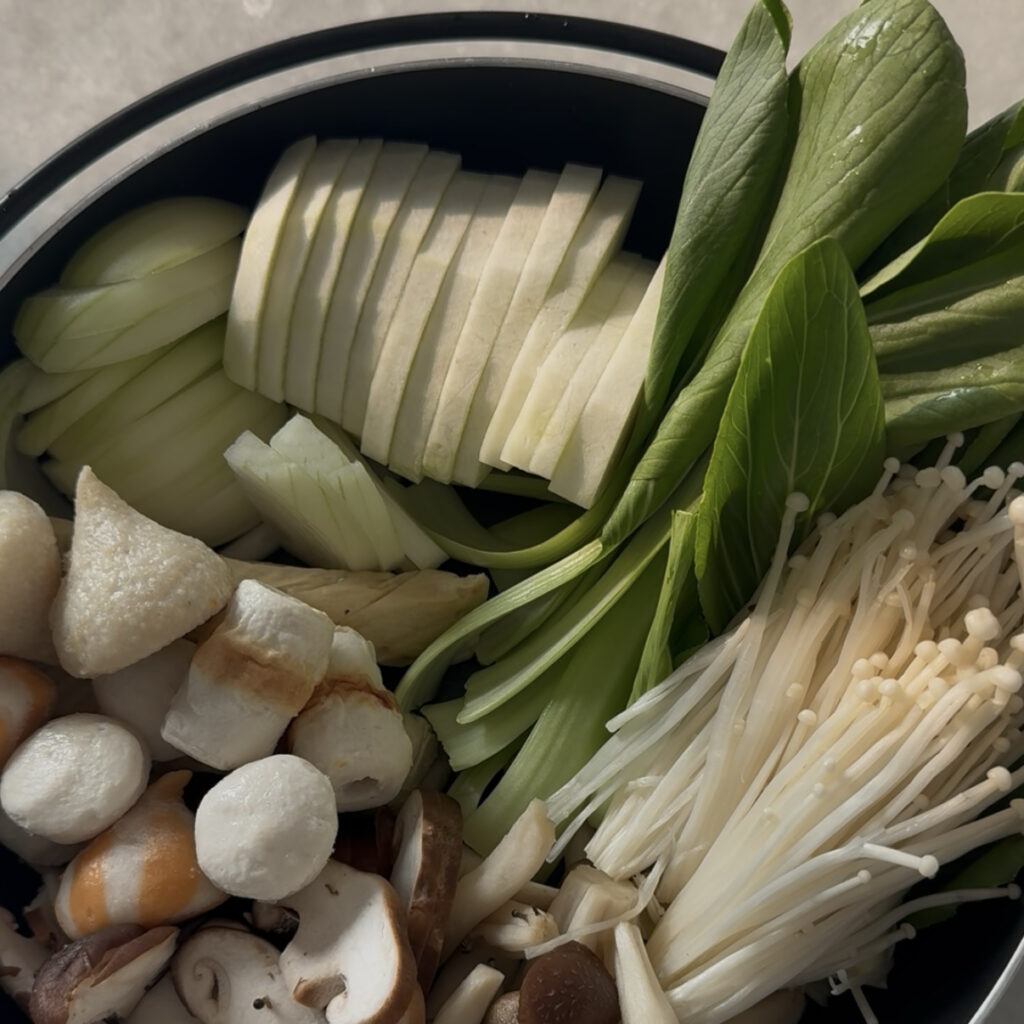
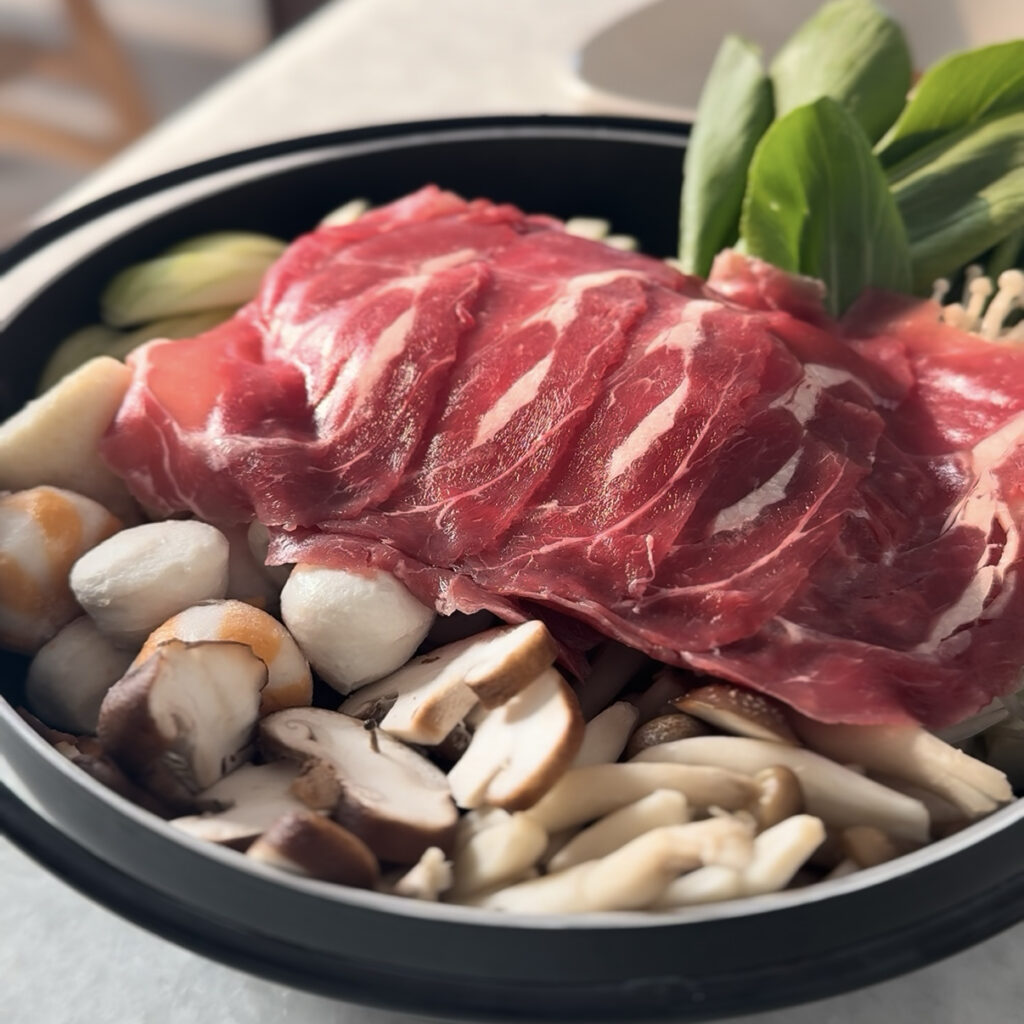
Arrange the sliced onion, Korean radish, mushrooms, leafy vegetables, fish balls (if using), and thinly sliced beef in a large shallow pot. I like to group similar ingredients together because it makes the hot pot look more colorful and appetizing, but there’s no right or wrong way to arrange them.
Step 2. Add the seasoning paste.
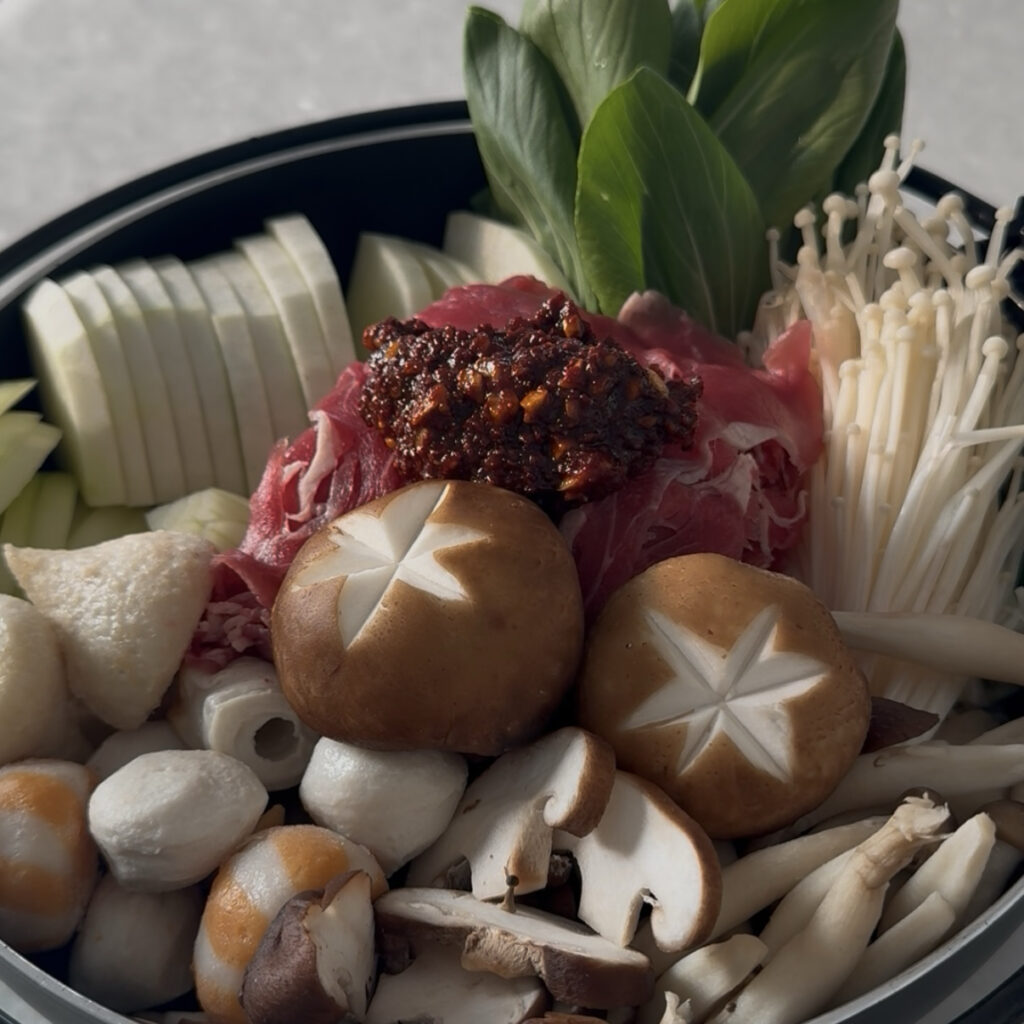
In a small bowl, mix the gochujang, gochugaru, tuna sauce, beef bouillon powder, soup soy sauce, minced garlic, and black pepper until well combined. Spoon the seasoning paste over the center of the ingredients so it will slowly melt into the broth as it cooks.
Step 3. Add the water.
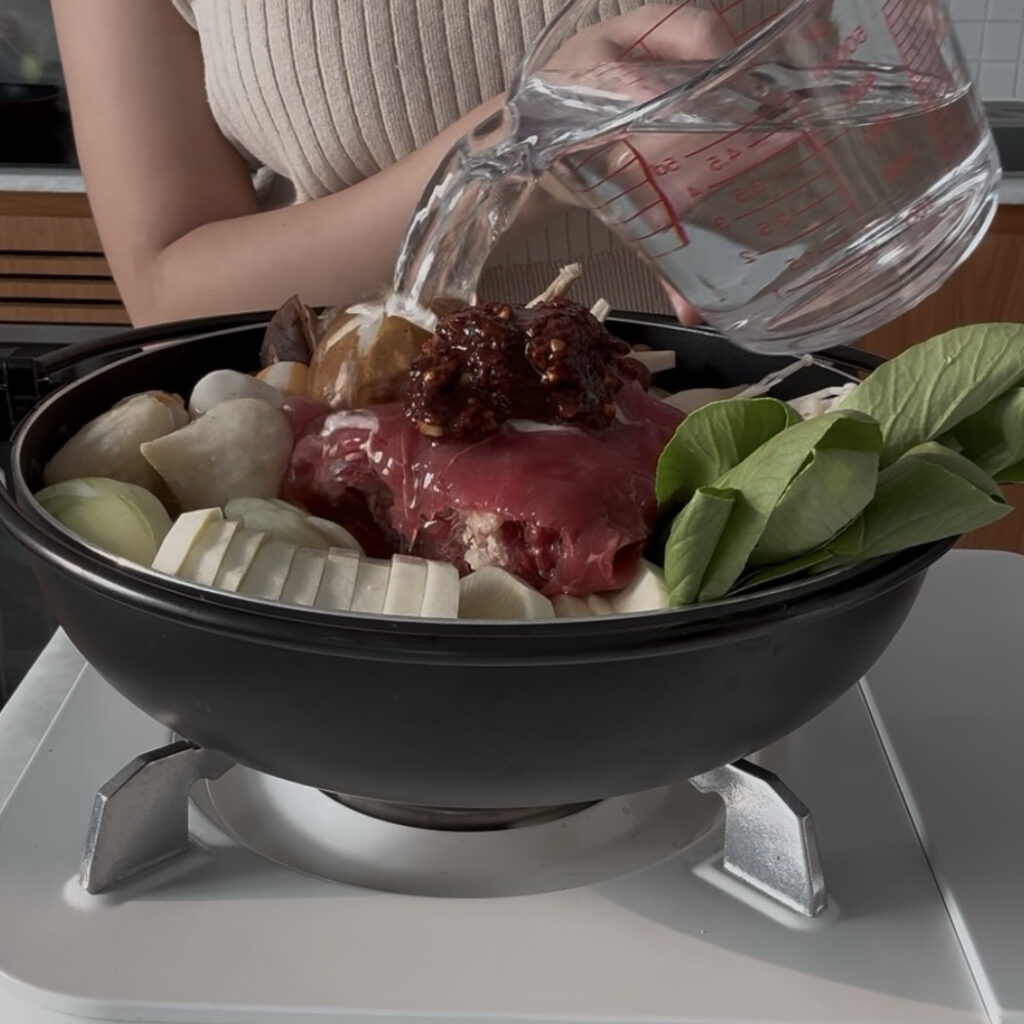
Slowly pour the water into the pot until most of the ingredients are covered. Don’t worry if some of the vegetables are sticking out. They’ll soften quickly as they cook.
step 4. Bring everything to a boil.
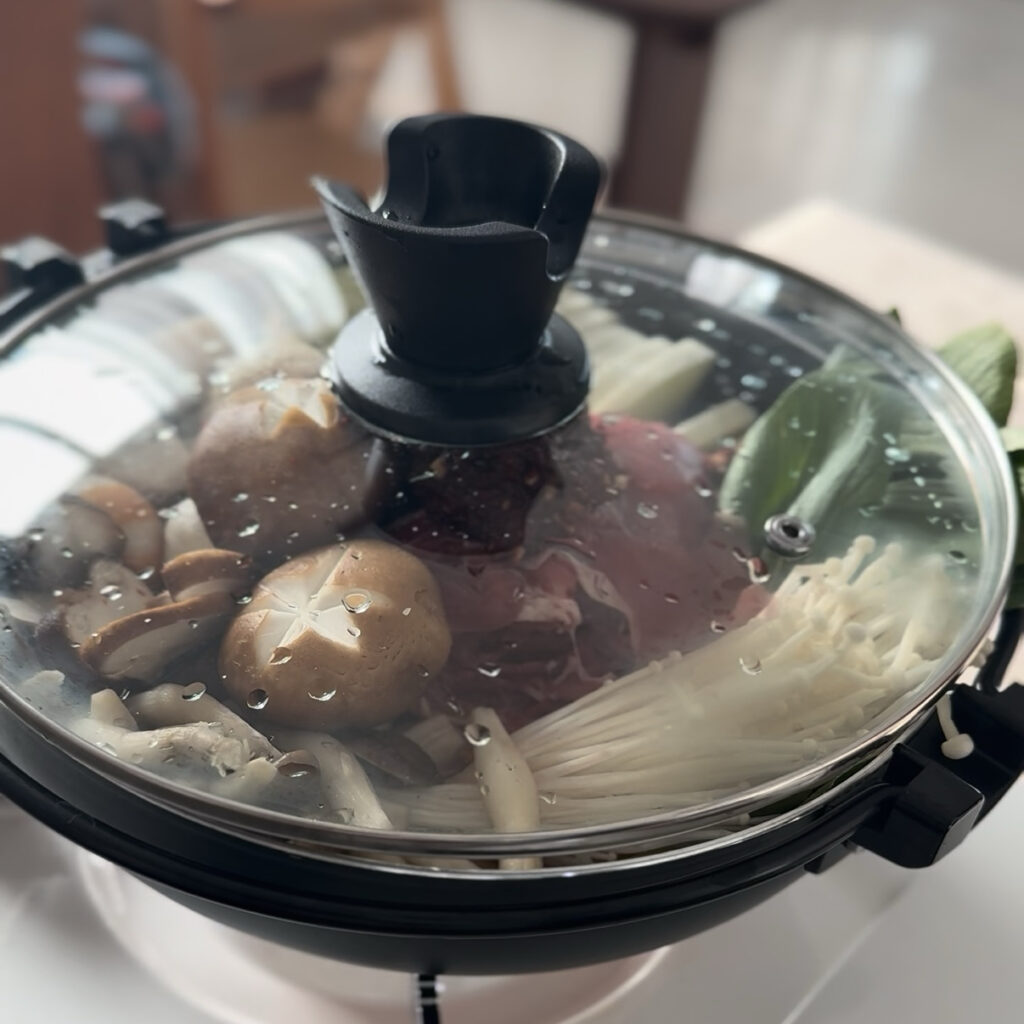
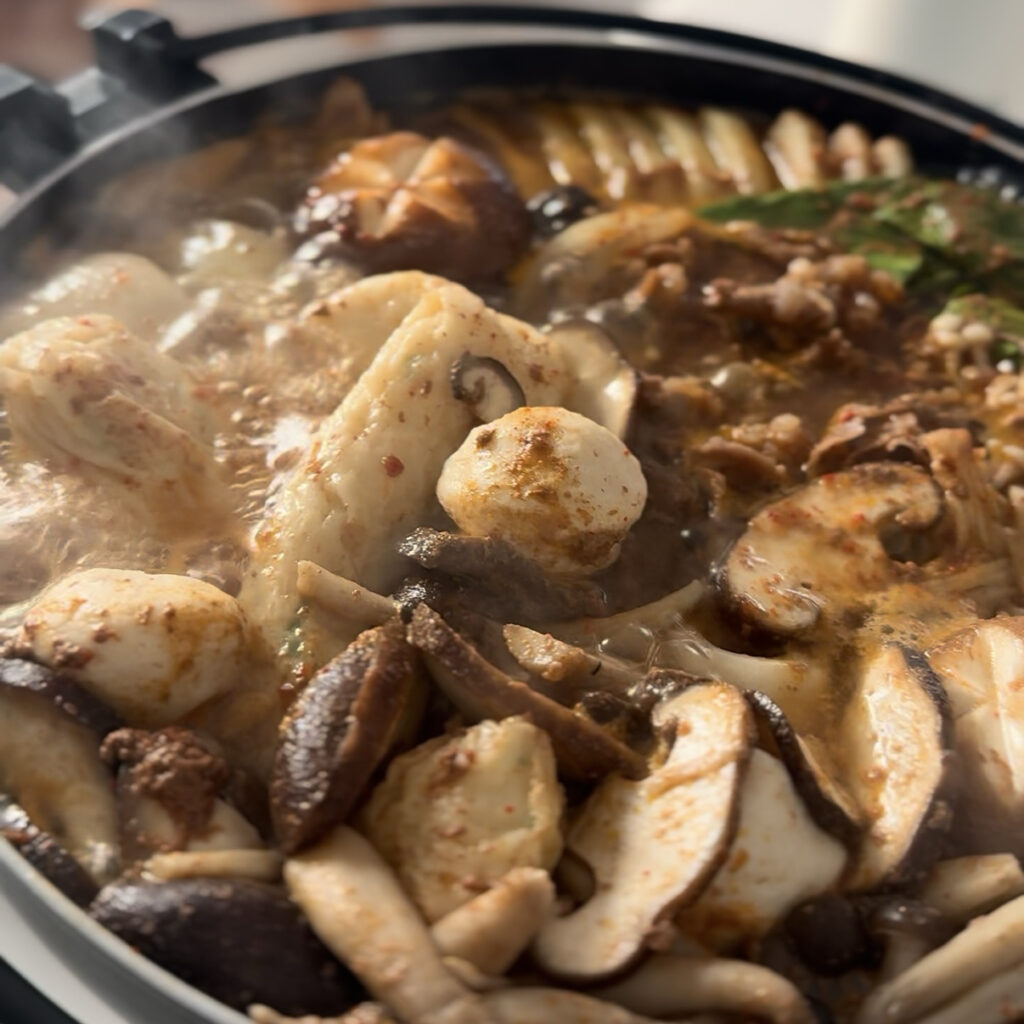
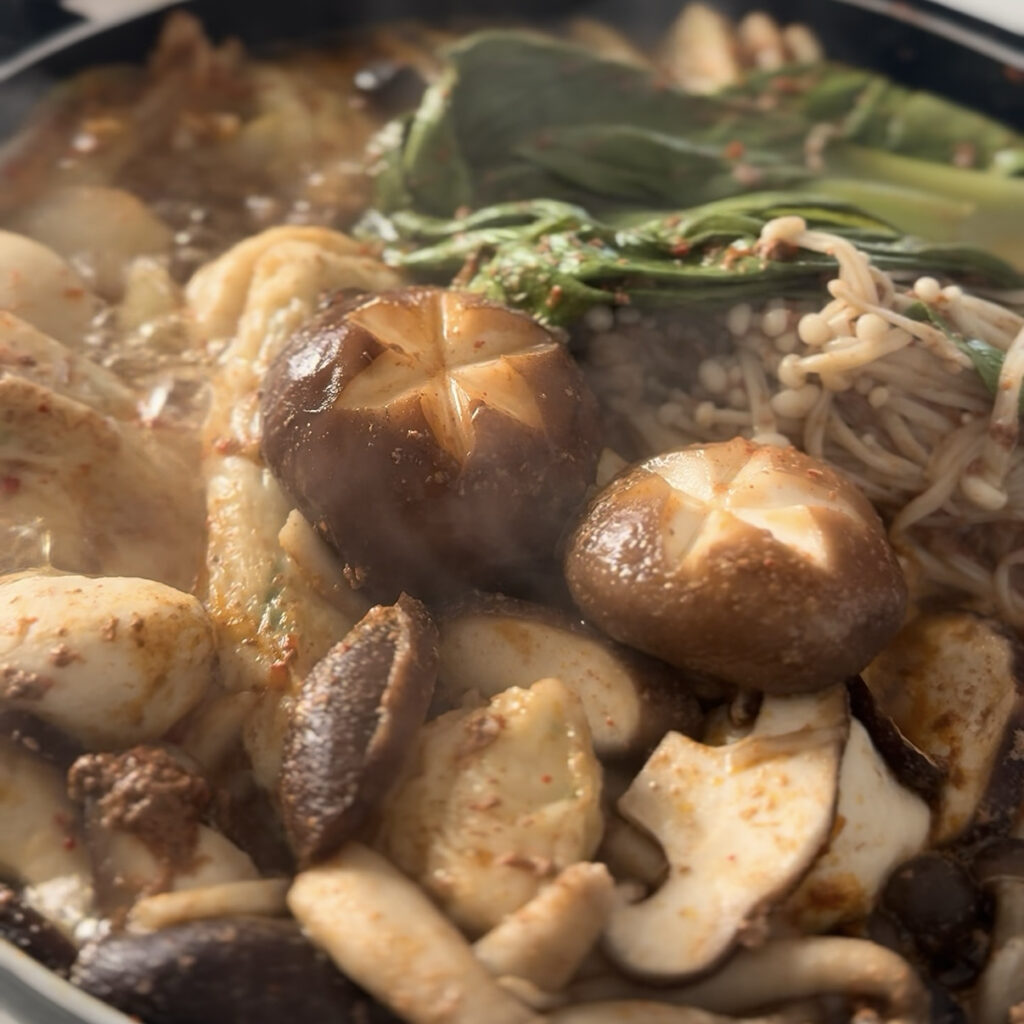
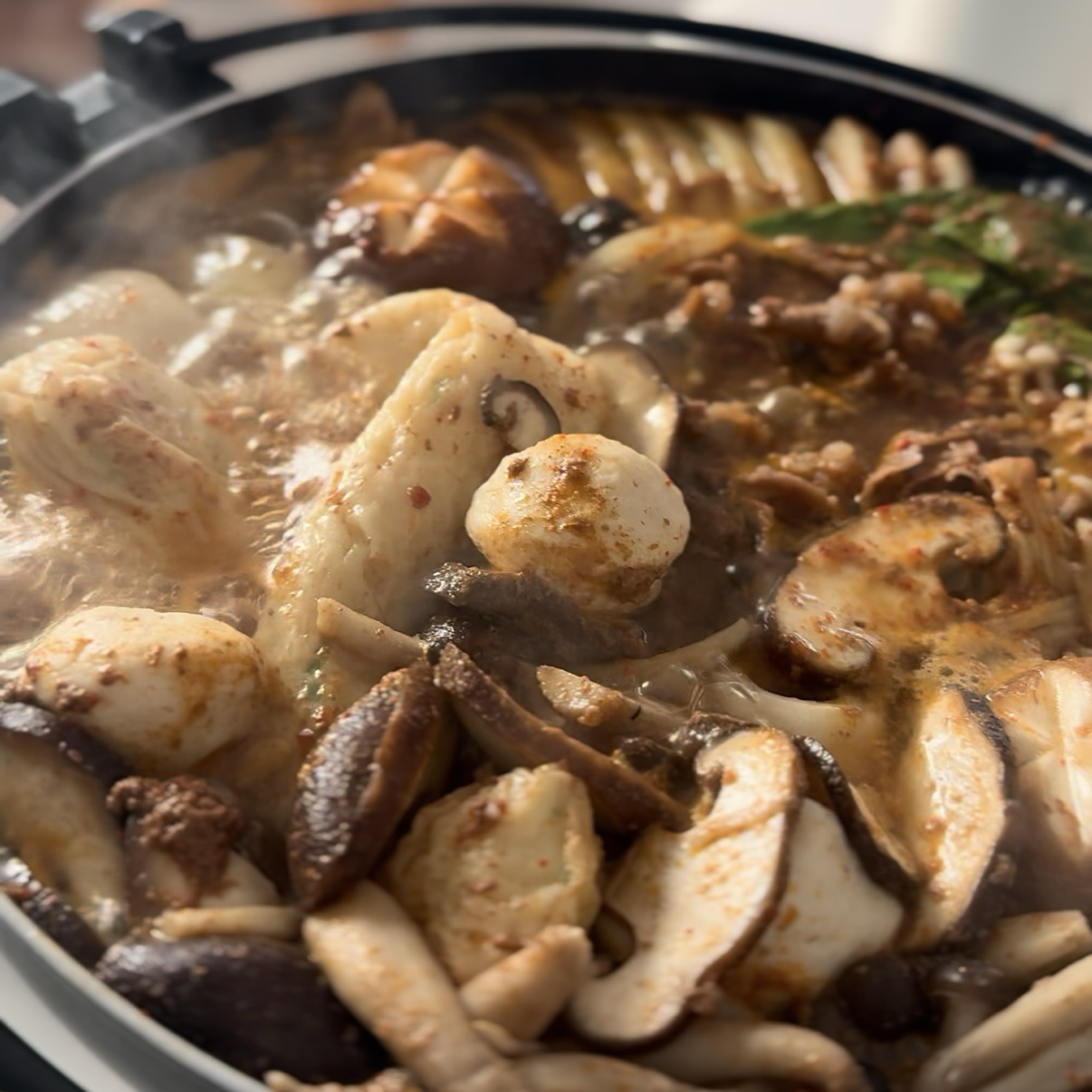
Place the pot over medium heat and bring it to a gentle boil. As the seasoning paste melts into the broth, the mushrooms, onion, and radish will release their natural flavor, creating a rich and savory broth. Once the beef is cooked and the vegetables are tender, it’s ready to enjoy.
step 5. Serve and enjoy.
Serve the hot pot while it’s still bubbling. The broth becomes even more delicious as it continues to simmer, so take your time and enjoy every bite.
🍽️ Serving Tips
✓ This hot pot tastes best when served bubbling hot, so enjoy it as soon as the beef is cooked and the vegetables are tender.
✓ Feel free to add more mushrooms or vegetables if you like. Just keep in mind that adding a lot of extra vegetables may slightly dilute the broth. If that happens, simply stir in a little more soup soy sauce, tuna sauce, or gochugaru to adjust the flavor.
✓ The broth becomes even more flavorful as it simmers, thanks to the mushrooms, onion, and radish releasing their natural sweetness and umami.
✓ Leftover broth can be stored in the refrigerator for up to 2 days. Reheat gently and add fresh vegetables or mushrooms for another delicious meal.
❓ FAQ
Q. Can I make this hot pot less spicy?
A. Yes. Simply use less gochugaru or gochujang. You can always add more later if you’d like a little extra heat.
Q. What vegetables can I use?
A. I used bok choy, but napa cabbage, spinach, chrysanthemum greens, and other leafy vegetables are all great choices. Use what you enjoy or what you already have in your refrigerator.
Q. My broth tastes too mild. What should I do?
A. If you add a lot of vegetables or mushrooms, they’ll naturally release water as they cook, which can make the broth taste milder. Simply add a little more soup soy sauce, tuna sauce, or gochugaru until the flavor is just right.
Q. Can I use regular soy sauce instead of soup soy sauce?
A. Yes. Soup soy sauce gives the broth a more traditional Korean flavor, but regular soy sauce works well if that’s what you have. The broth may be slightly darker and a little less savory.
Q. Can I use frozen vegetables?
A. Fresh vegetables are best, but frozen vegetables can work if that’s what you have. Just keep in mind they may release a little more water into the broth.
Q. Why is my broth not as spicy as I expected?
A. The broth naturally becomes milder as the vegetables release their juices. If you’d like a stronger flavor, simply stir in a little more gochugaru or soup soy sauce near the end of cooking.
👉👉 You Might Also Like
🇰🇷 First time cooking Korean food?
Before you start, check out these 8 essential Korean ingredients that I use in almost every recipe.
👉 Read: 8 Essential Korean Ingredients Every Beginner Needs

Easy Spicy Korean Shabu Shabu
Ingredients
Method
- Arrange the beef, mushrooms, vegetables, onion, radish, and fish balls (if using) in a large pot.
- Mix all the broth ingredients in a small bowl to make the seasoning paste.
- Spoon the seasoning paste over the ingredients and pour in the water.
- Bring to a boil over medium heat, stirring until the seasoning dissolves.
- Cook for 10–15 minutes, or until the beef and vegetables are tender. Serve hot.

Hi, I’m Vella, a Korean home cook sharing easy Korean recipes for everyday cooking. I focus on simple recipes, practical tips, and ingredients that are easy to find outside Korea.