
🥢 Introduction
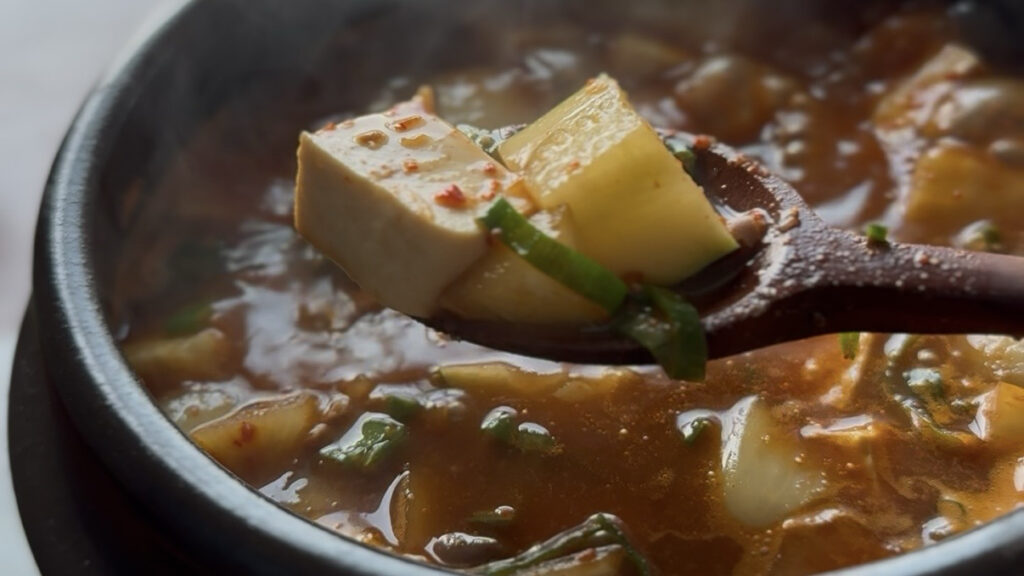
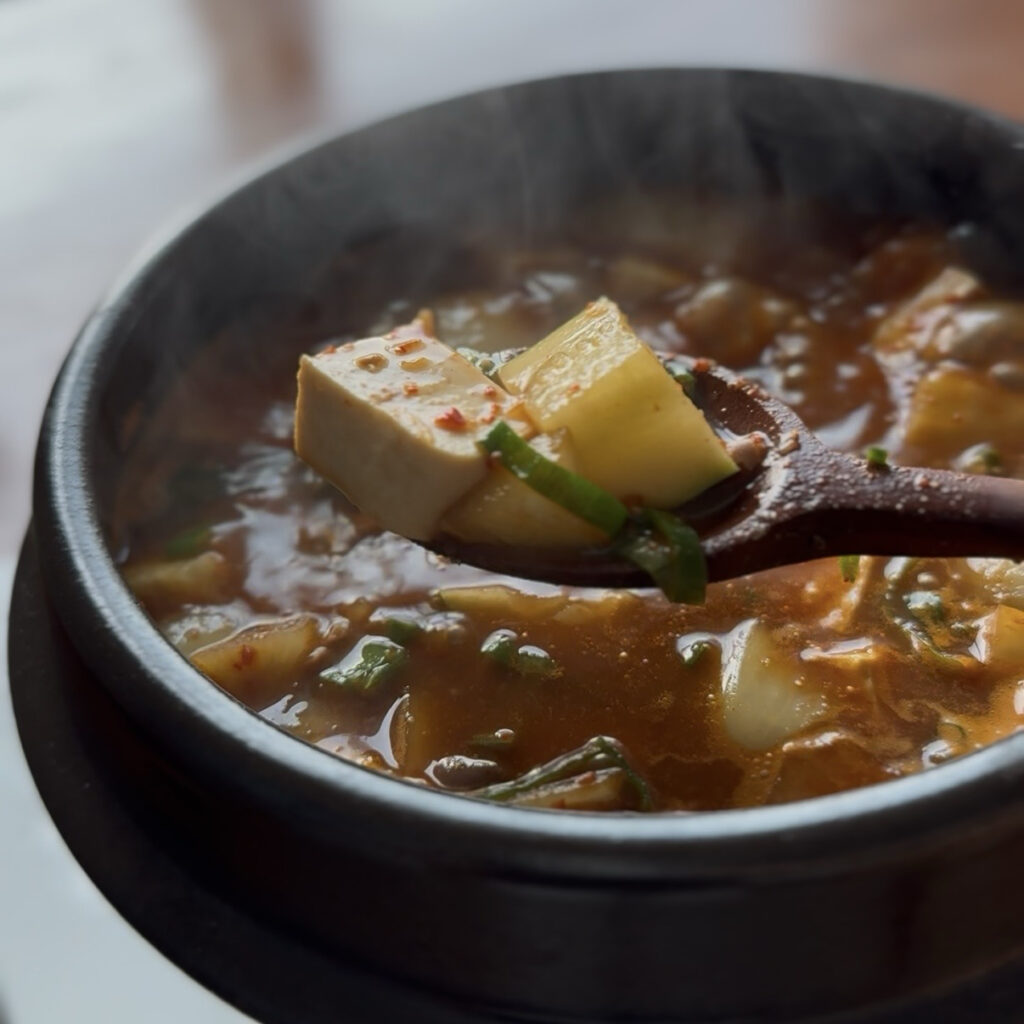
Doenjang jjigae is one of those Korean dishes I make whenever I want something warm and comforting. I especially love the version served at Korean BBQ restaurants. It’s usually bubbling hot, full of vegetables and tofu, and so good with a bowl of rice.
I wanted to make a simple version at home using ingredients that are easy to find. This recipe uses doenjang and a little ssamjang, which gives the broth that deeper, savory flavor I was looking for. I also add potatoes, zucchini, onion, and tofu, so it’s filling enough to enjoy with just rice.
The part I don’t skip is stir-frying the doenjang and ssamjang briefly in a little oil before adding the water. It might seem like a small step, but it makes the stew taste much richer.
If you love the doenjang jjigae you get at Korean BBQ restaurants, this is an easy version to try at home. It’s simple, hearty, and honestly one of my favorite Korean comfort foods.
🛒Ingredients
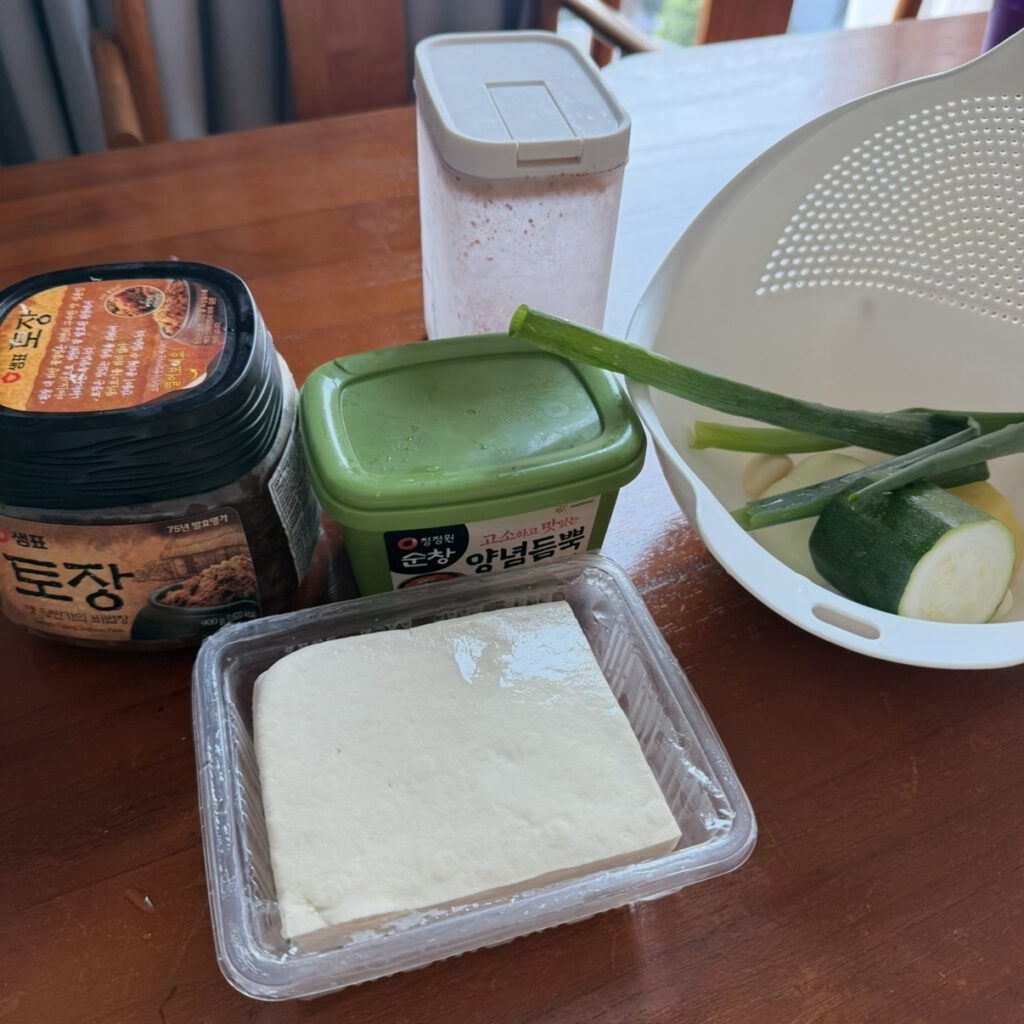
✓ 1 tsp cooking oil
✓ 2 tbsp Korean soybean paste (doenjang)
✓ 1 tbsp Korean spicy soybean paste (ssamjang)
✓ 1 tbsp Korean red pepper flakes (gochugaru)
✓ 1/2 tbsp minced garlic
✓ 1 small potato, diced
✓ 1/2 onion, chopped
✓ 1/3 zucchini, sliced
✓ 1/2 block tofu, cut into bite-sized pieces
✓ 1/2 green onion, sliced
✓ 400ml water
🍳 How to Make Korean BBQ-Style Doenjang Jjigae
Step 1. Stir-fry the doenjang and ssamjang
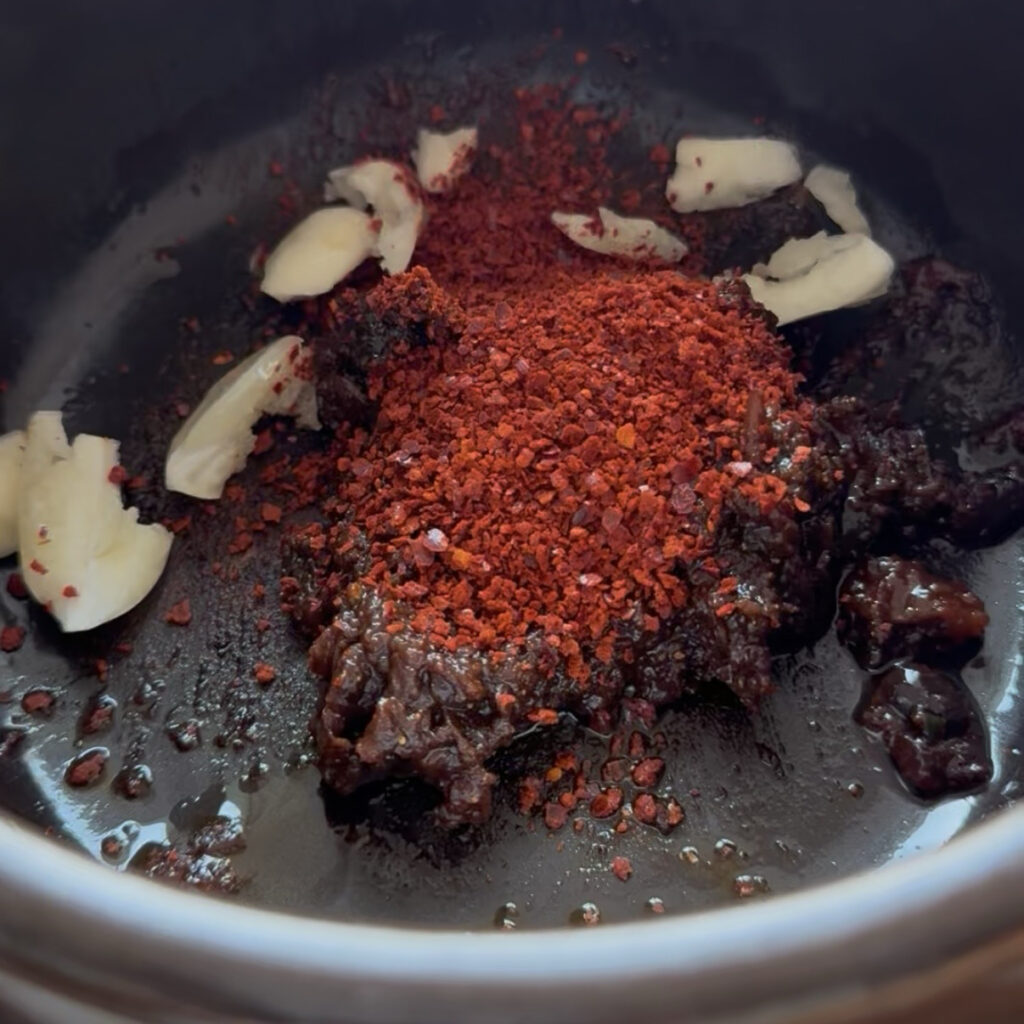
Heat 1 teaspoon of cooking oil in a pot over low heat. Add the doenjang and ssamjang and stir for about 30 seconds. You’ll notice the pastes become a little more fragrant as they warm up.
Add the gochugaru and minced garlic and stir for just a few seconds. Keep the heat low so the garlic and gochugaru don’t burn.
Step 2. Add the water
Pour in 400 ml (1 2/3 cups) of water and stir well to mix the pastes into the broth. Increase the heat and bring the broth to a boil.
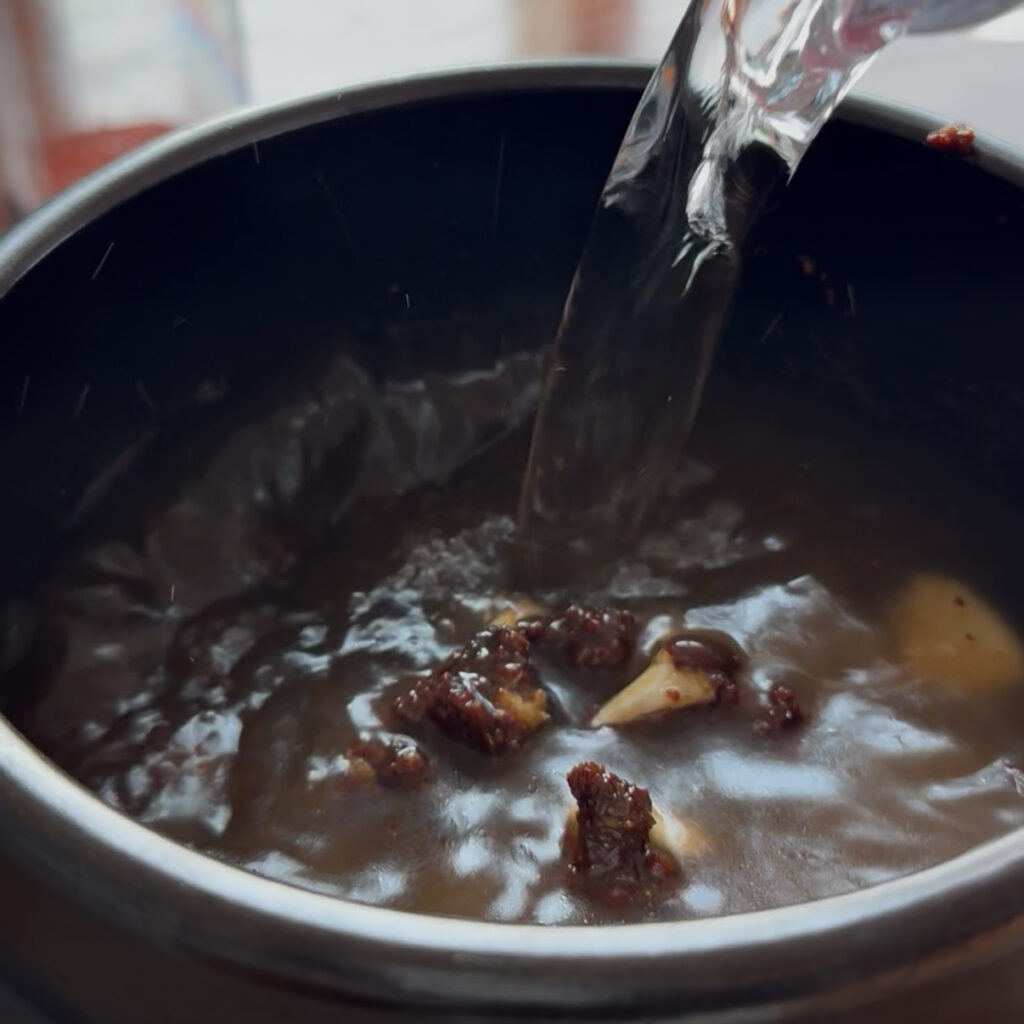
Step 3. Add the ingredients
When the broth starts boiling, add the diced potato, onion, zucchini, and tofu at the same time. Give everything a to gentle stir and bring it back to a boil.
Let the stew simmer for about 7–8 minutes, or until the potato is tender. I usually check the potato with a fork since it takes the longest to cook.
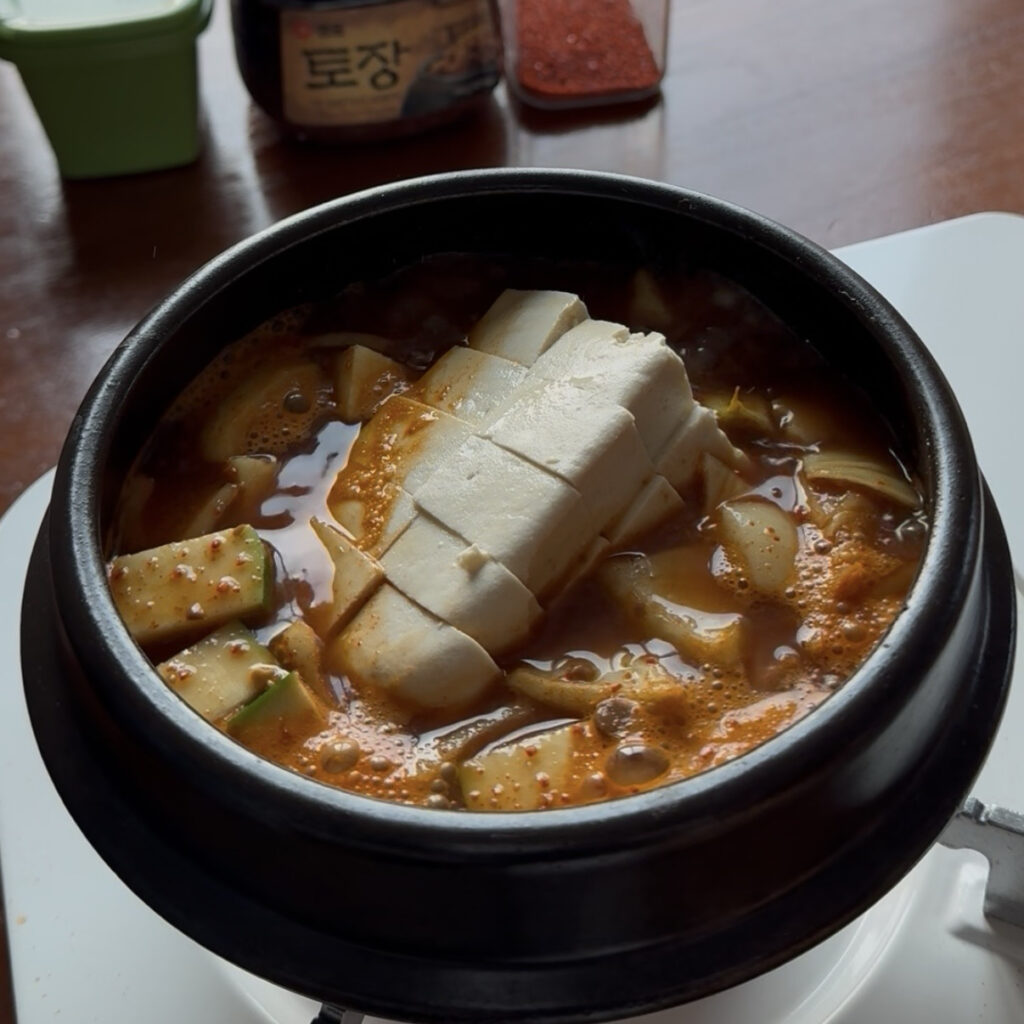
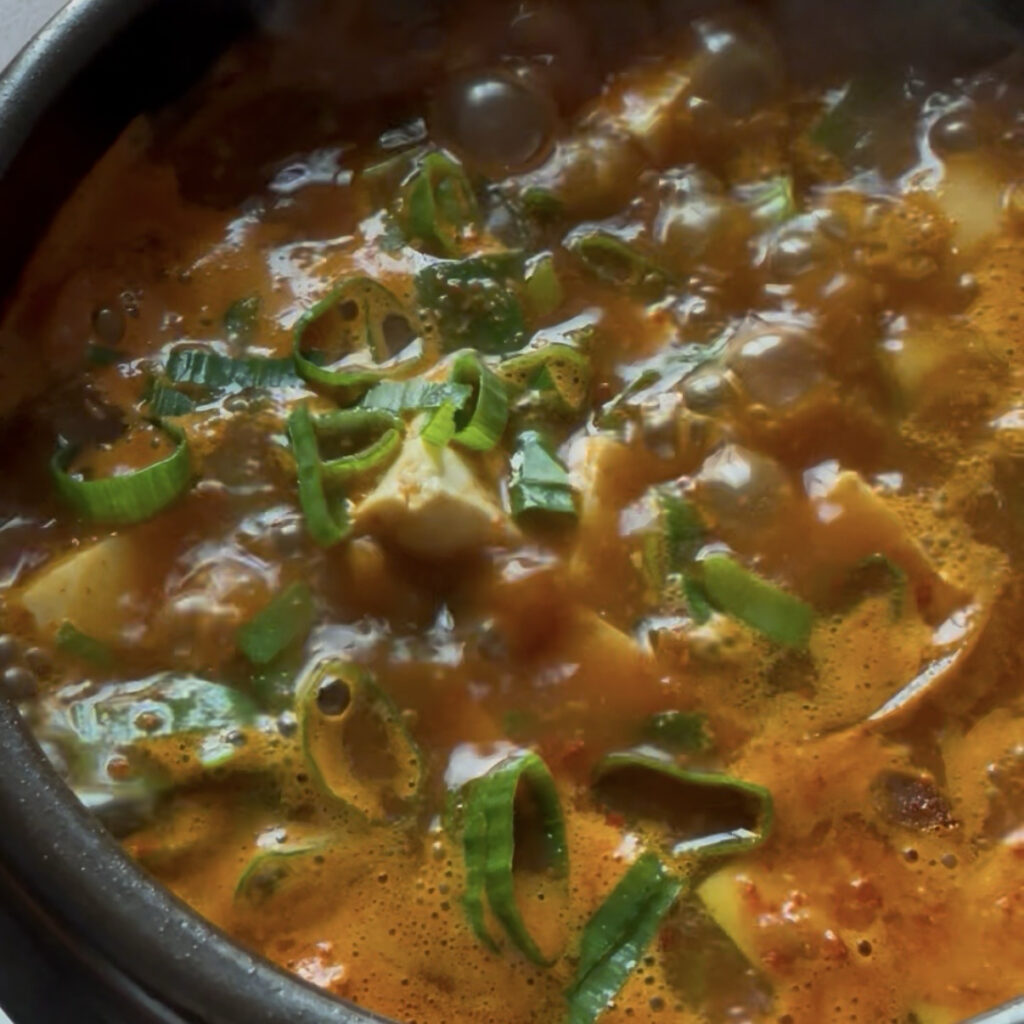
step 4. Add the green onion
Add the sliced green onion during the last minute of cooking. Once the vegetables are tender and the broth is bubbling, turn off the heat.
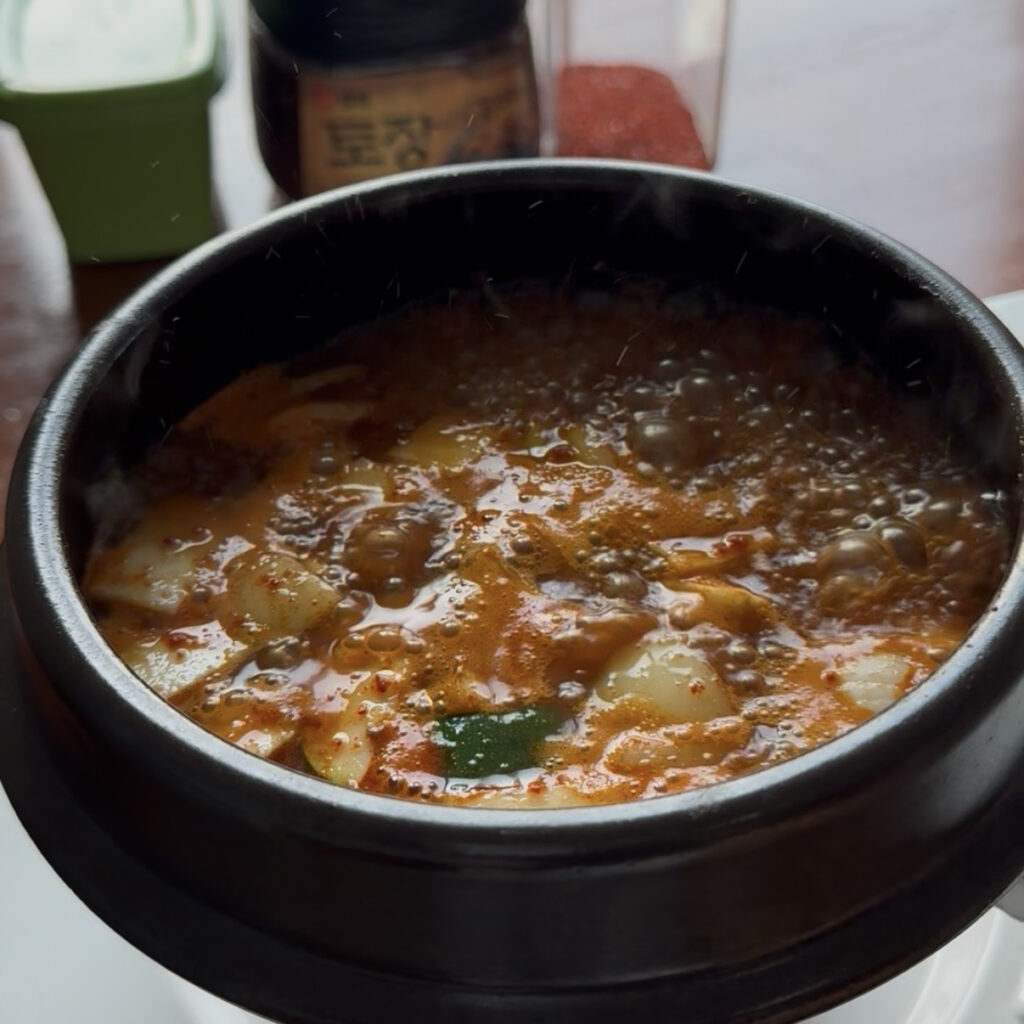
Your doenjang jjigae is ready to serve.
🍽️ Serving Tips
I always serve doenjang jjigae with a bowl of hot steamed rice. For me, that’s the best way to eat it. I usually put a little of the stew and some of the vegetables over my rice and eat them together.
If I’m making Korean BBQ at home, I’ll serve the jjigae with grilled meat and kimchi on the side. The salty, savory broth goes especially well with grilled meat, and a spoonful of jjigae between bites keeps the meal from feeling too heavy.
I also like to serve the jjigae while it’s still bubbling hot. You can finish it in a regular bowl, but serving it in a small earthenware pot or a heavy pot helps keep it hot at the table, just like at a Korean restaurant.
If you have leftovers, let them cool before refrigerating them in an airtight container. Reheat gently before serving.
❓ FAQ
Q. Can I skip the ssamjang?
A. You can, but I personally wouldn’t. It adds a little extra flavor to the broth and is one of the things that makes this version taste more like the doenjang jjigae I get at Korean BBQ restaurants.
Q. What if my stew turns out too salty?
A. Don’t worry. Just add a little more water and let it simmer for another minute or two. Doenjang and ssamjang can have very different levels of saltiness, so I always taste the broth before adding anything else.
Q. What can I add if I want more protein?
A. Thinly sliced pork, beef, shrimp, or clams are all good options. If you’re already making Korean BBQ, though, I like keeping the jjigae simple and serving the grilled meat on the side.
Q. Can I use miso instead of doenjang?
A. You can, but the flavor will be different. Japanese miso is usually milder and smoother, while Korean doenjang has a deeper, stronger, more savory flavor. If you have doenjang, I recommend using it for this recipe. But if miso is what you have at home, you can still make the stew—it just won’t taste quite the same.
🇰🇷 First time cooking Korean food?
👉 8 Essential Korean Ingredients Every Beginner Needs
👉 Korean Soy Sauce Explained: Jin Ganjang vs Guk Ganjang
👉 Gochujang vs. Gochugaru: What’s the Difference?
👉👉 You Might Also Like
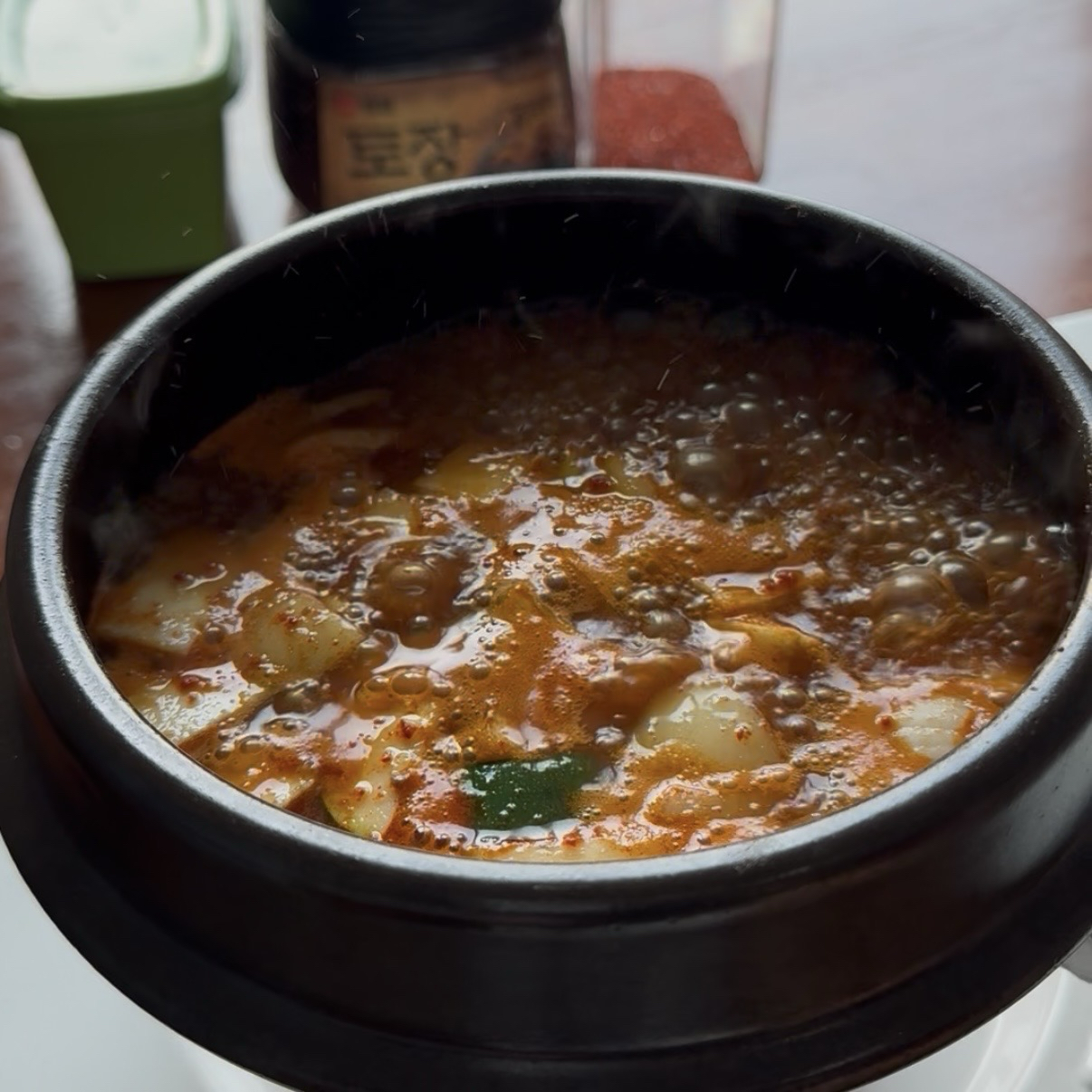

Korean BBQ-style Doenjang Jjigae
Ingredients
Method
- Heat oil and stir-fry doenjang and ssamjang for 30 seconds. Add gochugaru and garlic, then stir briefly.
- Add water and bring to a boil.
- Add potato, onion, zucchini, and tofu. Simmer for 7–8 minutes.
- Add green onion and cook for 1 minute. Serve hot with steamed rice.

Hi, I’m Vella, a Korean home cook sharing easy Korean recipes for everyday cooking. I focus on simple recipes, practical tips, and ingredients that are easy to find outside Korea.