
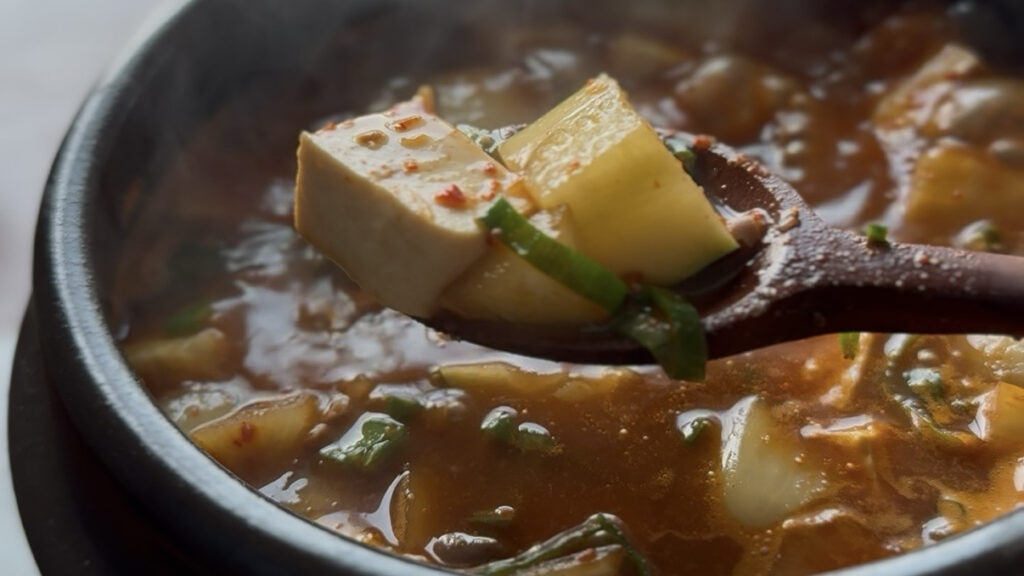
🥣 What Is Doenjang?
Doenjang (된장) is a traditional Korean fermented soybean paste made from soybeans and salt. It has a deep, savory flavor with a slightly salty and earthy taste. It’s a staple ingredient in Korean cooking and is used in everything from soups and stews to sauces and marinades.
Because doenjang is fermented, it has a strong flavor on its own. But once it’s cooked, it develops a rich, savory taste that adds depth to many Korean dishes.
Doenjang jjigae is a simple Korean stew made with doenjang, and it’s one of the most popular ways to enjoy it.
🥢 Korean BBQ Style Doenjang Jjigae at Home
Doenjang jjigae is one of those Korean dishes I make whenever I want something warm and comforting. I especially love the version served at Korean BBQ restaurants. It usually comes bubbling hot in a small pot, and I love having it with a bowl of rice after enjoying Korean BBQ.
Whenever I eat Korean BBQ, the doenjang jjigae feels like the perfect finishing touch to the meal. It’s warm, savory, and comforting without feeling too heavy.
That’s what inspired me to make my own Korean BBQ-style doenjang jjigae at home. I wanted to bring back that familiar restaurant experience and enjoy that same comforting feeling at home.
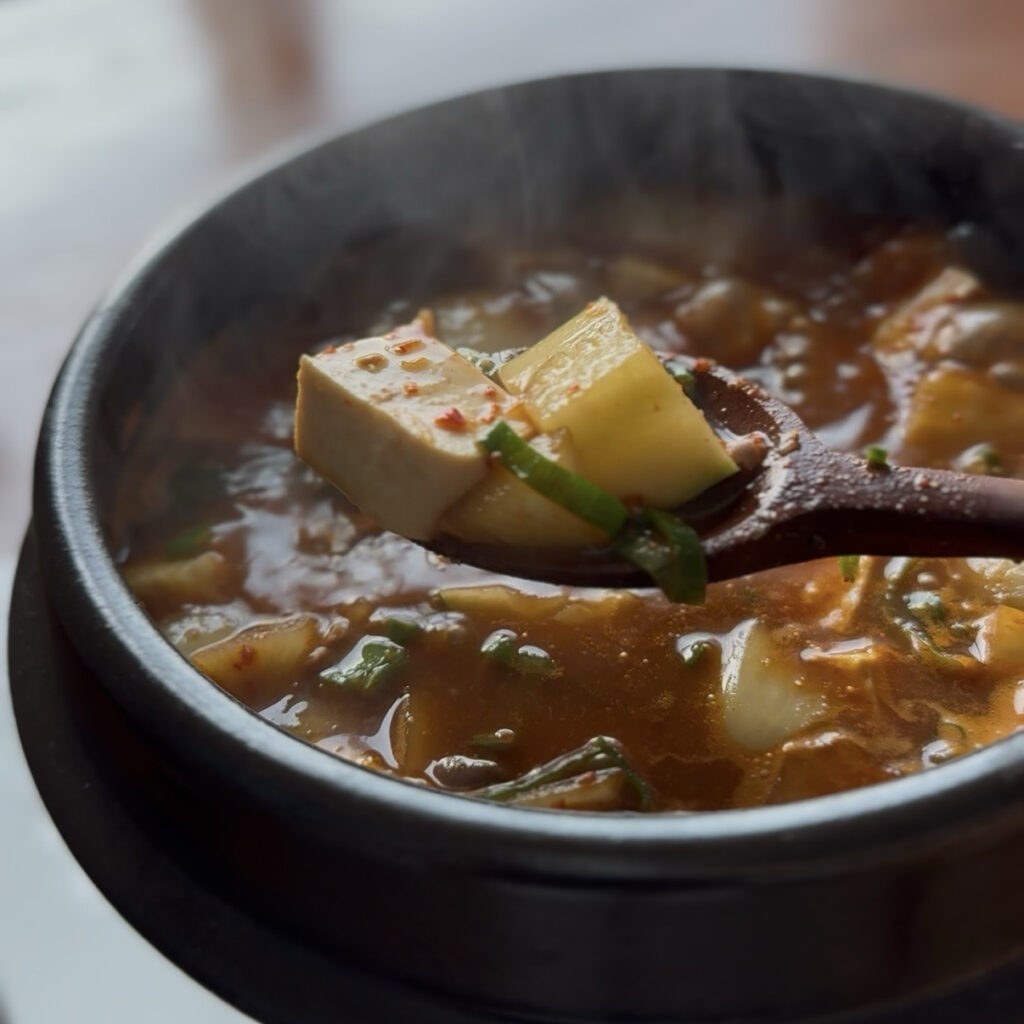
🛒Ingredients
✓ 1 tsp cooking oil
✓ 2 tbsp Korean soybean paste (doenjang)
✓ 1 tbsp Korean spicy soybean paste (ssamjang)
✓ 1 tbsp Korean red pepper flakes (gochugaru)
✓ 1/2 tbsp minced garlic
✓ 1 small potato, diced
✓ 1/2 onion, chopped
✓ 1/3 zucchini, sliced
✓ 1/2 block tofu, cut into bite-sized pieces
✓ 1/2 green onion, sliced
✓ 400ml water
🍳 How to Make Korean BBQ-Style Doenjang Jjigae
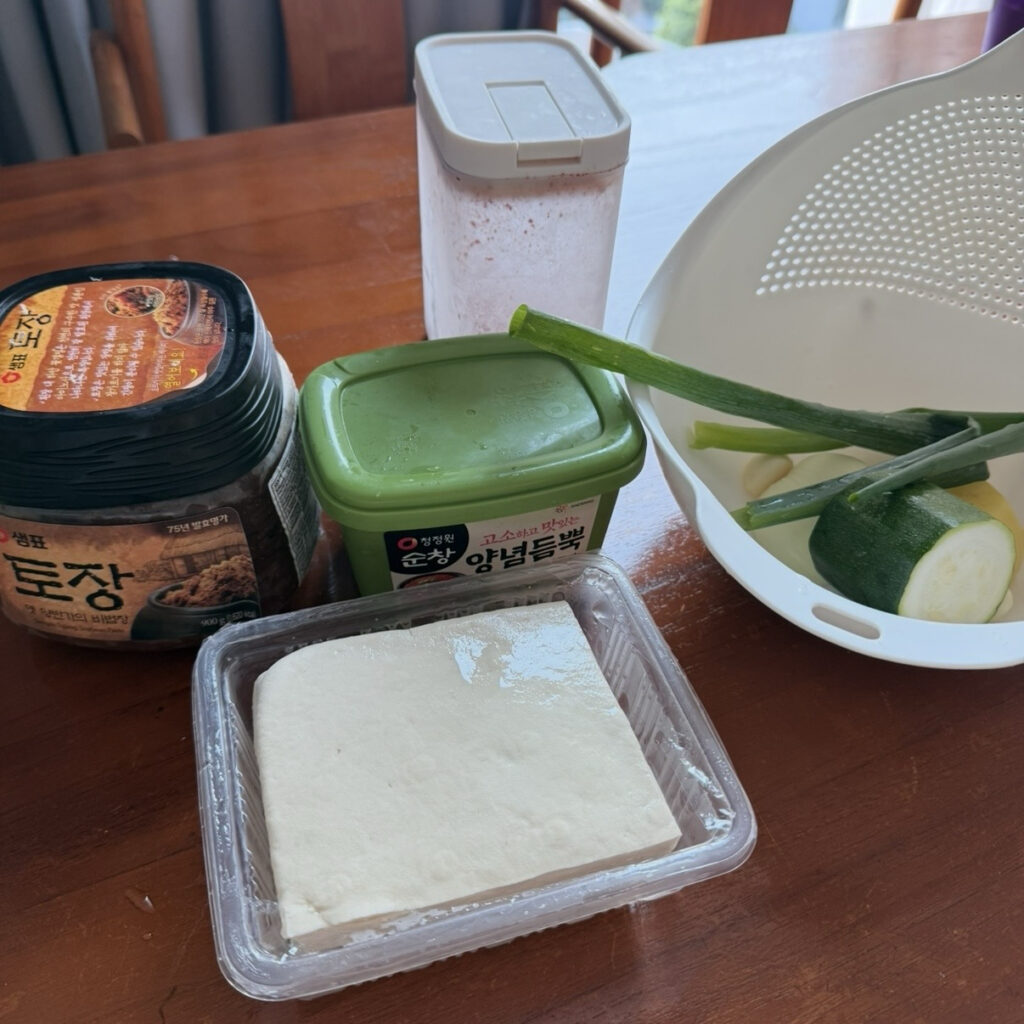
Step 1. Stir-fry the doenjang and ssamjang
Heat 1 teaspoon of cooking oil in a pot over low heat. Add the doenjang and ssamjang and stir for about 30 seconds. It’s a small step, but I always do this when I make doenjang jjigae. I find that it gives the broth a deeper, richer flavor.
Add the gochugaru and minced garlic and stir for just a few seconds. Keep the heat low so the garlic and gochugaru don’t burn.
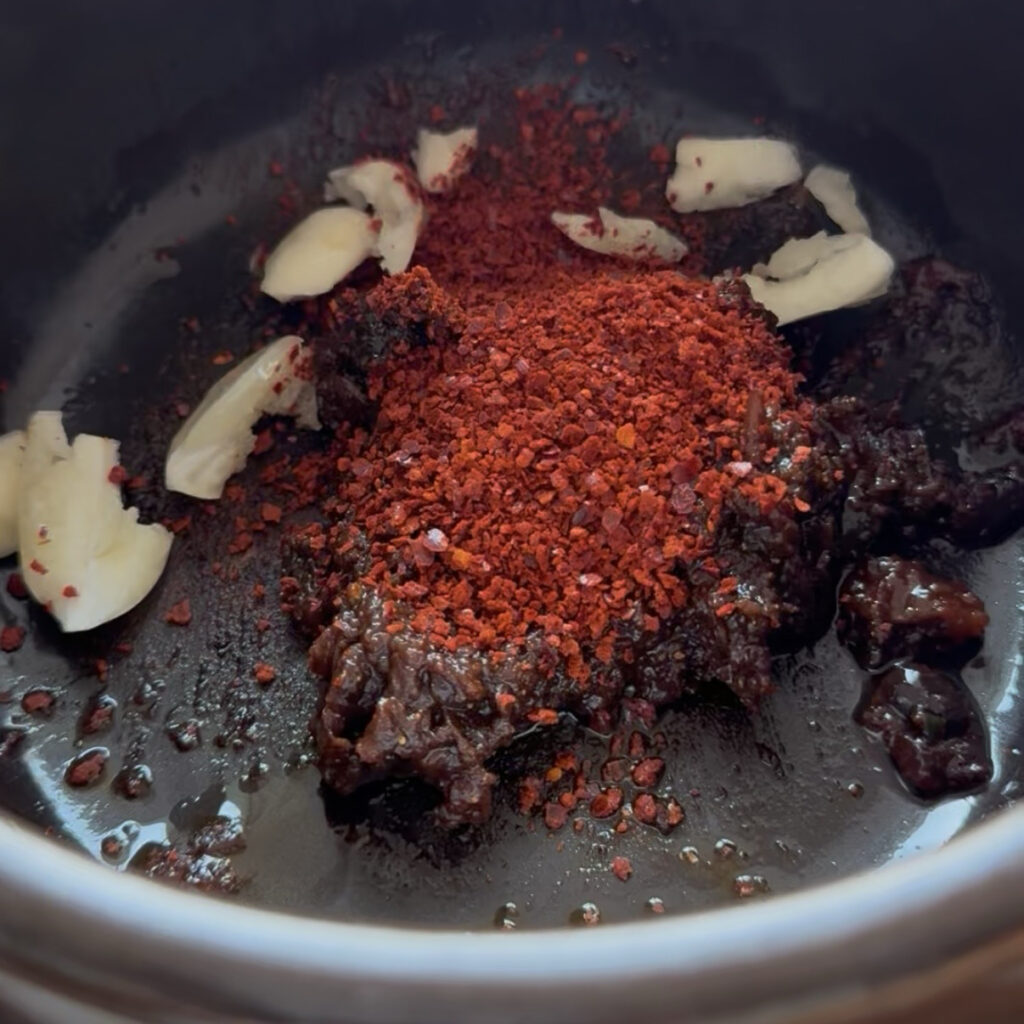
Step 2. Add the water
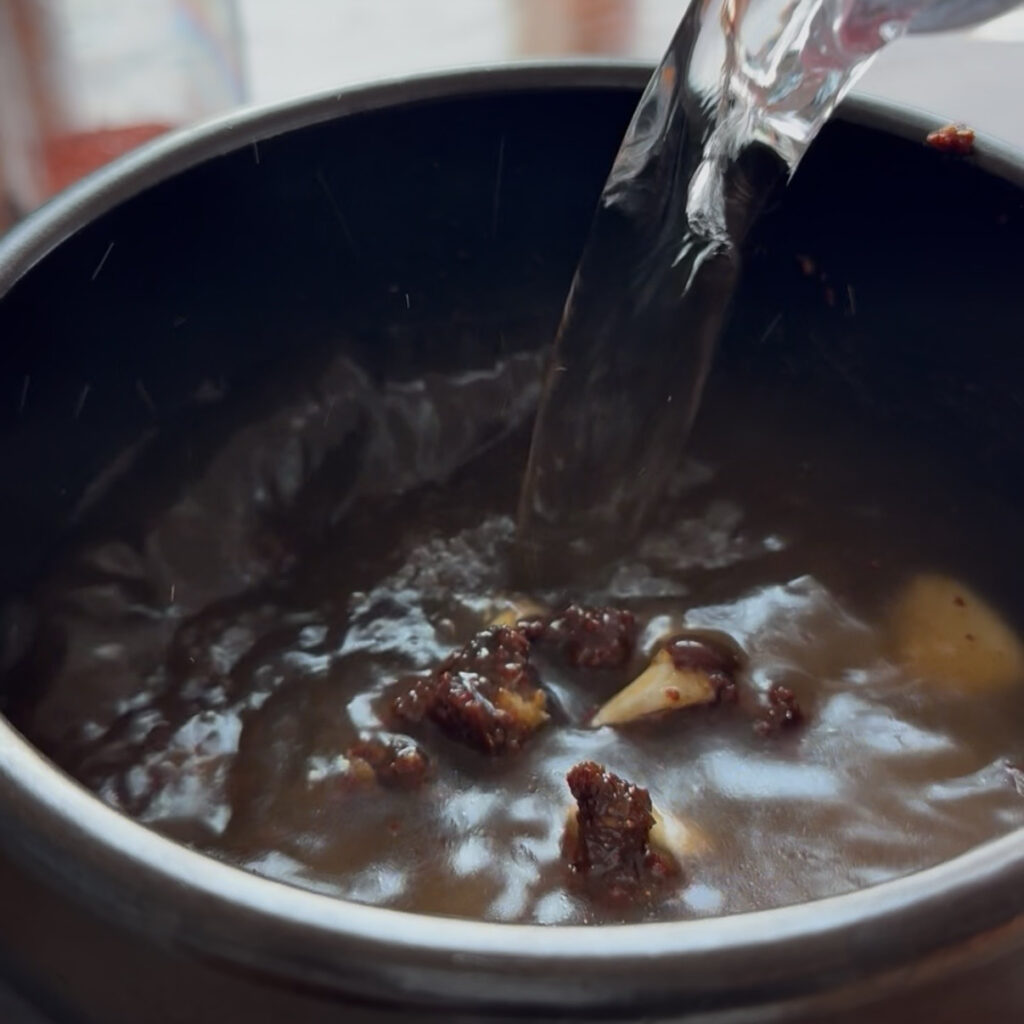
Pour in 400 ml (1⅔ cups) of water and give it a good stir to dissolve the doenjang and ssamjang into the broth. Turn the heat up and bring it to a boil.
Step 3. Add the ingredients
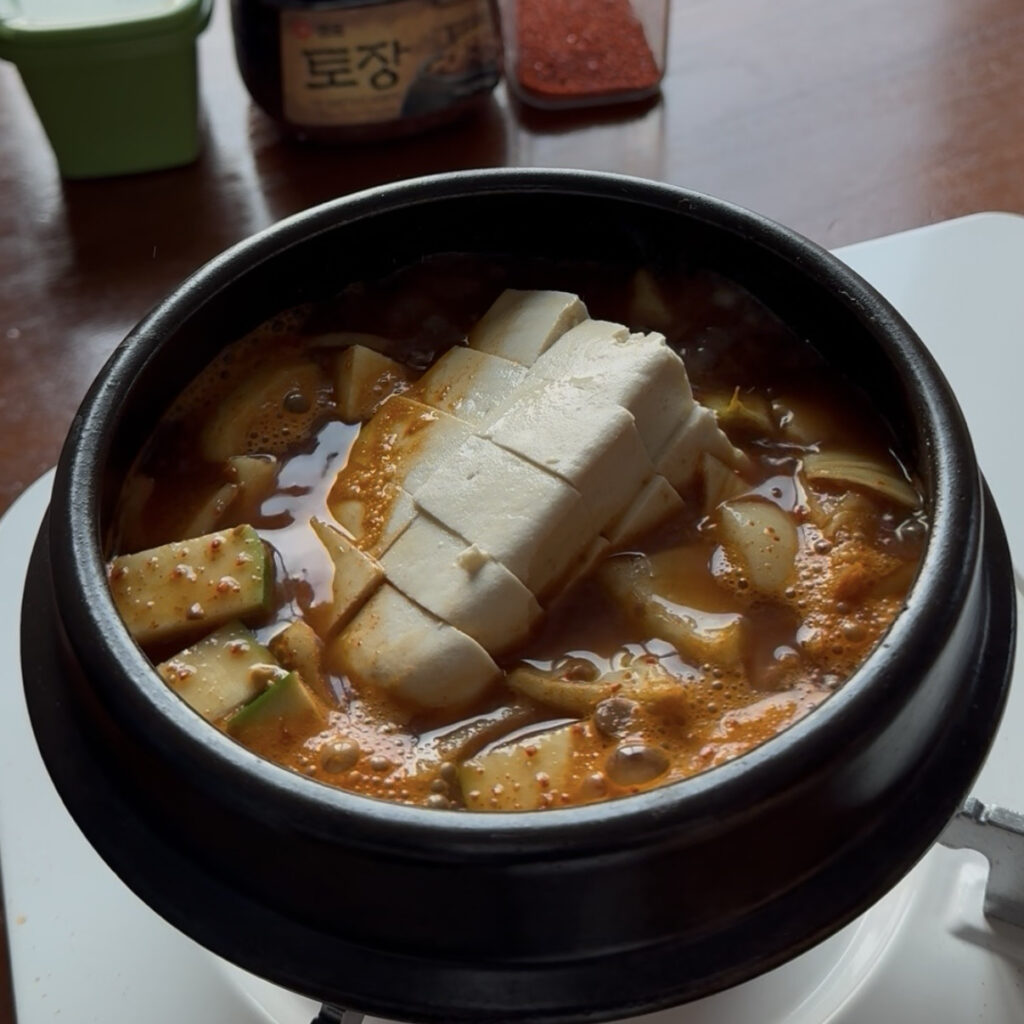
When the broth starts boiling, add the diced potato, onion, zucchini, and tofu all at once. Give everything a gentle stir and bring the stew back to a boil.
Let it simmer for about 7–8 minutes, or until the potato is tender. I usually taste a piece of potato to make sure it’s cooked through before turning off the heat.
step 4. Add the green onion
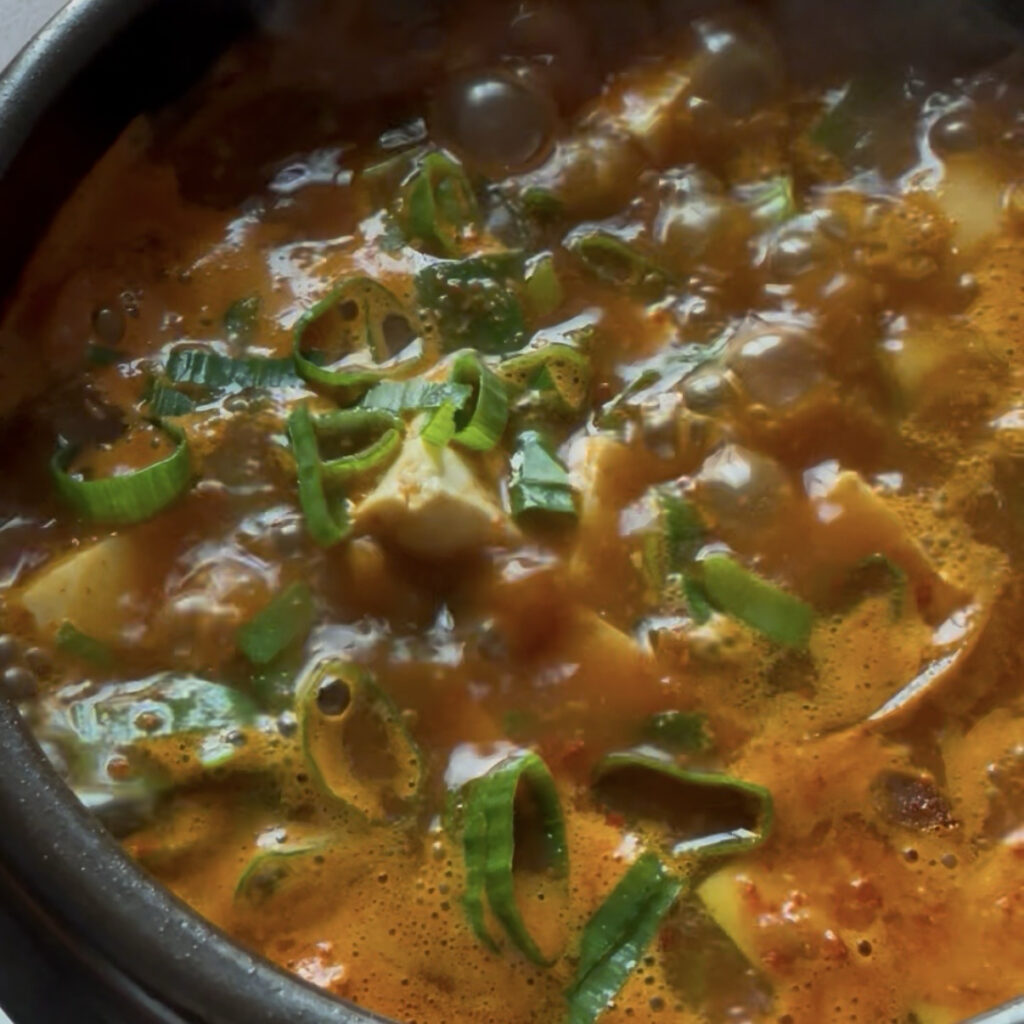
Add the sliced green onion during the last minute of cooking. Once the vegetables are tender and the broth is bubbling, turn off the heat.
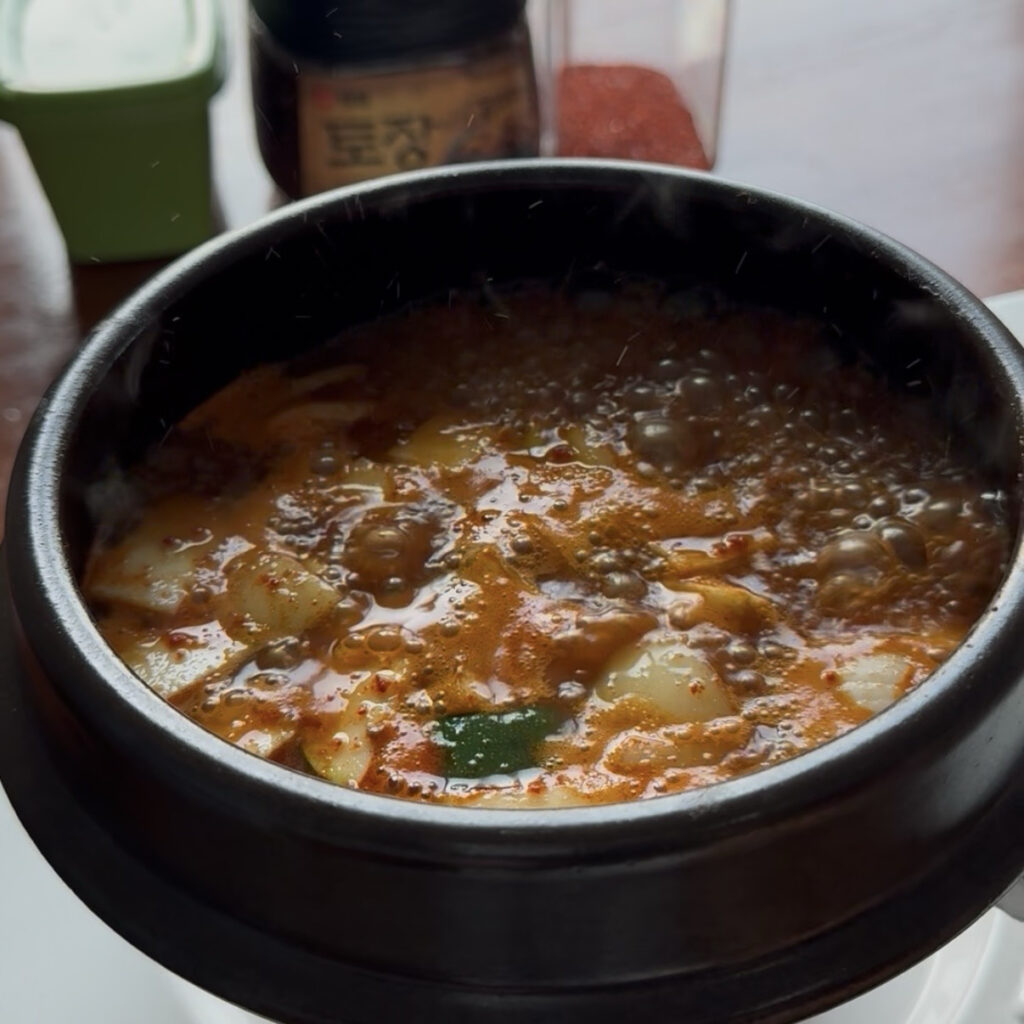
Your doenjang jjigae is ready to serve. I like to serve it hot with a bowl of rice.
🍽️ Serving Tips
I like to serve doenjang jjigae with grilled pork belly or Korean-style grilled beef. The savory broth goes really well with grilled meat.
Another way I often eat it is with rice. I spoon some of the broth and vegetables over warm rice and mix them together. I usually have some kimchi with it, too.
When I don’t have much of an appetite, I sometimes add cooked noodles to the stew instead of eating it with rice. It’s simple, but it’s really good.
I also don’t always make doenjang jjigae the same way. I usually just use whatever I have in the fridge. Sometimes I leave out the tofu, and if I have mushrooms or vegetables that need to be used, I throw those in too. That’s one of the things I like about doenjang jjigae—it’s pretty flexible.
If I have some leftover stew, I sometimes add rice directly to the broth and simmer it for a few minutes. It becomes almost like a simple Korean-style porridge, and it’s especially nice when I want something warm and easy to eat.
❓ FAQ
Q. Can I skip the ssamjang?
A. You can, but I personally like adding it. It gives the broth a little extra flavor and helps make this version taste more like the doenjang jjigae I usually get at Korean BBQ restaurants.
Q. What if my stew turns out too salty?
A. Add a little more water and let it simmer for another minute or two. Doenjang and ssamjang can have different levels of saltiness, so I always taste the broth before adding anything else.
Q. What can I add if I want more protein?
A. Thinly sliced pork, beef, shrimp, or clams are all good options. If you’re already making Korean BBQ, though, I like keeping the jjigae simple and serving the grilled meat on the side.
Q. Can I use miso instead of doenjang?
A. You can, but the flavor will be different. Japanese miso is usually milder and smoother, while Korean doenjang has a deeper, stronger, more savory flavor. If you have doenjang, I recommend using it for this recipe. But if miso is what you have at home, you can still make the stew—it just won’t taste quite the same.
🇰🇷 First time cooking Korean food?
👉 8 Essential Korean Ingredients Every Beginner Needs
👉 Korean Soy Sauce Explained: Jin Ganjang vs Guk Ganjang
👉 Gochujang vs. Gochugaru: What’s the Difference?
👉👉 You Might Also Like
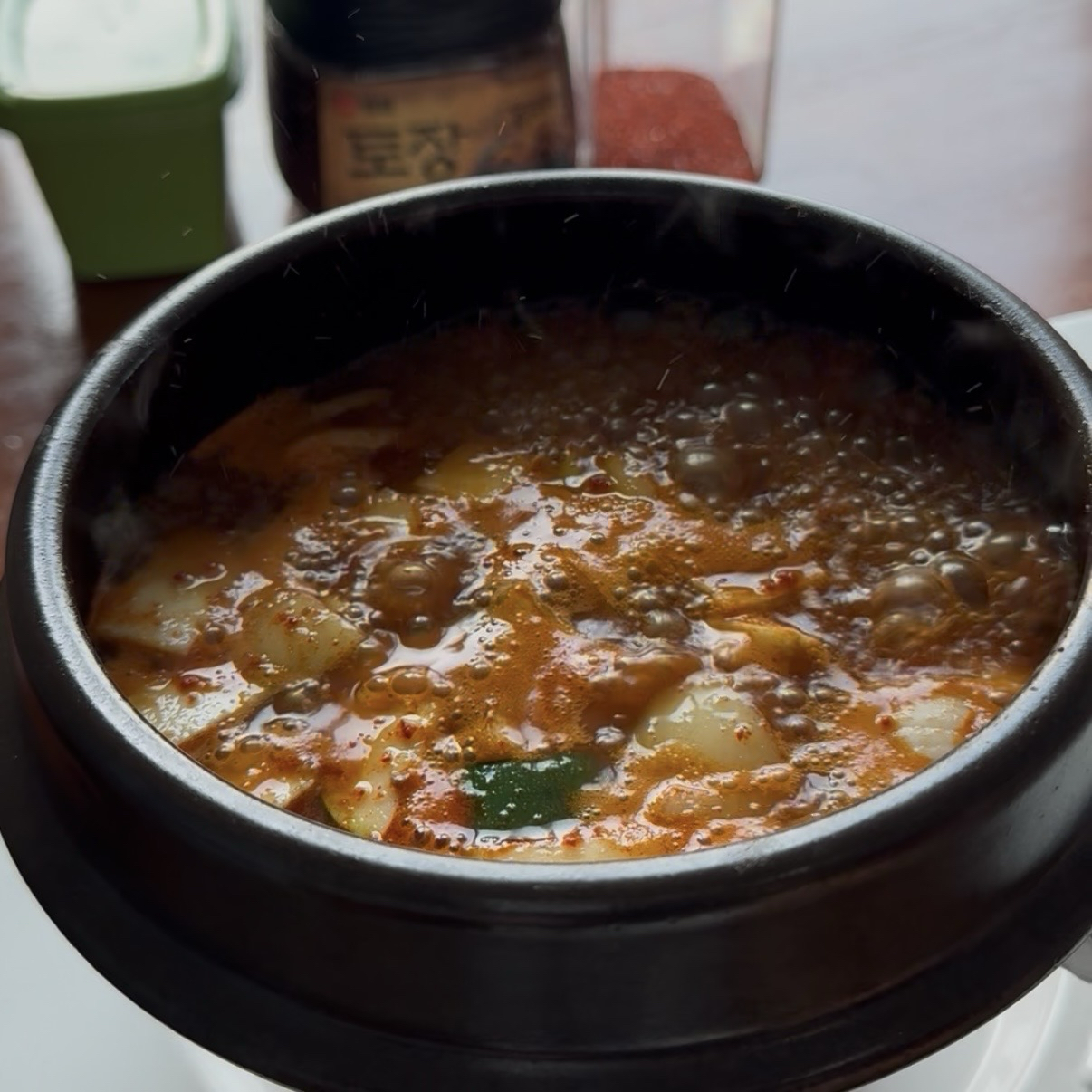

Korean BBQ-style Doenjang Jjigae
Ingredients
Method
- Heat oil and stir-fry doenjang and ssamjang for 30 seconds. Add gochugaru and garlic, then stir briefly.
- Add water and bring to a boil.
- Add potato, onion, zucchini, and tofu. Simmer for 7–8 minutes.
- Add green onion and cook for 1 minute. Serve hot with steamed rice.

Hi, I’m Vella, a Korean home cook sharing easy Korean recipes for everyday cooking. I focus on simple recipes, practical tips, and ingredients that are easy to find outside Korea.