
🥢 Introduction
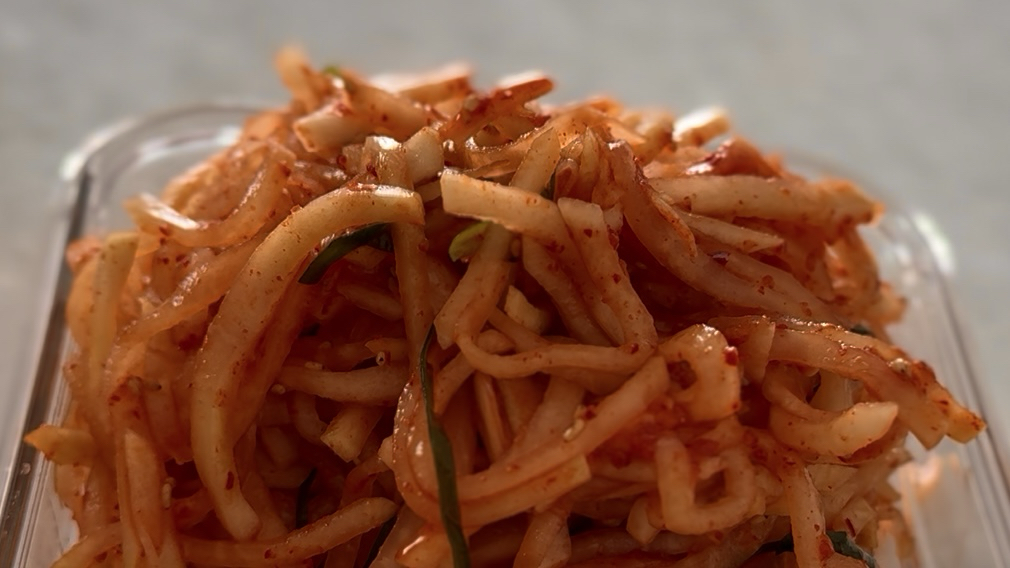
Musaengchae is one of the Korean side dishes I make most often at home. It’s crunchy, a little spicy, slightly sweet, and goes with just about everything. I usually make a big batch because it disappears faster than I expect.
Made with fresh daikon radish, gochugaru (Korean red pepper flakes), garlic, and fish sauce, this simple side dish is full of flavor. As the radish sits, it softens just enough while staying crisp, soaking up all the sweet, spicy, and savory seasoning.
One of the things I love most about this recipe is how easy it is to make. After letting the radish sit for a while, all you have to do is mix everything together. It’s simple enough for beginners, but the flavor tastes just like the musaengchae you’ll find at a Korean restaurant.
I love serving it with Korean BBQ, but it’s also delicious with grilled meat, fried chicken, or simply a bowl of warm rice. If you’ve never made Korean Spicy Radish Salad (Musaengchae) before, I hope you’ll give this recipe a try!
🛒 Ingredients
For the Radish
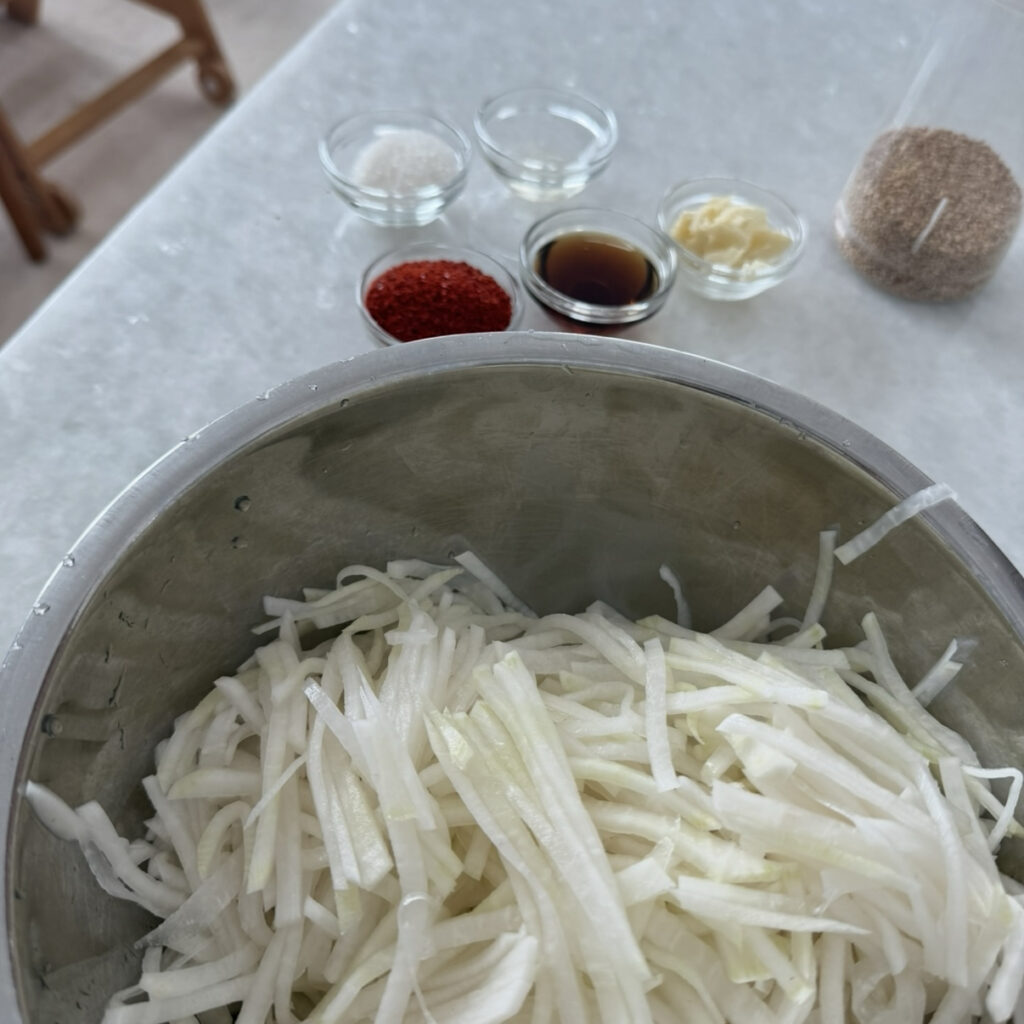
✓ 800g daikon radish (about 1 large daikon), julienned
✓ 1.5 Tbsp salt
✓ 2 Tbsp sugar
For the Seasoning
✓ 3 Tbsp gochugaru (Korean red pepper flakes)
✓ 3 Tbsp fish sauce
✓ 1 Tbsp minced garlic
✓ 1-2 Tbsp sugar
✓ ½ Tbsp white vinegar
✓ 1 Tbsp sesame seeds
✓ 2 green onions, thinly sliced
🍳 Instructions
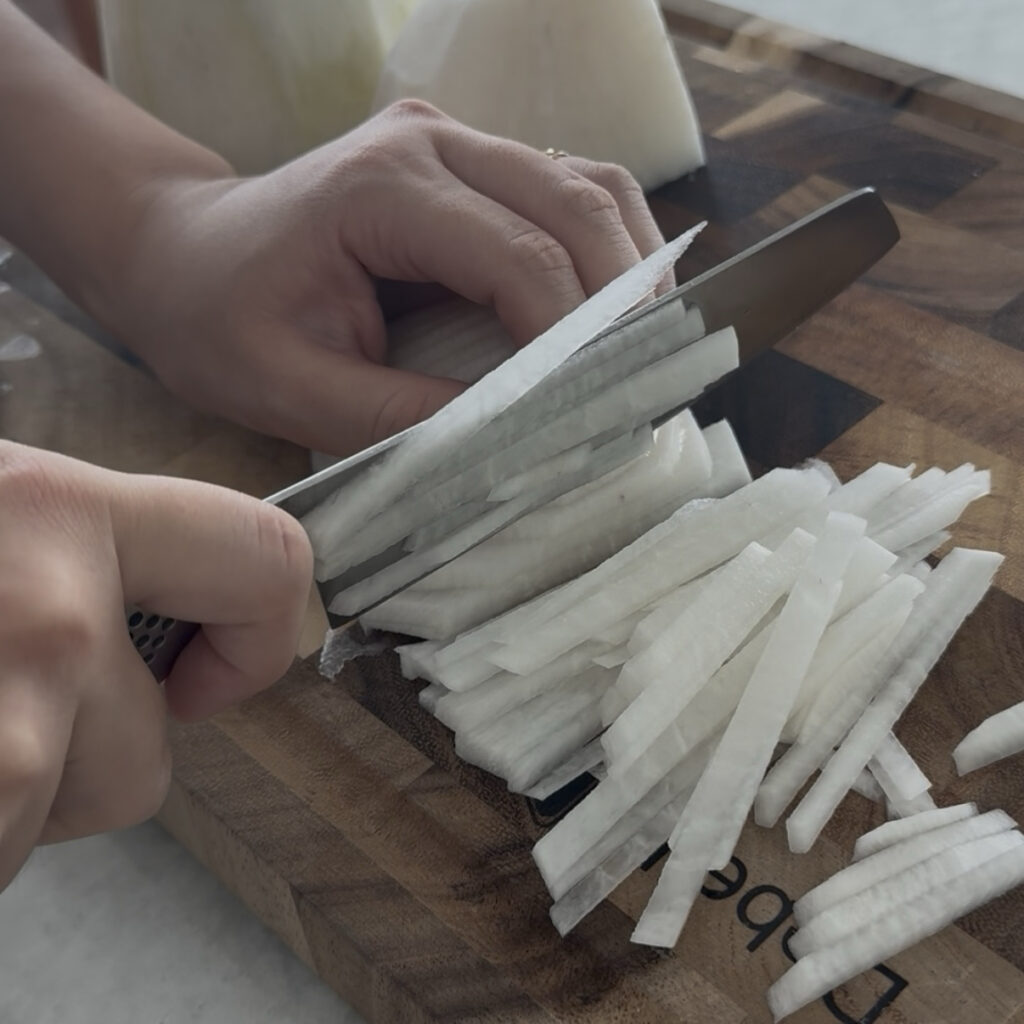
Step 1. Julienne the Radish
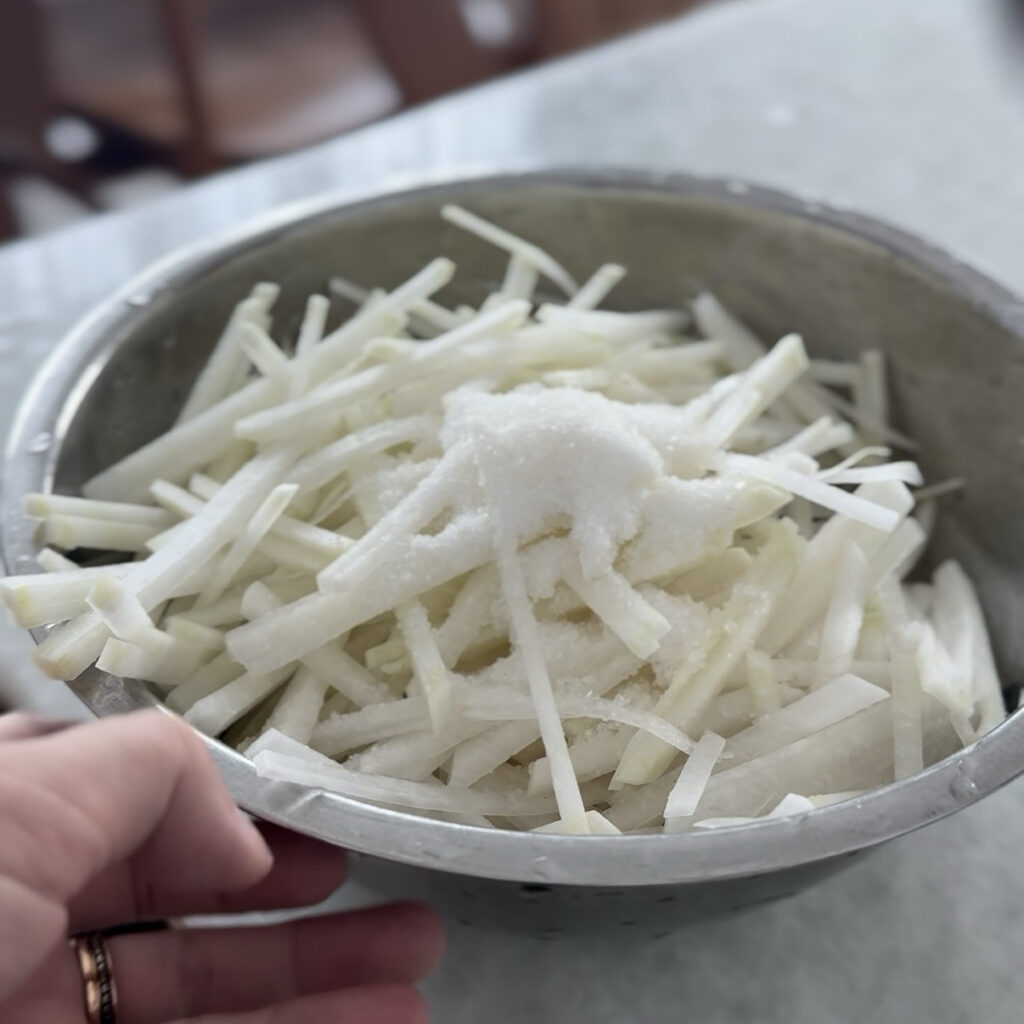
Wash the daikon well and peel it if needed. If the skin looks fresh and smooth, I usually leave it on. Julienne the radish into thin, even strips so it stays nice and crisp.
Step 2. Salt the Radish
Toss the radish with 1.5 Tbsp salt and 1 Tbsp sugar. Let it sit for 30 minutes, then drain well and gently squeeze out any remaining liquid. This simple step helps the seasoning stick to the radish instead of becoming watery.
Step 3. Season the Radish
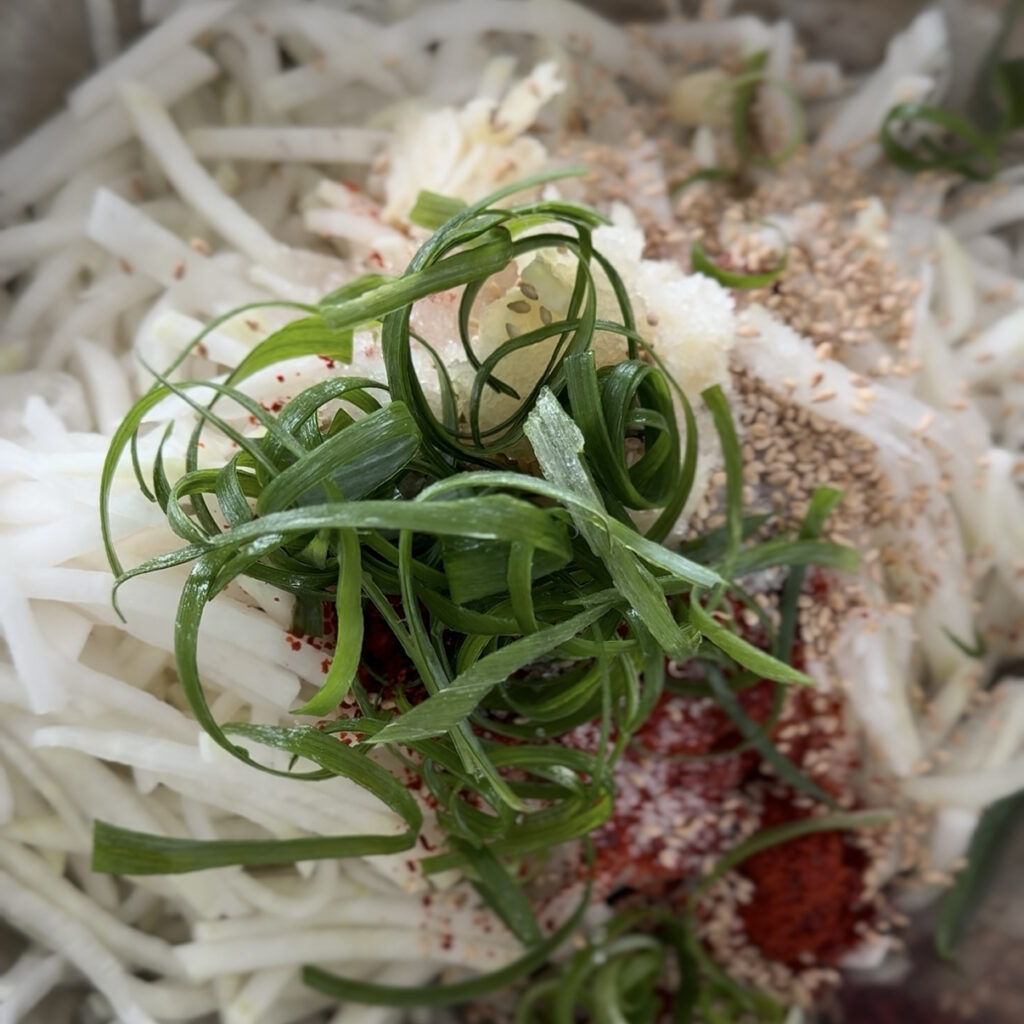
Add the gochugaru, fish sauce, garlic, sugar, vinegar, sesame seeds, and green onions. Adjust the sugar to your taste, since every radish is a little different.
Step 4. Mix Everything Together
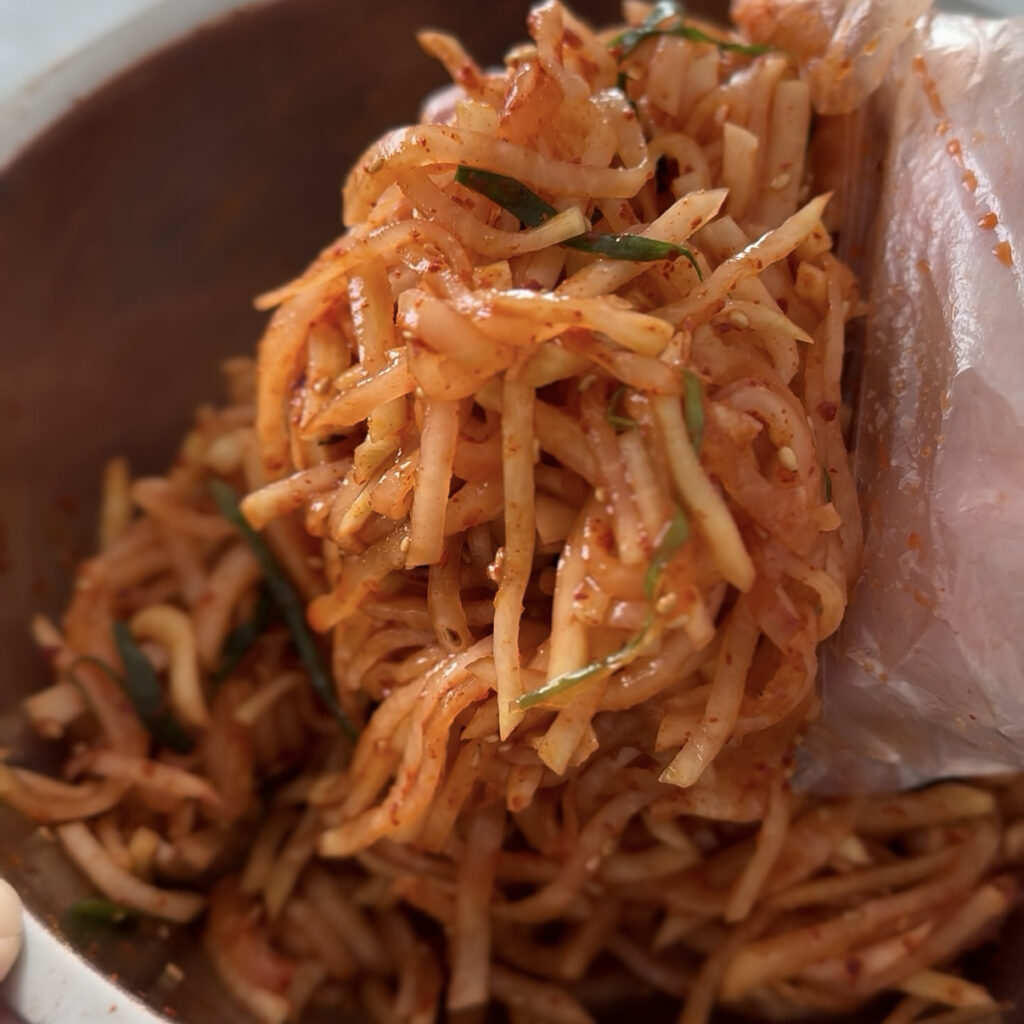
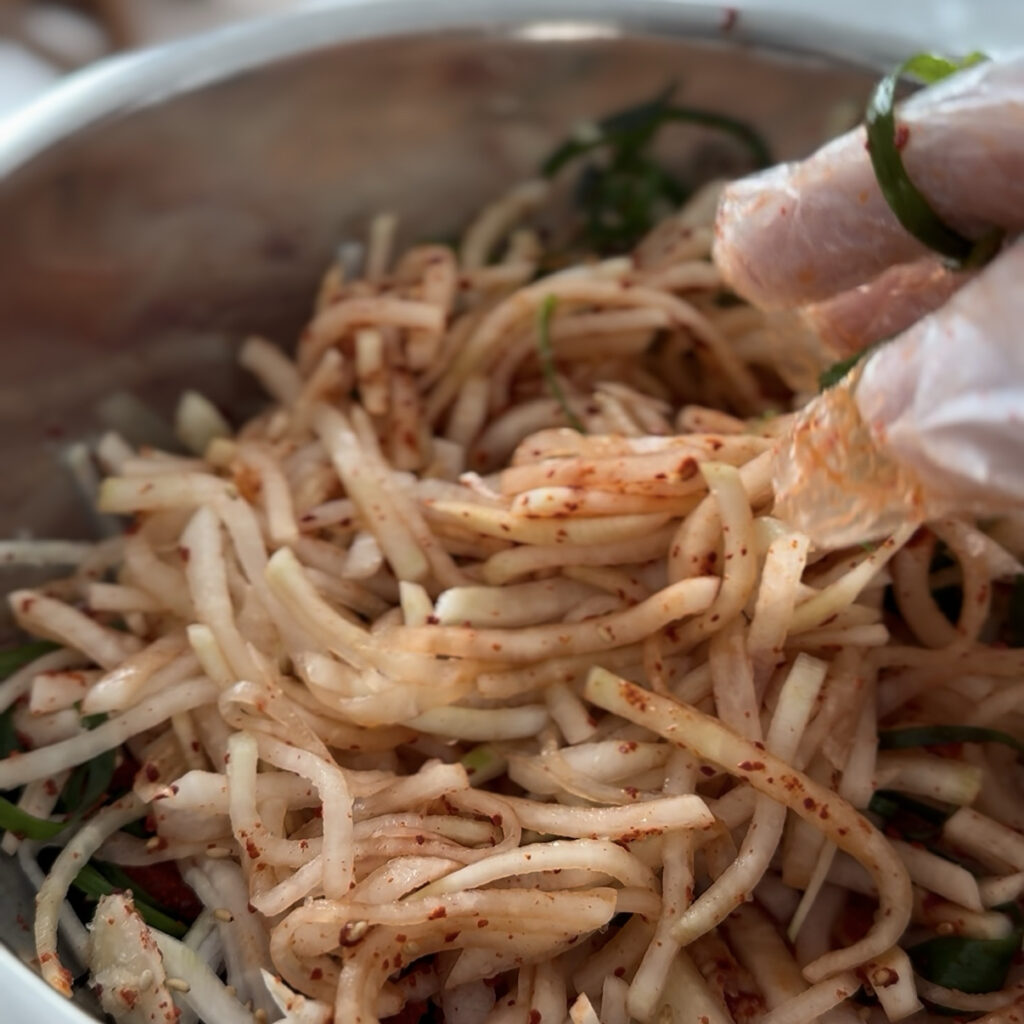
Mix just until the radish is evenly coated with the seasoning. I like using my hands with gloves because it’s the easiest way to mix everything evenly.
Step 5. Serve and Enjoy
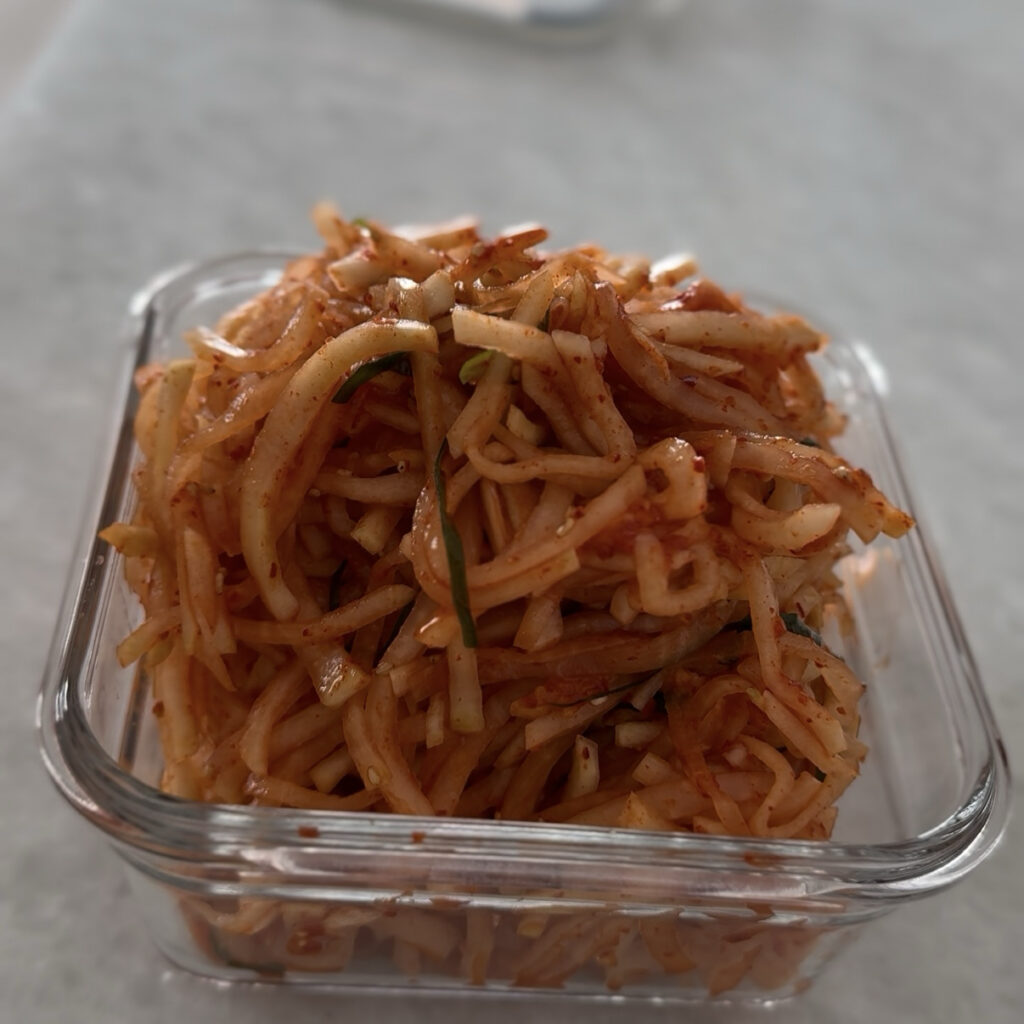
You can enjoy it right away, but I think it tastes even better after chilling in the refrigerator for about 30 minutes. The flavors blend together while the radish stays crisp and refreshing.
🍽️ Serving Tips
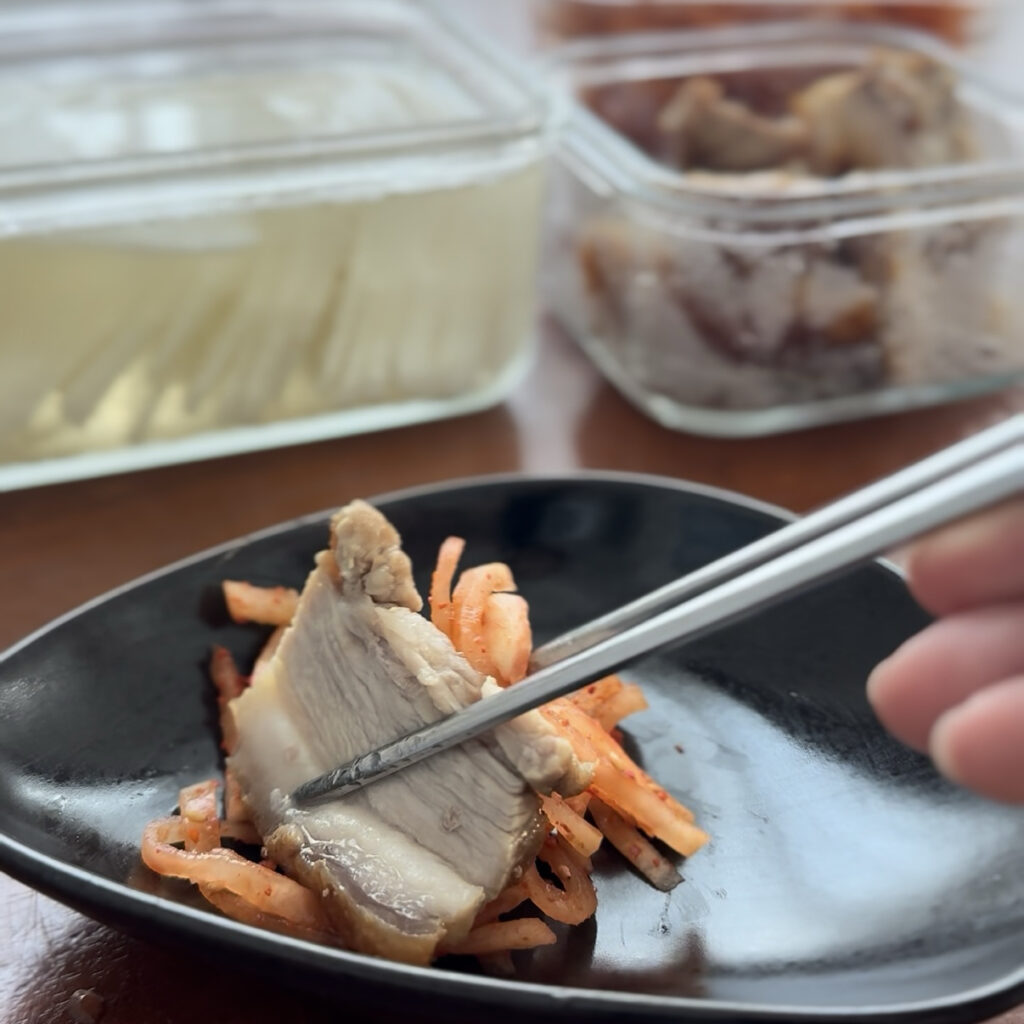
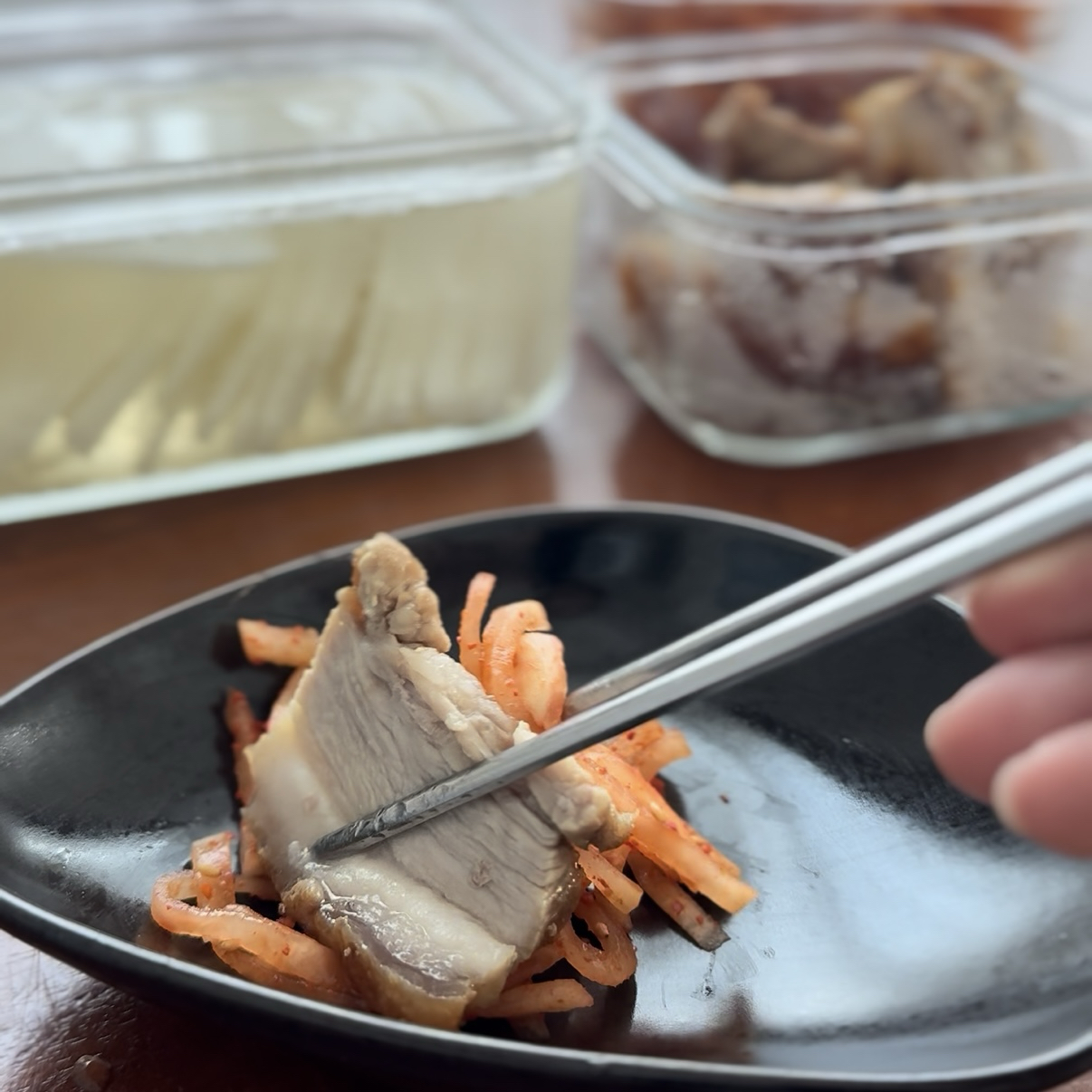
I almost always have a container of musaengchae in my refrigerator because it goes with so many meals. I love serving it with Korean BBQ, especially grilled pork belly (samgyeopsal), but it’s just as good with grilled chicken, bulgogi, or spicy pork.
One of my favorite easy meals is bibimbap made with just warm rice, musaengchae, a fried egg, and a drizzle of sesame oil. You don’t need lots of toppings to make a satisfying bowl.
❓ FAQ
Q. Why do you salt the radish first?
A. Salting helps draw out excess moisture so the seasoning sticks better. It also softens the sharp, peppery flavor that some daikon can have, especially when it’s in season with a stronger taste.
Q. Can I make musaengchae without fish sauce?
A. Yes. If you don’t eat fish sauce, you can substitute soy sauce. The flavor will be a little different, but it will still be delicious.
Q. Why is my musaengchae watery?
A. This usually happens if the radish isn’t drained well after salting. Be sure to remove as much moisture as possible before adding the seasoning.
Q. Can I use regular red pepper flakes instead of gochugaru?
A. I don’t recommend it. Gochugaru has a milder heat and slightly sweet flavor that’s essential for authentic musaengchae.
Q. My musaengchae tastes too salty. What should I do?
A. If it tastes too salty, add a little more sugar to balance the flavor.
Q. What if my daikon tastes very spicy?
A. Don’t worry! Some daikon naturally have a stronger, peppery flavor. Salting the radish first helps mellow the taste.
👉👉 You Might Also Like
🇰🇷 First time cooking Korean food?
Before you start, check out these 8 essential Korean ingredients that I use in almost every recipe.
👉 Read: 8 Essential Korean Ingredients Every Beginner Needs
Ingredients
Method
- Julienne the daikon
- Toss with salt and sugar. Let it sit for 30 minutes, then drain well.
- Add the remaining ingredients and mix until evenly coated.
- Serve immediately or chill before serving.

Hi, I’m Vella, a Korean home cook sharing easy Korean recipes for everyday cooking. I focus on simple recipes, practical tips, and ingredients that are easy to find outside Korea.