
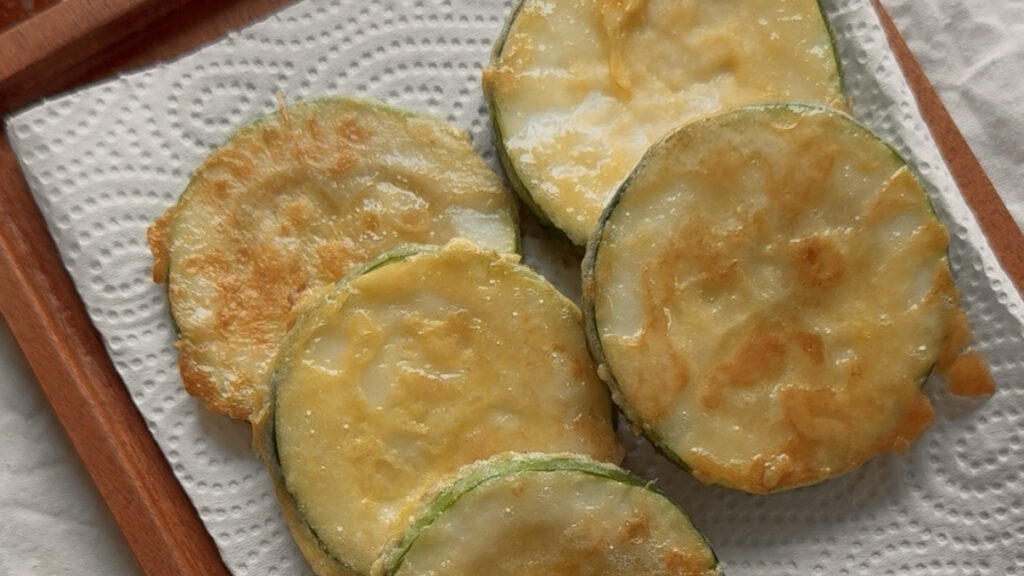
What Is Hobakjeon?
Hobakjeon is a Korean side dish made with aehobak, a young Korean squash that looks similar to zucchini. The skin is thin and tender, and the flesh is soft with a mild, slightly sweet flavor. It’s a little softer than regular zucchini, which I think works especially well for this kind of pan-fried dish.
Aehobak is something I use quite often in Korean cooking. I grew up seeing it in soups, stews, and simple side dishes, and hobakjeon is one of the easiest ways to enjoy it. The aehobak is sliced into rounds, dipped in flour and egg, and cooked in a pan until lightly golden.
I don’t like to add too much seasoning to hobakjeon. Once the aehobak cooks, it becomes soft and brings out a gentle sweetness, and the egg coating gives it just enough savory flavor. For me, that’s really all it needs.
💡 What If You Can’t Find Aehobak?
Aehobak isn’t easy to find where I live, so I usually use regular zucchini instead. I was a little worried it wouldn’t work as well at first, since zucchini is firmer and has a different texture. But I’ve made hobakjeon with it several times now, and it turns out just fine.
Once the zucchini is sliced thinly and cooked with the flour and egg coating, I don’t notice a big difference. The zucchini is still tender, with a mild, slightly sweet flavor. If I can find aehobak, I’ll use it, but regular zucchini is what I usually reach for.
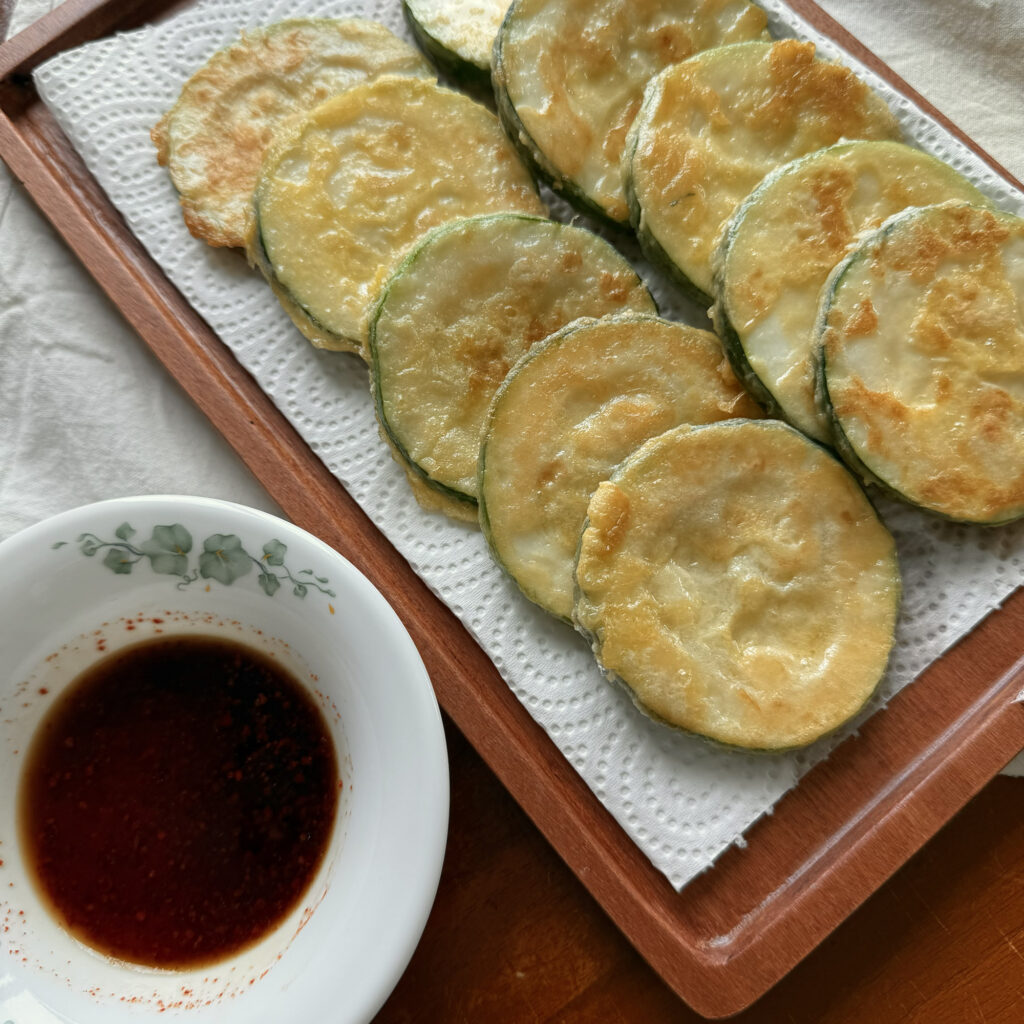
🥒Why You Will Love This Simple Zucchini Jeon
One reason I like making hobakjeon is that it comes together quickly. I only need a few ingredients: zucchini, flour, salt, and an egg. Most of the time, I already have them in my kitchen.
When I need a quick side dish for dinner, this is one of the first things I think of. I slice the zucchini, coat it with flour and egg, and cook it in a pan. It doesn’t take long, and I don’t need to make anything complicated.
🛒Ingredients
✓ 1 medium zucchini (about 250–300 g), thinly sliced into ⅛-inch (3–4 mm) rounds
✓ ¼ teaspoon salt
✓ 4 tablespoons all-purpose flour
✓ 1 egg
✓ 3 tablespoons neutral cooking oil, for pan-frying
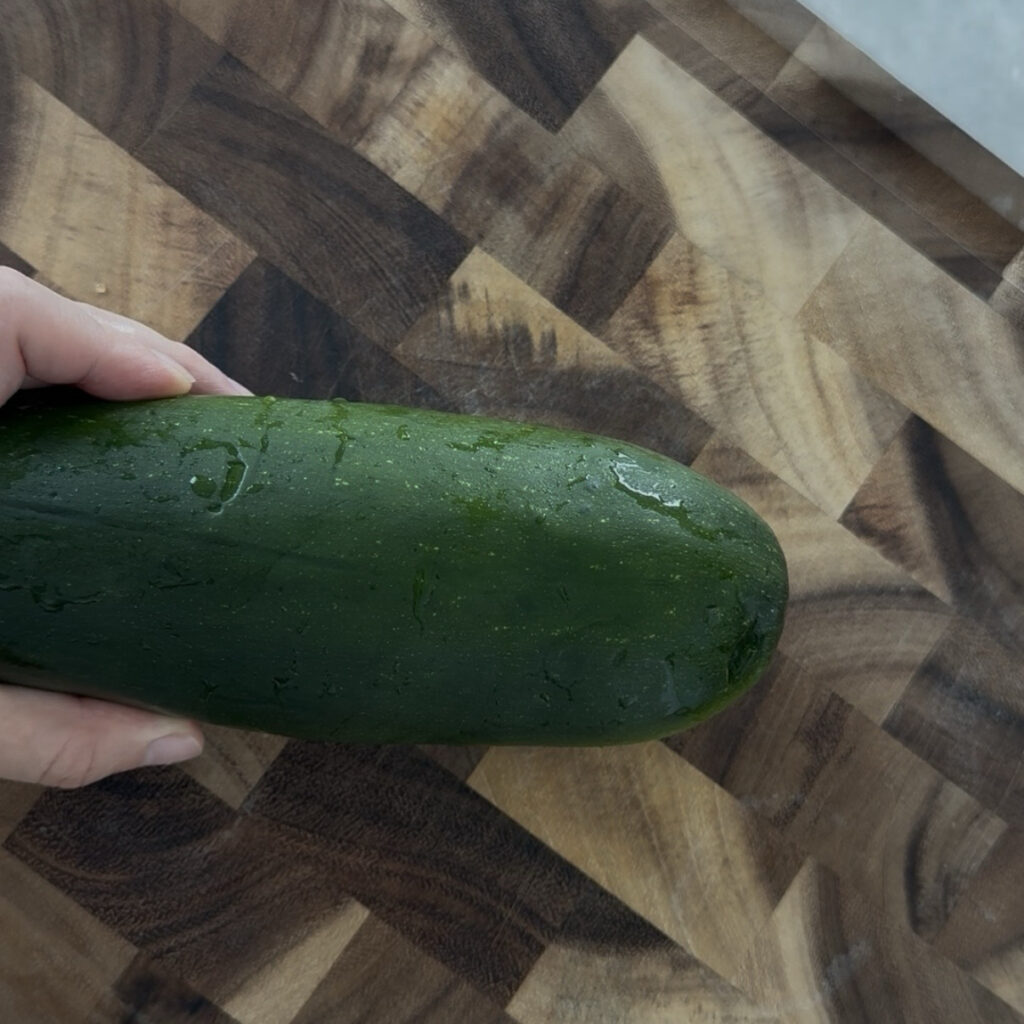
For the Zucchini Pancakes
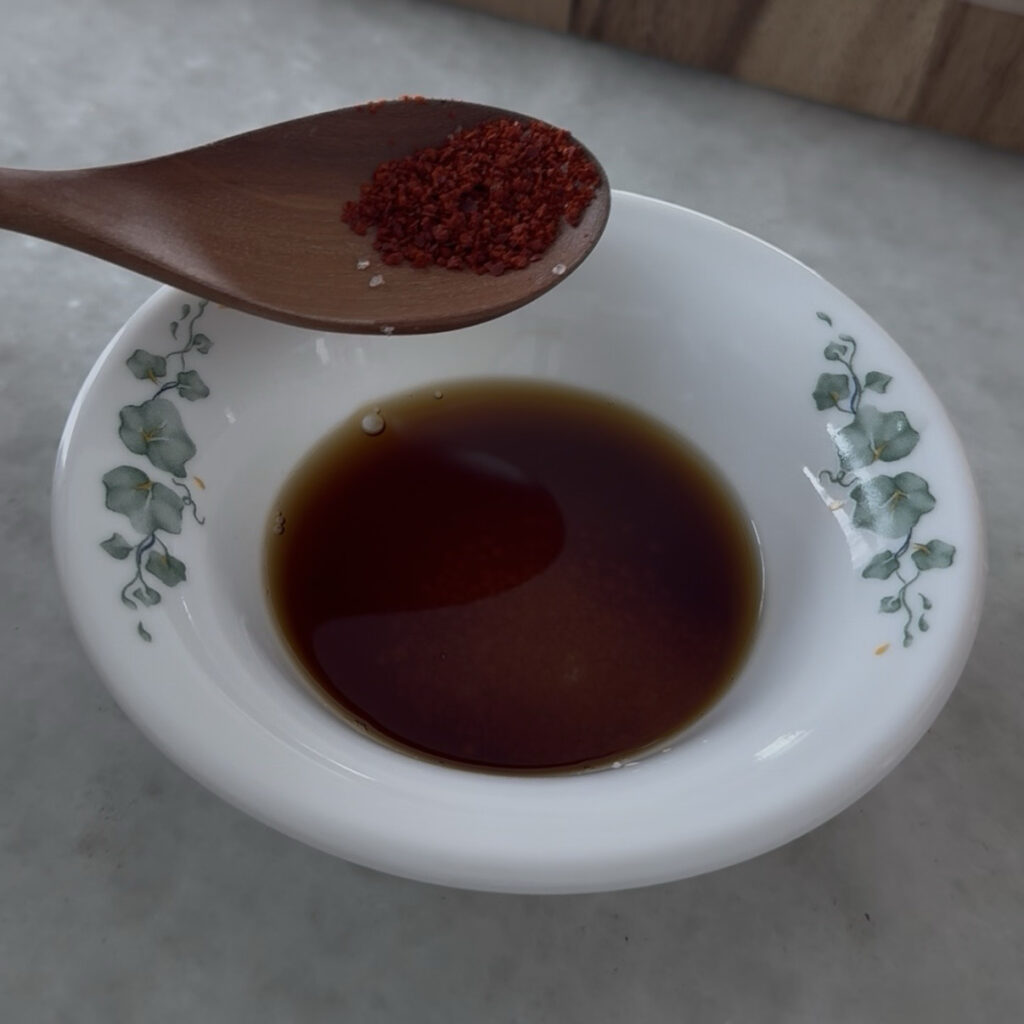
✓ 1 tablespoon soy sauce
✓ 1 teaspoon vinegar
✓ 1 teaspoon water
✓ ⅓ teaspoon sugar
✓ A pinch of red pepper flakes, optional
🍳 How to Make Korean Zucchini Pancakes
Step 1. Slice and Salt the Zucchini
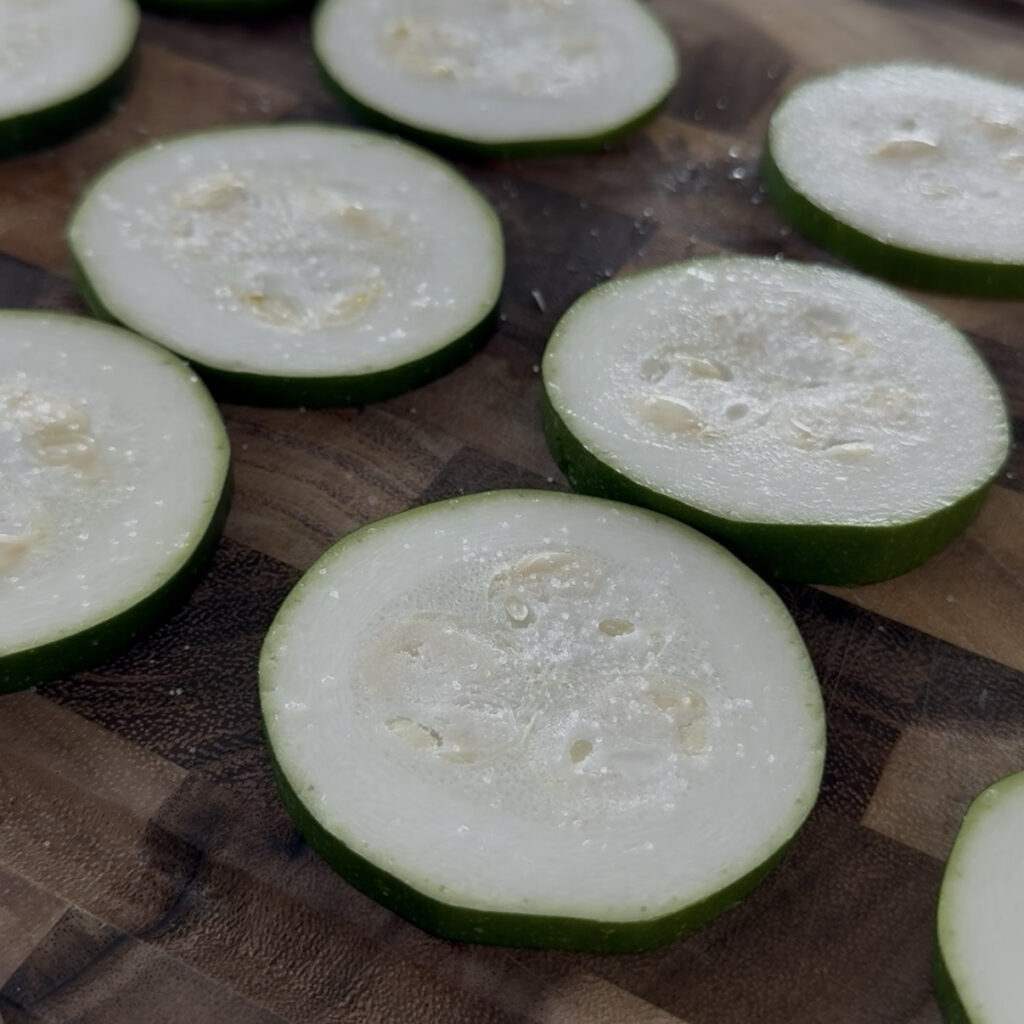
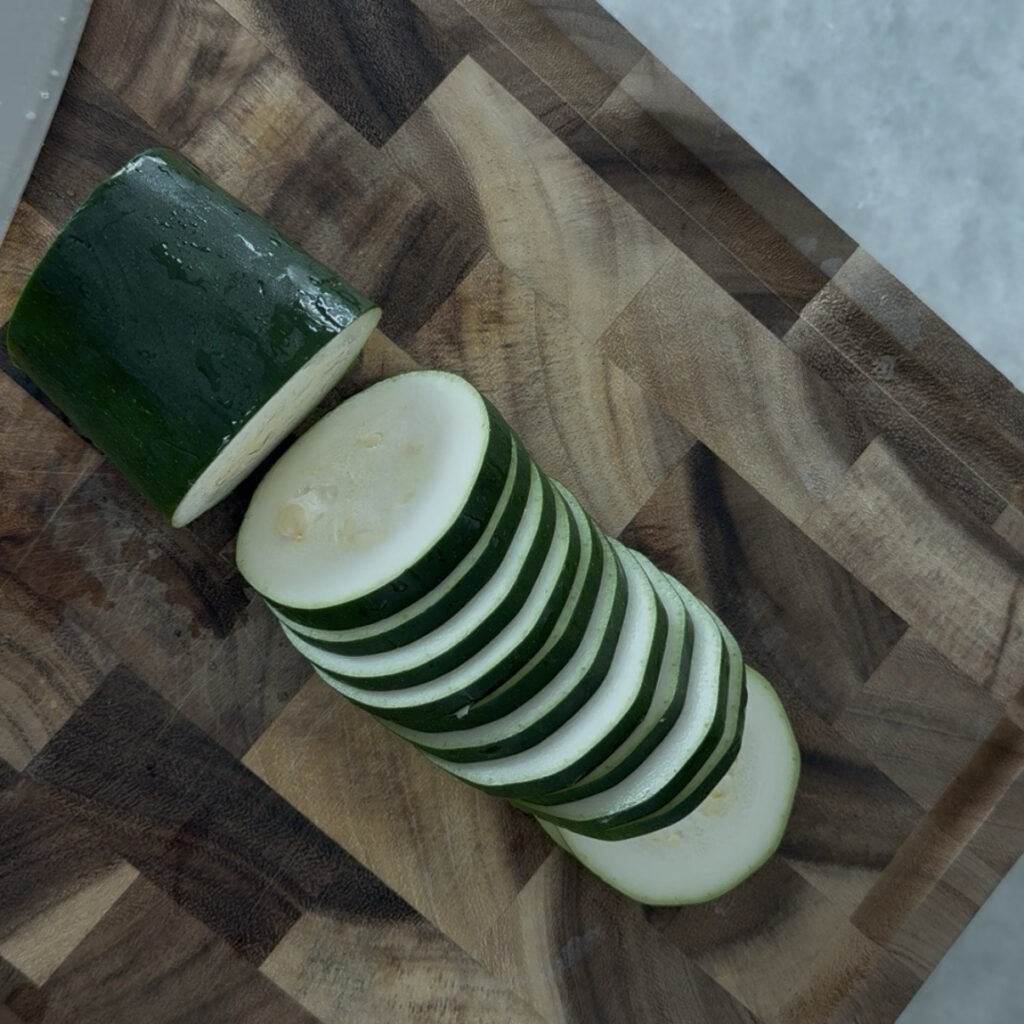
Wash the zucchini and pat it dry. Leave the skin on and trim off both ends. Slice it into thin rounds, about ⅛ inch (3–4 mm) thick. Don’t slice it too thick, or the center may not cook through. If you slice it too thin, the texture won’t be as good.
Sprinkle with ¼ teaspoon of salt and let it sit for 5–10 minutes. If you’re short on time, you can skip this step. You can season the egg instead, or just serve the hobakjeon with a soy sauce dipping sauce.
Step 2. Pat the Zucchini Dry
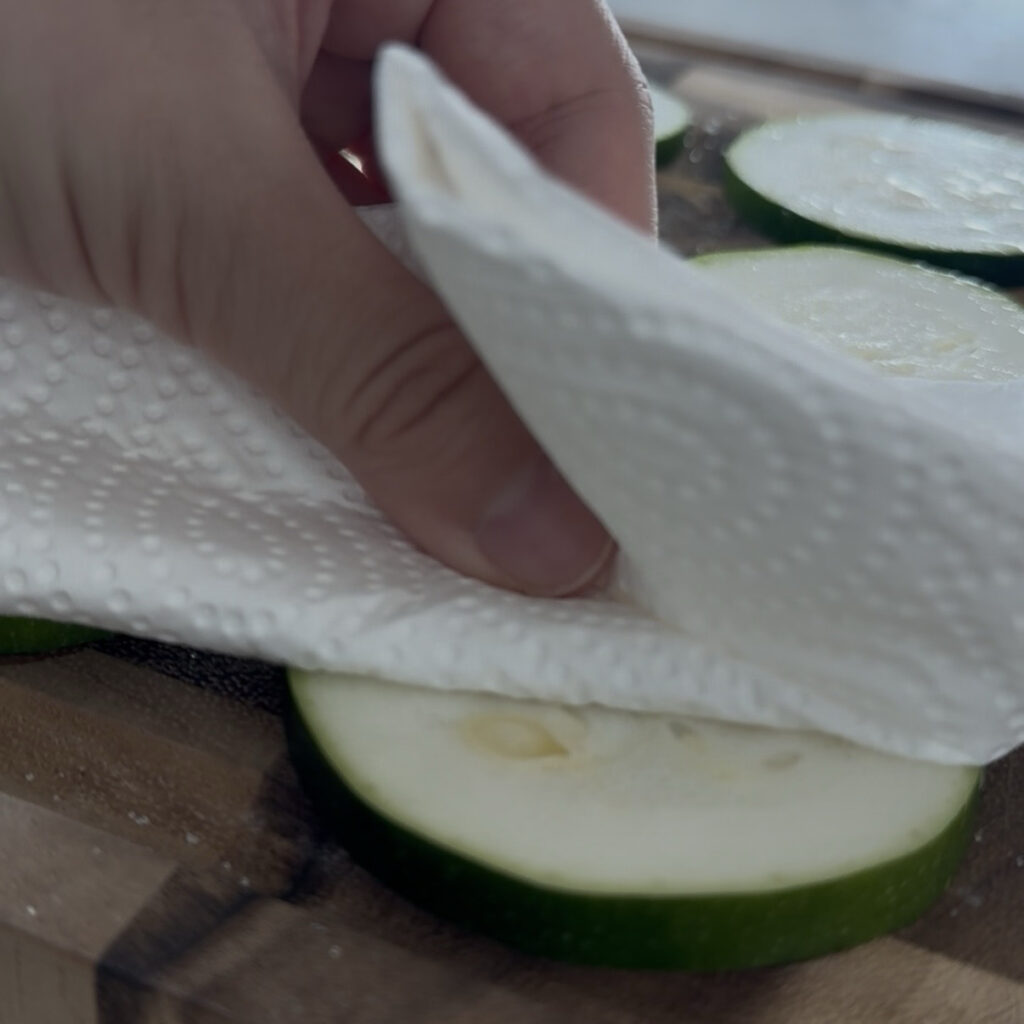
After 5–10 minutes, you’ll see some moisture on the zucchini Pat each slice dry with a paper towel. You don’t need to dry it completely, but make sure the slices aren’t too wet. This helps the flour stick better.
Try not to leave the zucchini in the salt for too long. It will release more water and the slices can get too soft.
Step 3. Coat with Flour and Egg
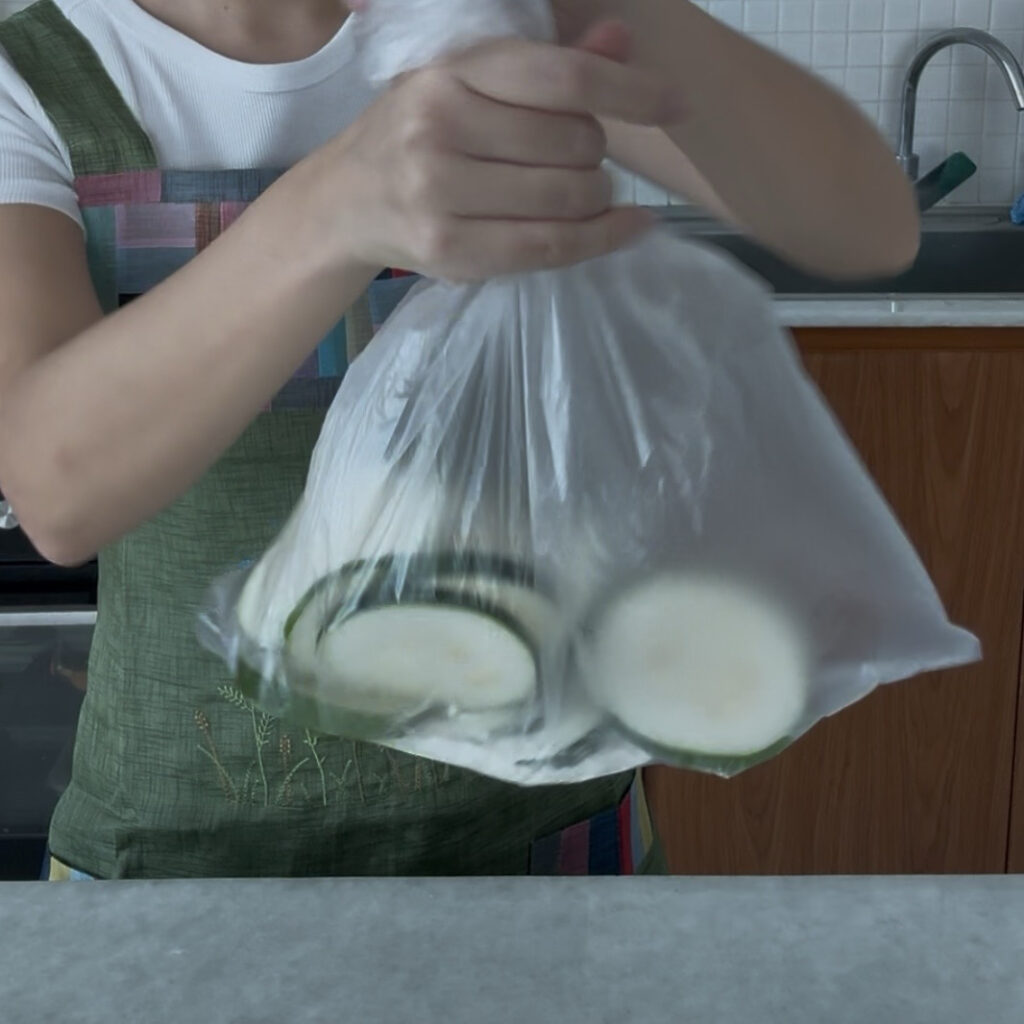
I usually use a plastic bag for this step. Put the zucchini slices and flour into the bag, leaving a little air inside. Seal the bag and gently shake it until the slices are lightly coated with flour. Shake off any extra flour.
If you don’t have a plastic bag, you can just use a shallow bowl. Put the flour in the bowl and coat each slice on both sides, then shake off the extra flour. Make sure the flour isn’t too thick, since the egg won’t stick as well.
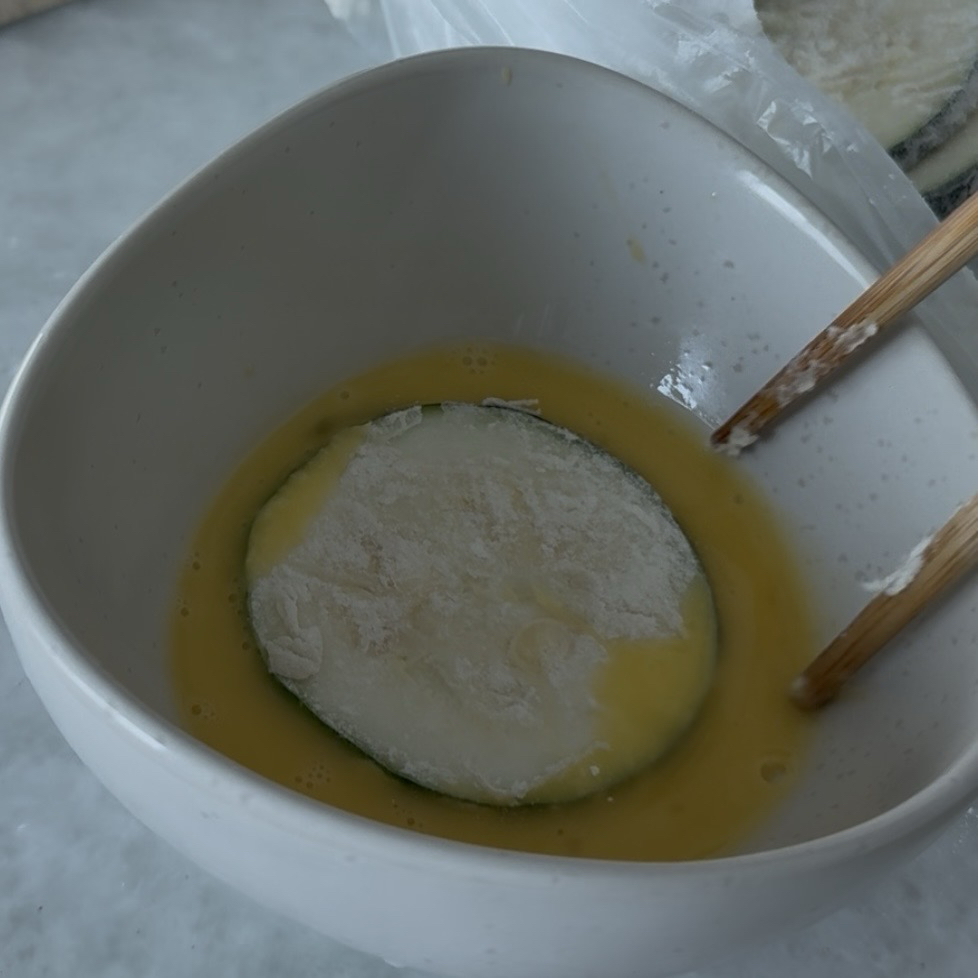
In a separate bowl, beat the egg well until the yolk and white are fully combined. Dip each zucchini slice into the beaten egg, making sure it’s evenly coated.
step 4. Pan-Fry the Zucchini
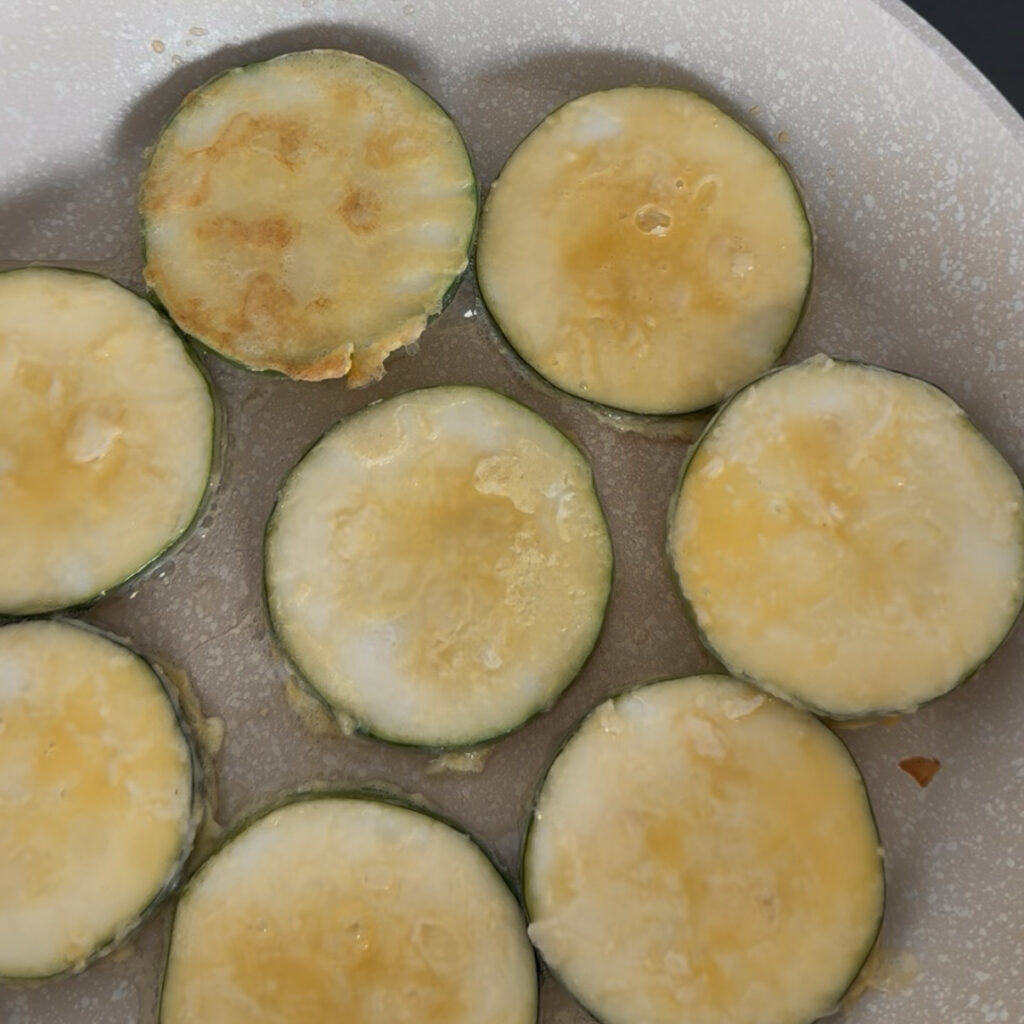
Heat a little oil in a nonstick pan over medium heat. Once the pan is hot, add the egg-coated zucchini slices in a single layer. Cook for about 2–3 minutes on each side, until both sides are lightly golden.
Keep the heat around medium so the outside doesn’t brown too quickly. Add a little more oil if needed. If you have a lot of zucchini, cook it in batches so the slices have enough room in the pan.
step 5. Make the Dipping Sauce and Serve
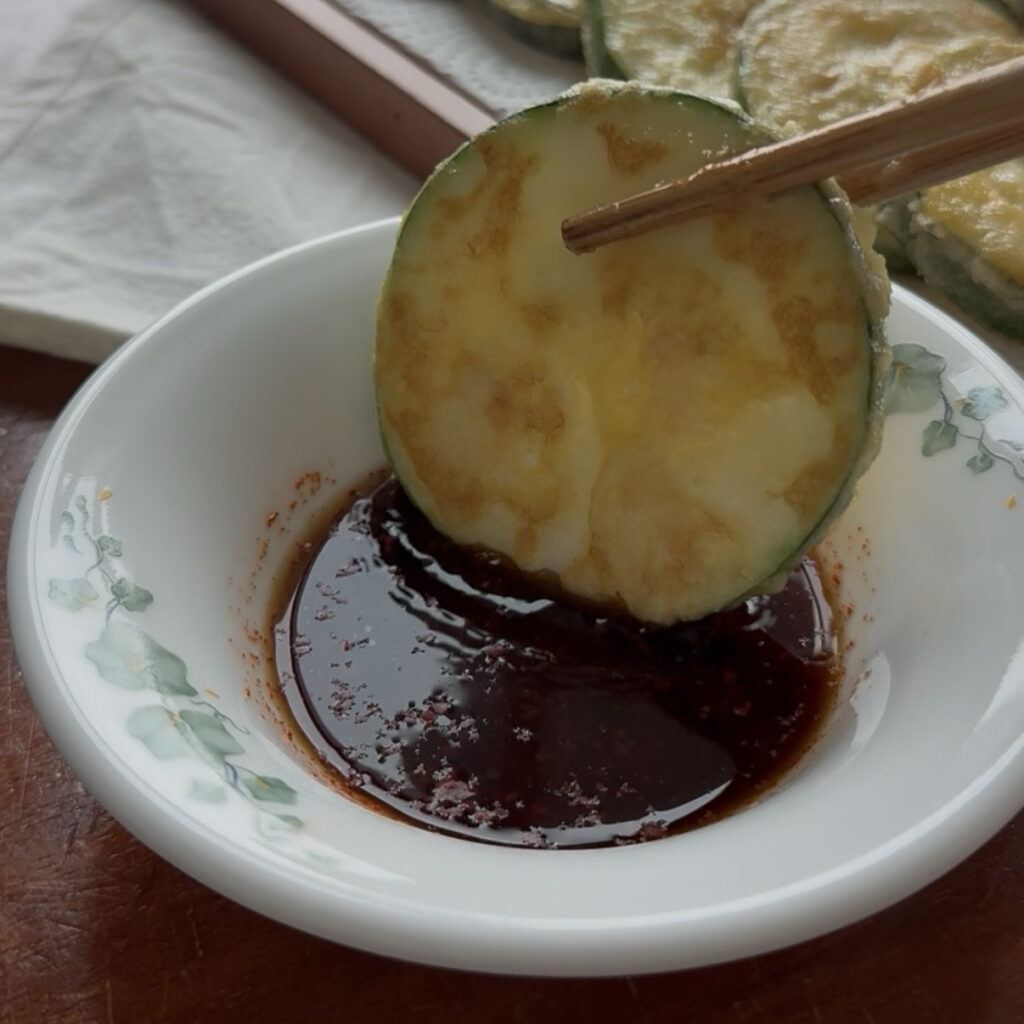
In a small bowl, mix the soy sauce, vinegar, water, and sugar. Stir until the sugar dissolves. Taste it and add a little more water or vinegar if needed.
Serve the hobakjeon warm with the dipping sauce on the side. I usually make the sauce while the hobakjeon is cooking, so everything is ready at the same time.
🍽️ Serving Tips
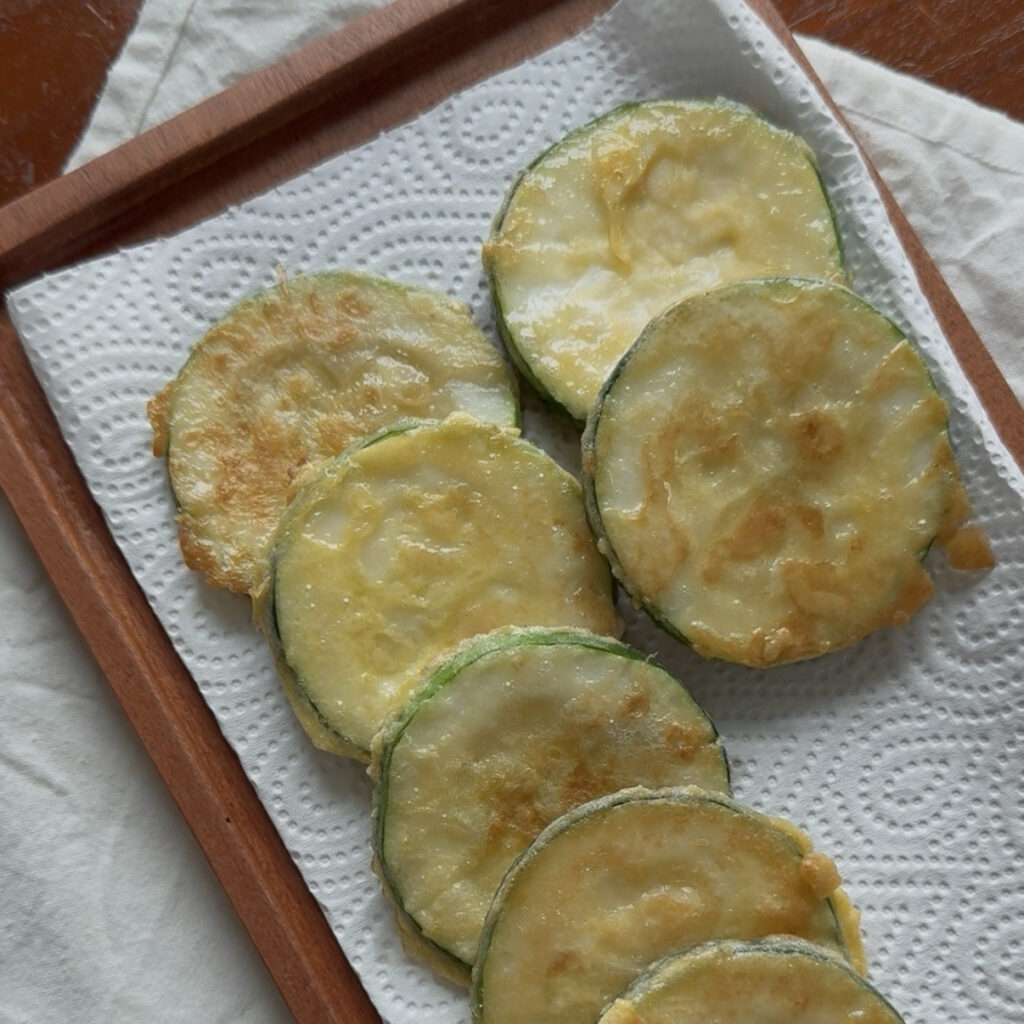
If you’re making a large batch, try not to stack the hobakjeon while they’re still hot. I usually spread them out on a large plate or tray for a few minutes. This keeps them from getting too soggy.
I also like to keep the dipping sauce on the side instead of pouring it over the hobakjeon. The coating stays better that way, especially if you’re not eating them right away.
❓ FAQ
Q. Do I need to make the dipping sauce?
A. Not necessarily. If you season the zucchini and egg well, the hobakjeon is good on its own. When I’m in a hurry, I sometimes skip the sauce and just eat it as it is. If I have a little more time, I make the dipping sauce and serve it on the side.
Q. How much oil should I use for hobakjeon?
A. You don’t need a lot of oil. I usually add just enough to lightly cover the bottom of the pan. The zucchini should sizzle gently when you put it in, but it shouldn’t be sitting in a lot of oil. Add a little more if the pan gets dry while cooking.
Q. Why do I coat the zucchini with flour?
A. The flour helps the egg coating stick to the zucchini. A light coating of flour helps the egg cover each slice more evenly and keeps it from slipping off while cooking.
Q. Why does my egg coating come off?
A. The zucchini may still have too much moisture on the surface. Make sure to pat it dry well after salting, then coat it lightly with flour before dipping it in the egg. This helps the egg coating stick better while cooking.
Q. Why is my hobakjeon soggy?
A. It could be because the zucchini has too much moisture. This can happen if you leave it in the salt for too long. Pat the slices dry before coating them with flour. Also, try not to stack the hobakjeon while they’re still hot. I usually spread them out on a plate for a few minutes after cooking.
👉👉 You Might Also Like
🇰🇷 First time cooking Korean food?
👉 8 Essential Korean Ingredients Every Beginner Needs
👉 Korean Soy Sauce Explained: Jin Ganjang vs Guk Ganjang
👉 Gochujang vs. Gochugaru: What’s the Difference?
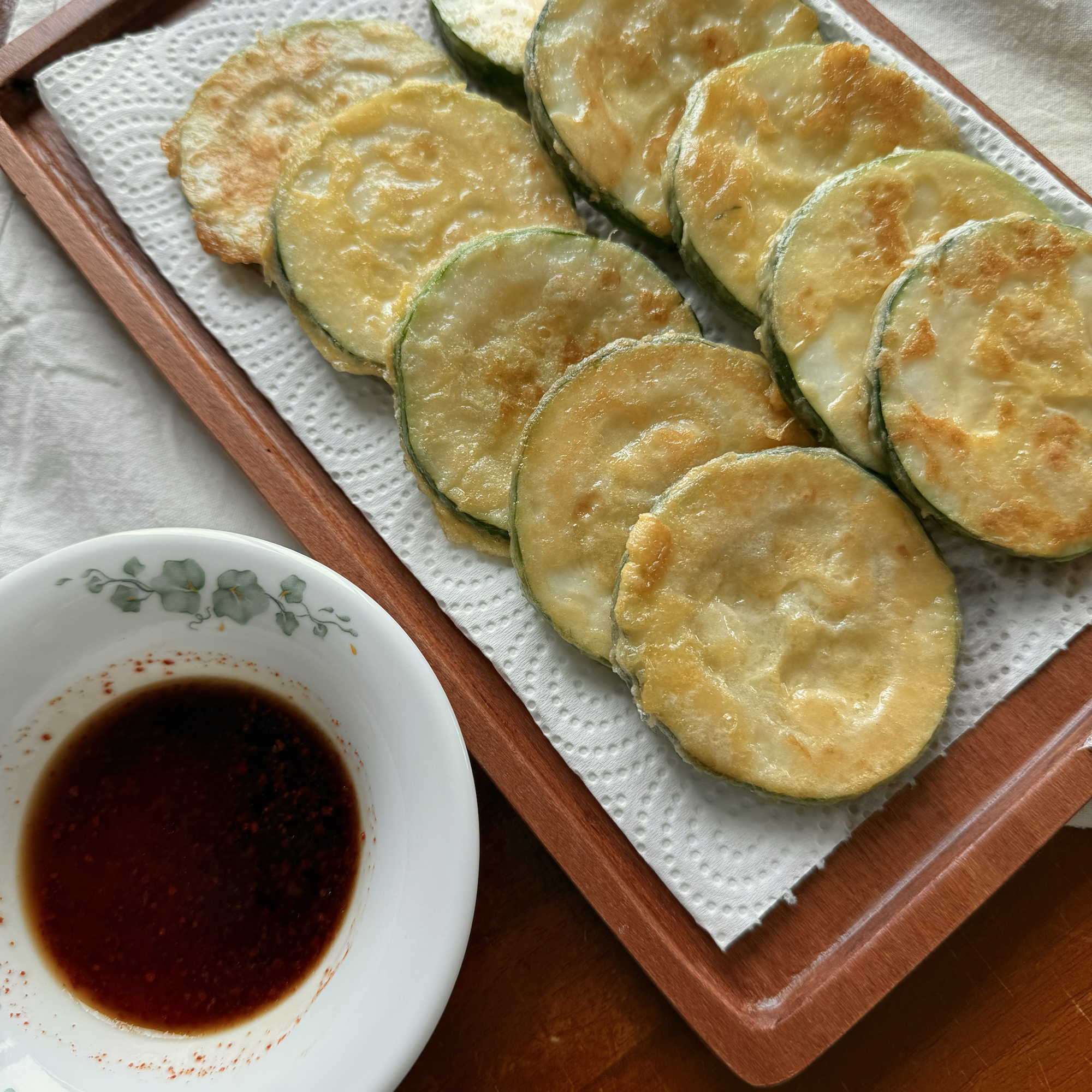

Easy Korean Zucchini Pancake (Hobakjeon)
Ingredients
Method
- Slice the zucchini into thin rounds. Sprinkle with salt and let sit for 5–10 minutes.
- Pat the zucchini dry with a paper towel.
- Lightly coat each slice with flour, then dip in beaten egg.
- Heat oil in a nonstick pan over medium-low heat. Cook until golden brown on both sides and tender.
- Mix the soy sauce, vinegar, water, and sugar in a small bowl.
- Serve warm with the dipping sauce.

Hi, I’m Vella, a Korean home cook sharing easy Korean recipes for everyday cooking. I focus on simple recipes, practical tips, and ingredients that are easy to find outside Korea.