
🥢 Introduction
Some days I just want something warm and comforting, but I don’t have the energy to cook anything complicated. On days like that, bibimbap is one of my favorite meals to make. It’s filling, comforting, and a great way to turn a few simple ingredients into a proper meal.
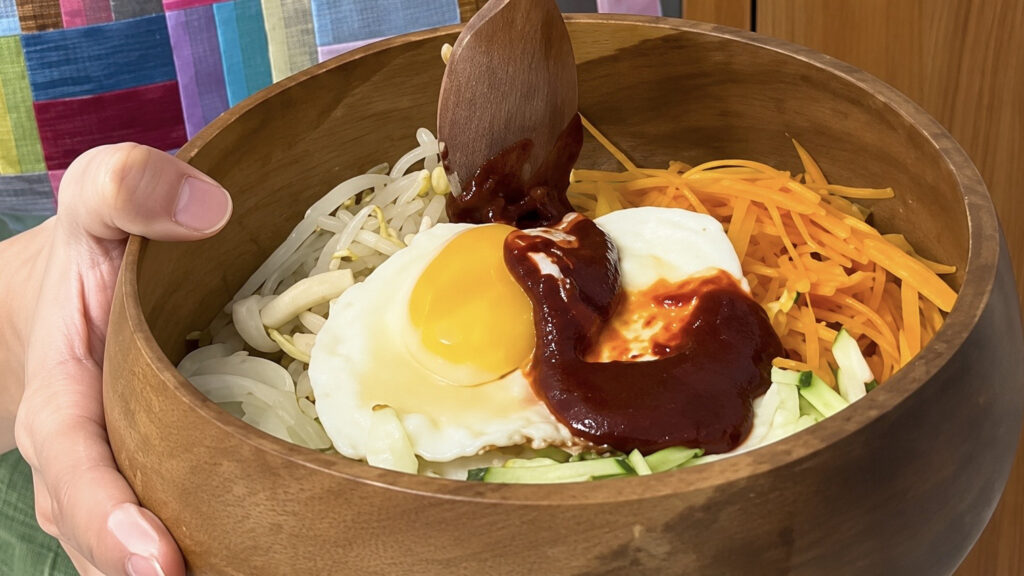
Bibimbap is one of the most well-known Korean dishes. The name literally means “mixed rice,” and that’s exactly what it is: warm rice topped with vegetables, an egg, and gochujang, all mixed together before eating.
Growing up in Korea, bibimbap didn’t always feel like a dish that needed a special recipe. It was often something you could make with whatever vegetables or side dishes you already had at home. Add them to rice with an egg and some gochujang, mix everything together, and you have a satisfying meal.
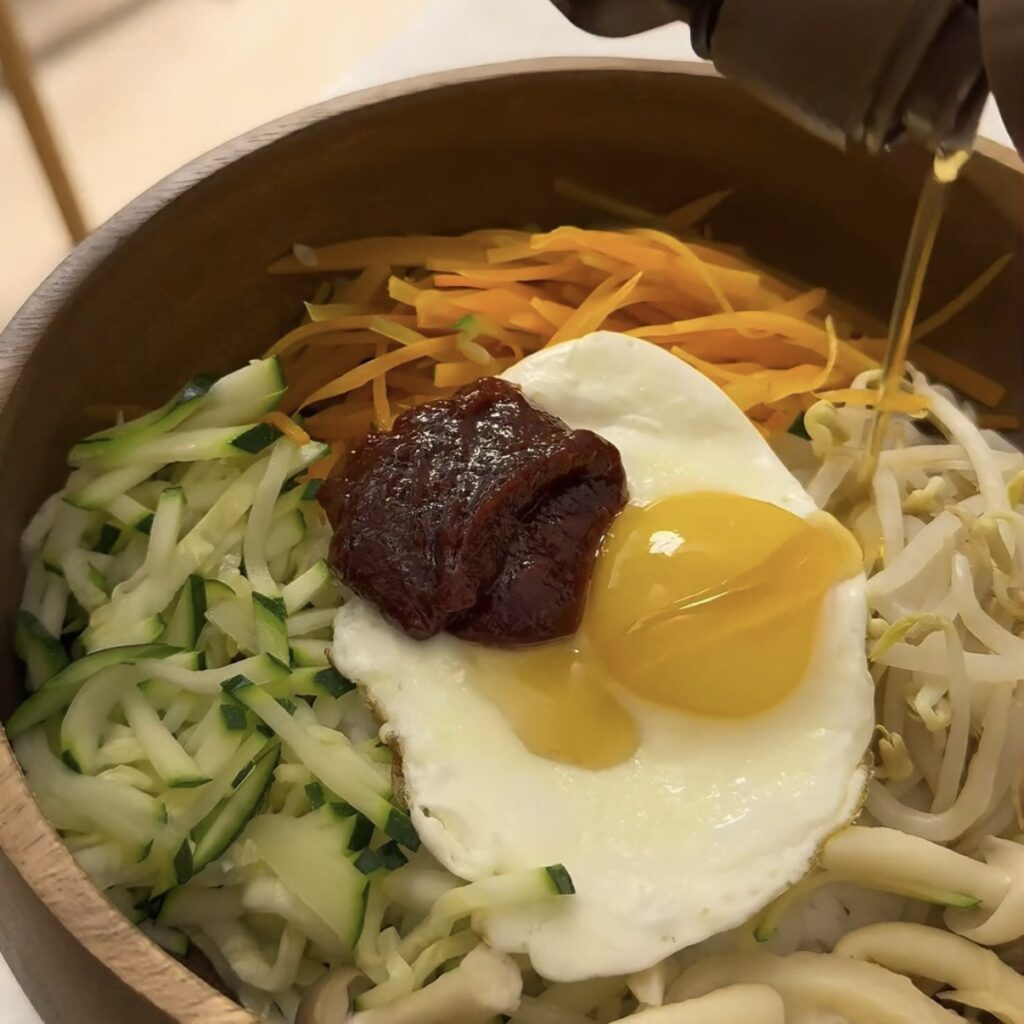
Traditional bibimbap usually takes a little more time because the toppings are prepared and seasoned separately. This easy version keeps things much simpler. I use just a few ingredients and one pan, so it comes together quickly without losing the flavors that make bibimbap so good.
It’s the kind of Korean meal I like making when I want something homemade and comforting without spending too much time in the kitchen.
🛒 Ingredients
✔ ½ zucchini, thinly sliced : Thinly sliced zucchini cooks quickly and adds a mild, slightly sweet flavor.
✔ ½ carrot, thinly sliced : Thinly sliced carrot adds a little sweetness, crunch, and color to the bowl.
✔1 Handful Mung Bean Sprouts : Light and crunchy, mung bean sprouts add a fresh texture to the bibimbap.
✔ 1 handful of mushrooms : Use your favorite mushrooms. They add a savory flavor and tender texture.
✔ 1 bowl warm rice : The base of bibimbap. Warm, freshly cooked rice works best for mixing with the toppings and sauce.
✔ 1–2 tbsp gochujang (Korean chili paste) : This gives bibimbap its signature spicy, savory, and slightly sweet flavor. Adjust the amount to your taste.
✔ 1 egg (fried or raw yolk is fine) : A fried egg on top adds richness, especially when the yolk mixes into the rice.
✔ 1 tsp sesame oil : Just a little adds a nutty aroma and brings all the flavors together.
Tip: Any leftover veggies in your fridge will work great.
👩🍳 Instructions
Step 1. Prepare the ingredients
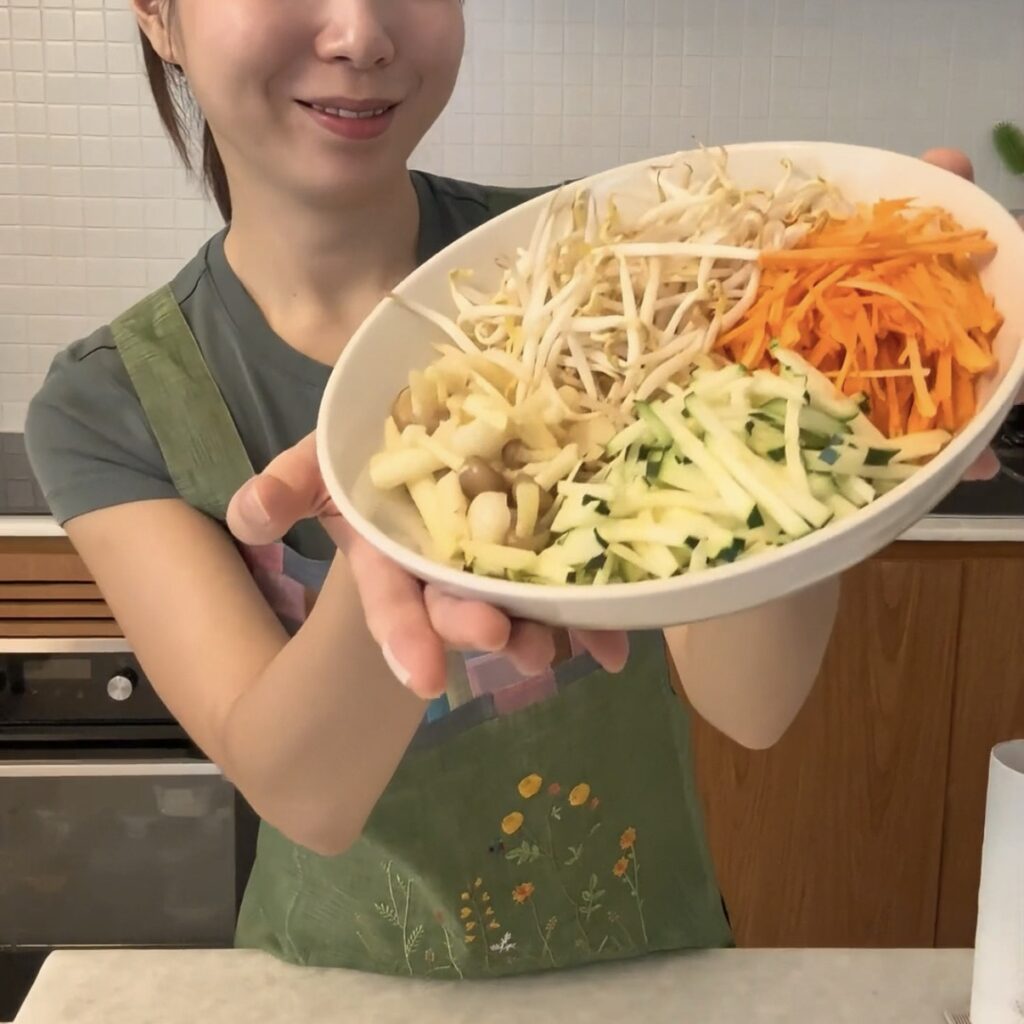
Slice the zucchini and carrot thinly so they cook quickly. Give the bean sprouts and mushrooms a quick rinse and shake off the excess water. And don’t forget the warm rice. Have it ready in a bowl, waiting for its toppings.
Step 2. Add the vegetables to the pan
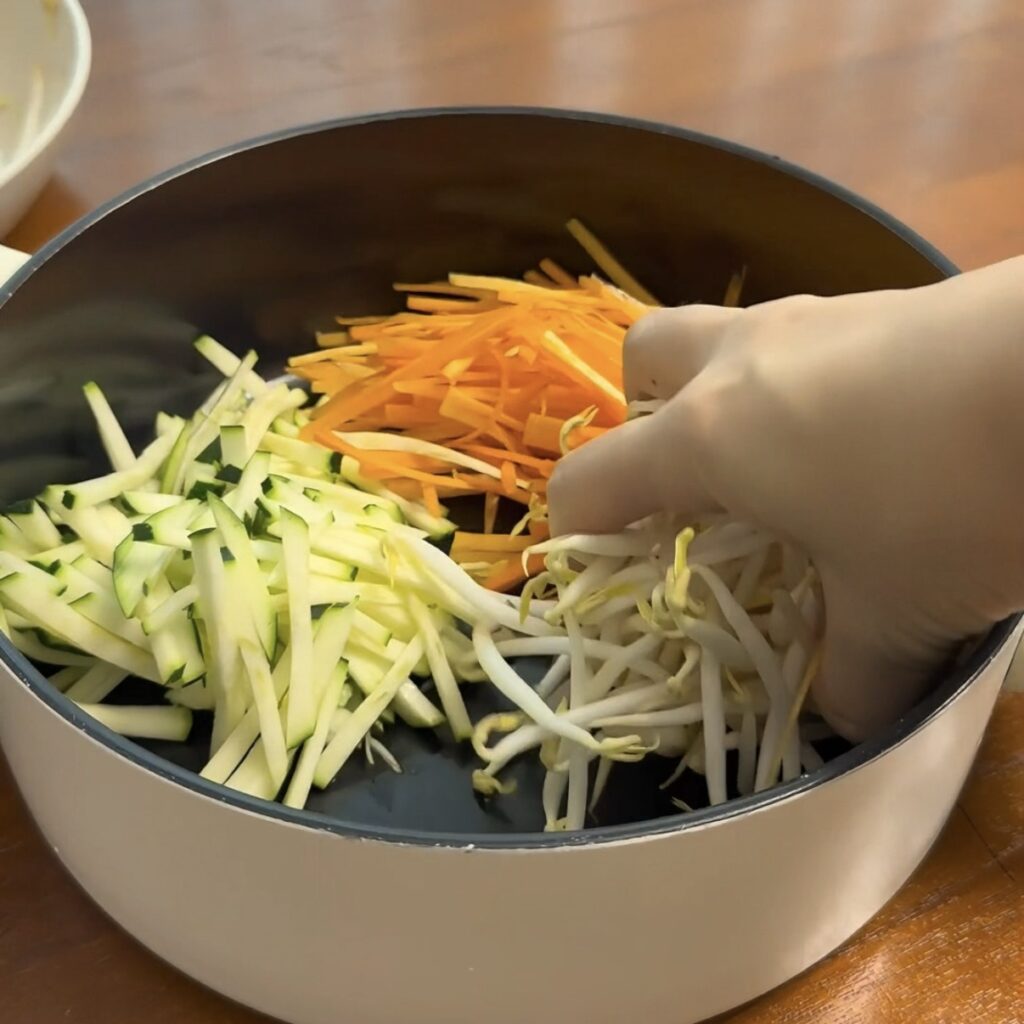
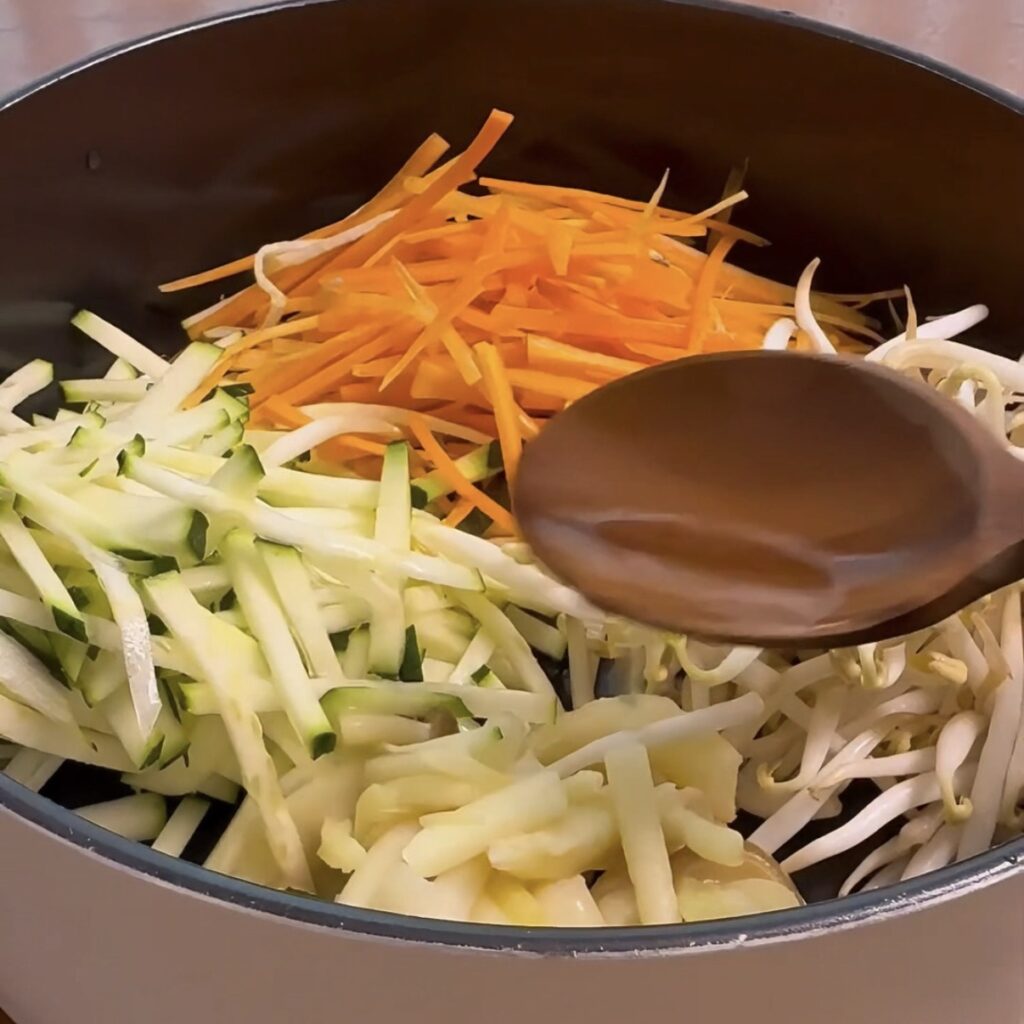
Place the zucchini, carrot, mung bean sprouts, and mushrooms in a pan over medium heat. Add just a small splash of water—only enough to create a little steam as the vegetables cook.
Step 3. Cover and cook
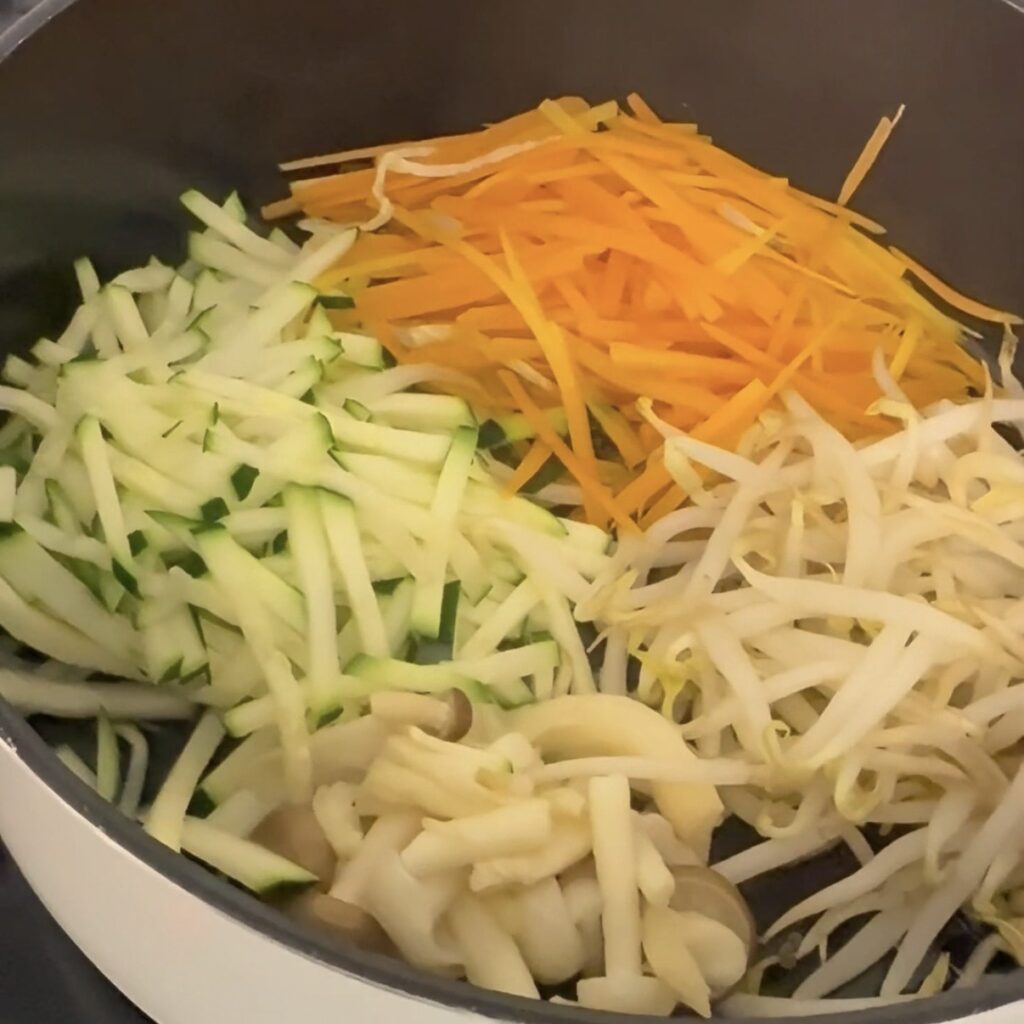
Cover with a lid and cook for about 3–5 minutes. Stir once or twice while cooking so the vegetables cook evenly. They should be tender but still have some texture, especially the carrot and bean sprouts.
Step 4. Remove any excess moisture
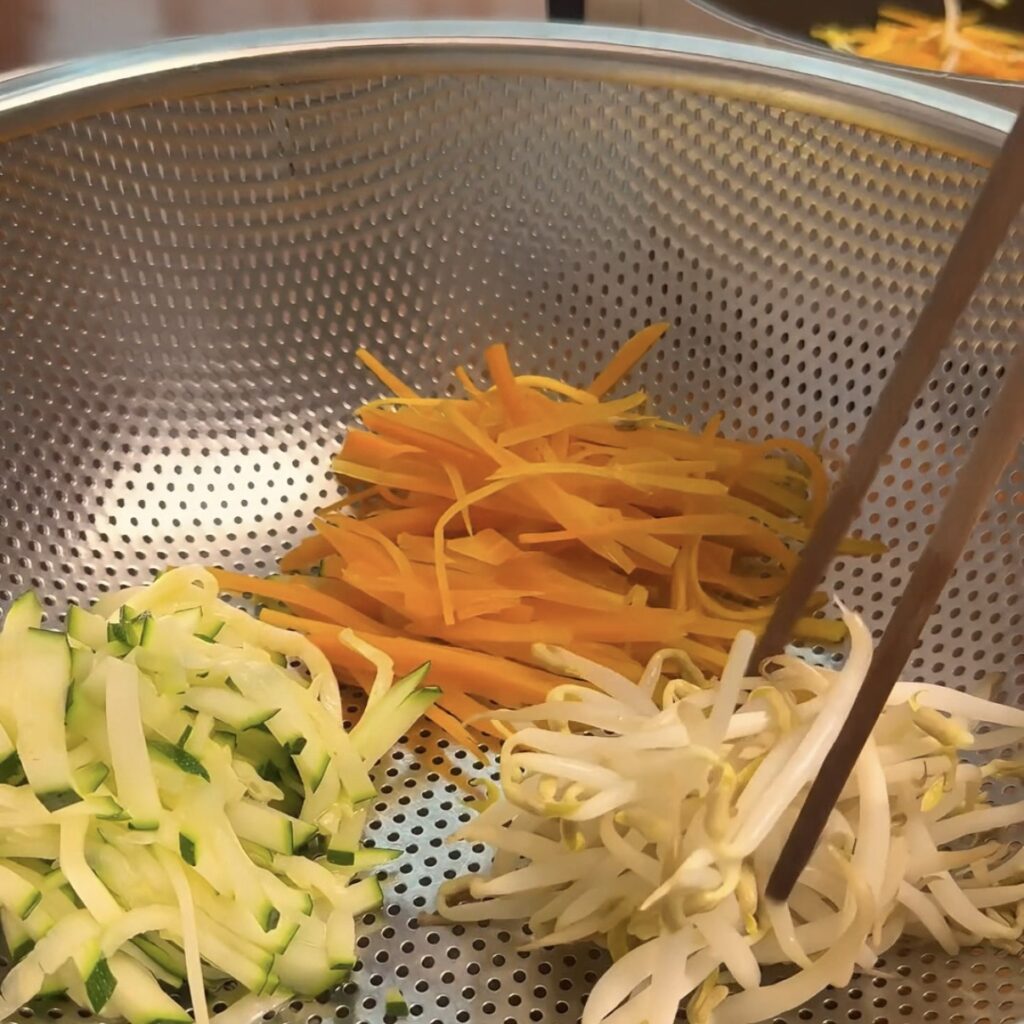
Take off the lid once the vegetables are cooked. If there is water left in the bottom of the pan, continue cooking uncovered briefly until most of the excess moisture has evaporated. This helps keep the bibimbap from becoming watery.
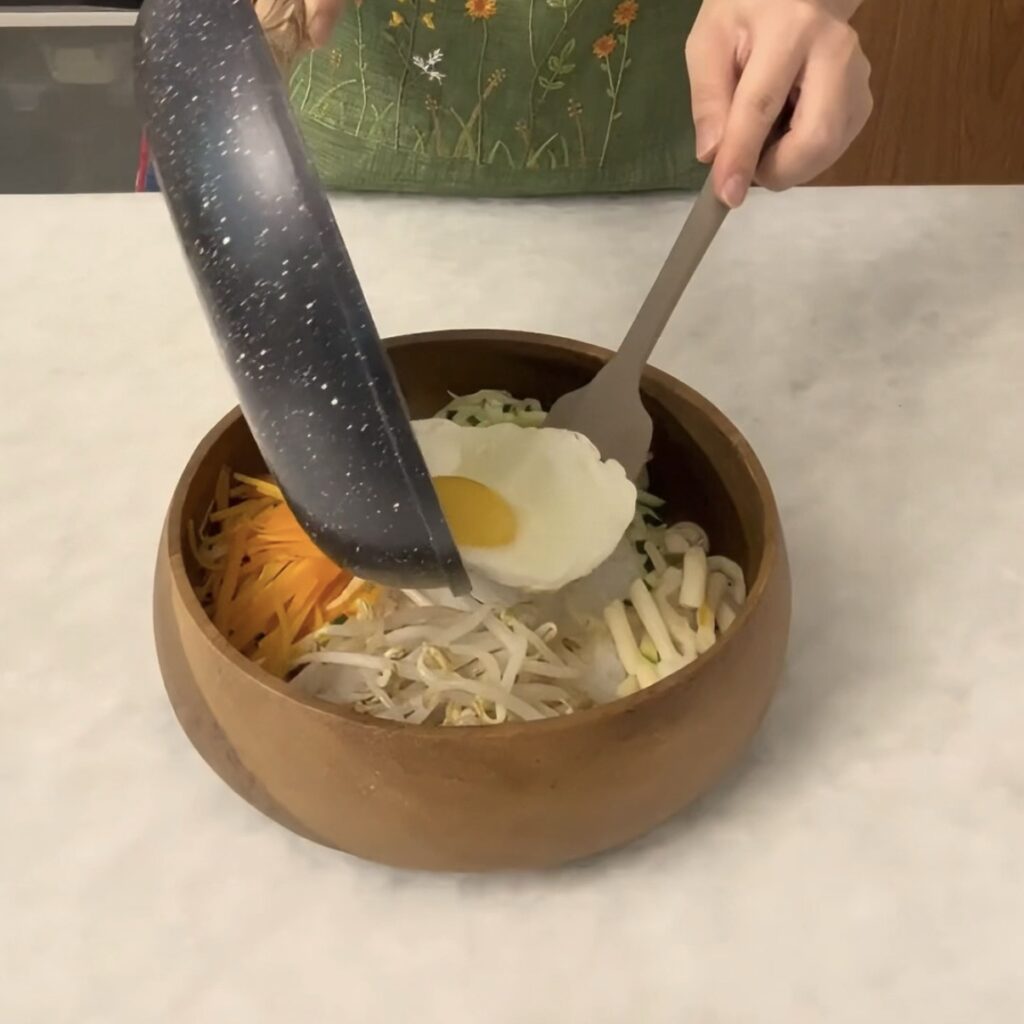
Step 5. Assemble the bibimbap
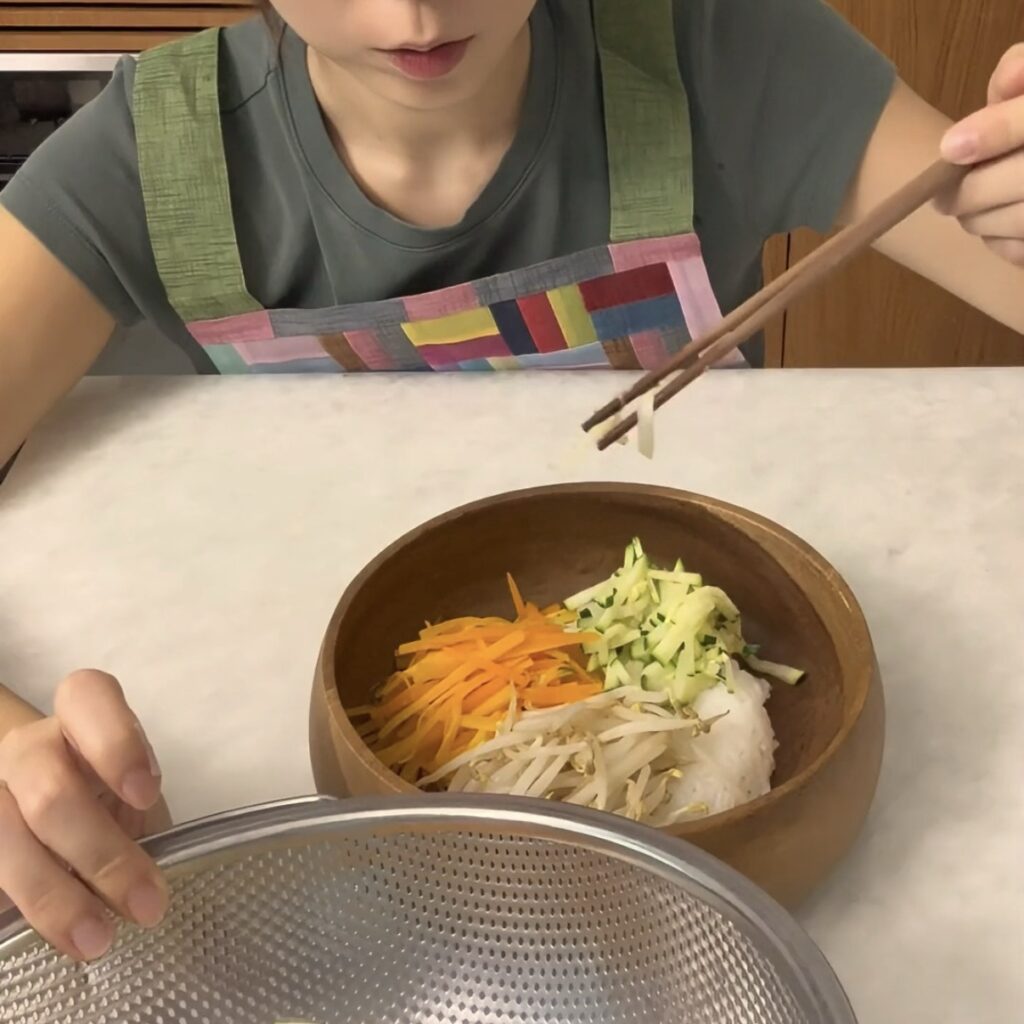
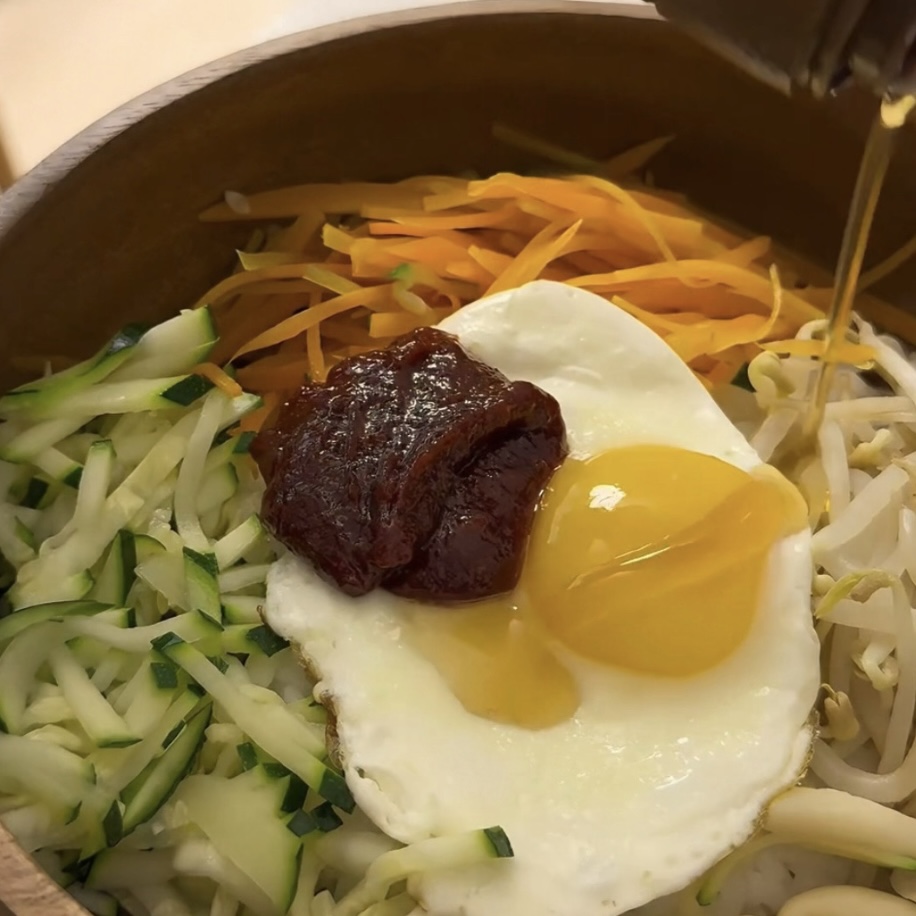
Place the cooked vegetables over the warm rice. Top with a fried egg, then add 1–2 tablespoons of gochujang and 1 teaspoon of sesame oil.
Step 6. Mix and enjoy
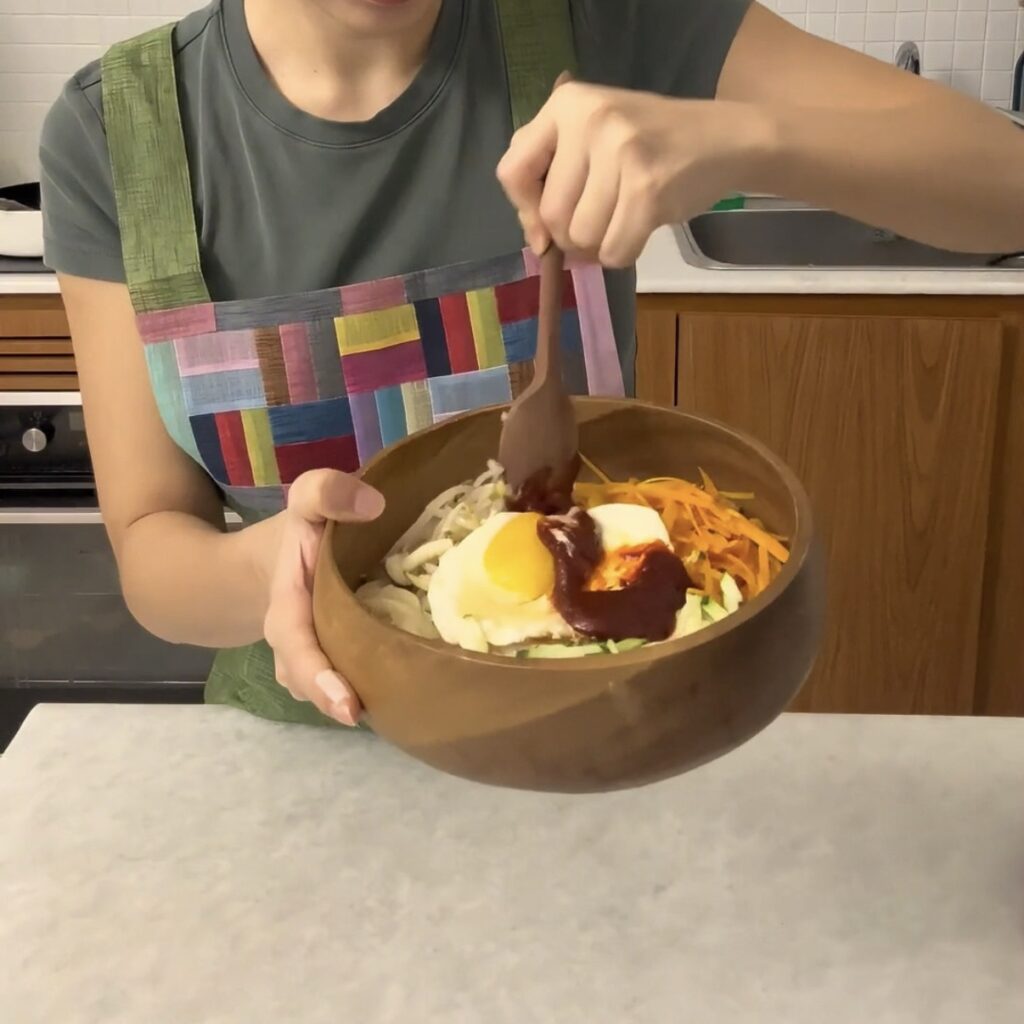
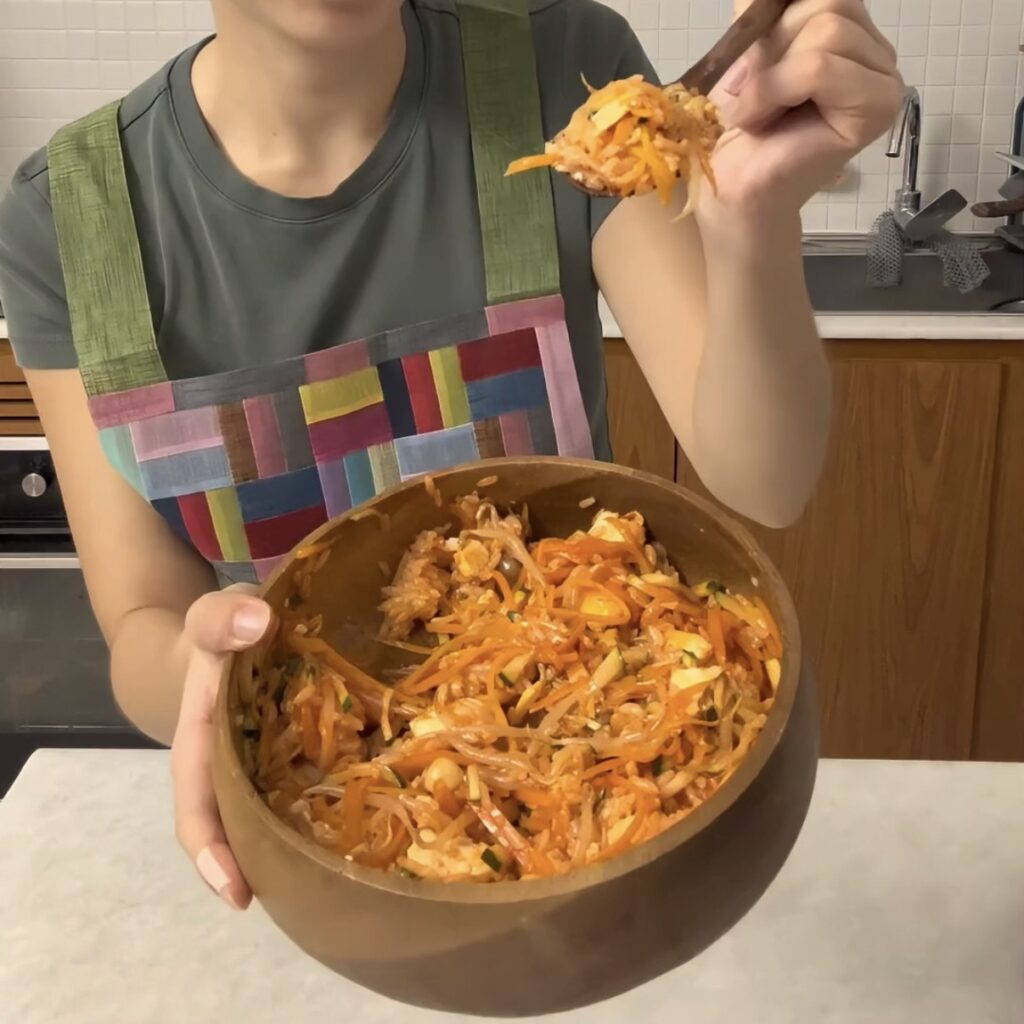
Mix everything thoroughly until the gochujang and sesame oil are evenly distributed through the rice and vegetables. Taste first, then add more gochujang if needed. Serve immediately while warm.
🍽️ Serving Tips
✔ Add roasted seaweed or sesame seeds for extra nutty flavor and a little crunch.
✔ Adjust the gochujang to your taste. Start with 1 tablespoon, mix well, and add more if you want it spicier.
✔ Top with a runny fried egg if you like. Once mixed in, the yolk adds richness to the rice and vegetables.
✔ Keep the vegetables separate when plating for that classic colorful bibimbap look. They’ll all get mixed together before eating anyway.
✔ Serve while the rice and vegetables are still warm. Mix everything well just before eating so the gochujang and sesame oil coat the whole bowl.
❓FAQ
Q. Can I add meat to bibimbap?
Yes! Beef is a classic choice for bibimbap, but chicken or pork works well too. Cook the meat separately, season it lightly with soy sauce, and add it on top with the vegetables. Thinly sliced or ground meat is especially easy because it cooks quickly. For one bowl, a small handful is usually enough to make the meal more filling without covering up the vegetables and gochujang.
Q. Is this bibimbap vegetarian?
Yes. This version is vegetarian as written, since it’s made with rice, vegetables, gochujang, sesame oil, and an egg. If you want to make it vegan, simply leave out the egg. Just check the label on your gochujang as well, since ingredients can vary depending on the brand.
Q. Do I need sesame oil?
I really recommend it if you have some. Sesame oil adds the nutty aroma that I associate with a good bowl of bibimbap, and you only need about a teaspoon. If you don’t have it, you can still make the recipe, but the flavor will be a little different. I wouldn’t replace it with a neutral cooking oil, since it won’t give you the same flavor.
Q. What can I use instead of gochujang?
Gochujang is one of the main flavors in bibimbap, so there isn’t a substitute that tastes exactly the same. If possible, I recommend using real Korean gochujang. If you can’t find it, you can use another chili paste in a pinch, but the flavor will be different. Adding a little soy sauce and a touch of sweetness can help balance it, depending on the chili paste you use.
Q. Can I use different vegetables?
Absolutely. Bibimbap is very flexible, so you don’t have to use exactly the same vegetables every time. Spinach, mushrooms, carrots, zucchini, and mung bean sprouts all work well, but you can also use other vegetables you already have at home. Just keep in mind that vegetables have different cooking times, so harder vegetables may need to cook a little longer.
Q. Can I make bibimbap ahead of time?
You can prepare the vegetables ahead of time and keep them refrigerated, but I recommend assembling the bowl when you’re ready to eat. Reheat the rice and vegetables, then add the fried egg, gochujang, and sesame oil just before serving. This keeps the bibimbap tasting fresher and prevents the rice from sitting in the sauce for too long.
Q. How spicy is bibimbap?
That mostly depends on how much gochujang you use. For a milder bowl, start with about 1 tablespoon and mix everything well before adding more. If you enjoy spicy food, you can increase it to 2 tablespoons or adjust it to your taste. Remember that different brands of gochujang can also vary in heat and sweetness.
Q. Do I need a stone bowl to make bibimbap?
No. A regular serving bowl is completely fine for this recipe. A hot stone bowl is used for dolsot bibimbap, which gives the rice a crispy golden layer on the bottom. This easy bibimbap is meant to be simple, so you don’t need any special equipment.
👉 You Might Also Like
🇰🇷 First time cooking Korean food?
Before you start, check out these 8 essential Korean ingredients that I use in almost every recipe.
👉 Read: 8 Essential Korean Ingredients Every Beginner Needs
👉 Gochujang vs. Gochugaru: What’s the Difference?

Easy Bibimbap Recipe
Ingredients
Method
- Thinly slice the zucchini, carrot, and mushrooms. Rinse and drain the mung bean sprouts.
- Add all the vegetables to a pan with a splash of water. Cover and cook over medium heat for 3–5 minutes.
- Add the vegetables to warm rice and top with a fried egg, gochujang, and sesame oil.
- Mix everything well and serve warm.

Hi, I’m Vella, a Korean home cook sharing easy Korean recipes for everyday cooking. I focus on simple recipes, practical tips, and ingredients that are easy to find outside Korea.