
⏱️ Cooking Time
🧺 Prep: 10 min
🧂 Salting: 30 min
⏳ Fermentation: 1½–2 days (room temp)
🥢 Introduction
White kimchi often gets overlooked next to the bright red version, but it’s been part of Korean food culture for a long time.
It’s lighter, cleaner in taste, and quietly comforting.
No chili heat, no bold spice — just simple ingredients, salt, and time.
It’s the kind of food you don’t think much about at first, but end up craving later.
This recipe is meant to be practical and approachable.
Nothing fancy, nothing hard to find.
If you’re new to making kimchi, or just want something refreshing and easy, this white kimchi is a good place to start.
🛒 Ingredients
✔ 500 g Korean radish (or daikon), cut into bite-size pieces
✔ 500 g napa cabbage, cut into bite-size pieces
✔ 1 onion, cut into bite-size pieces
✔ ½–1 Asian pear, thinly sliced
✔ Green onions, chopped
✔ 2 red chilies, sliced (optional)
Seasoning & Brine
✔ 3 tbsp coarse sea salt
✔ 1½ tbsp sugar (1 tbsp for salting, ½ tbsp added later)
✔ 2 liters water
✔ 1 tbsp fish sauce
👩🍳 Instructions
Step 1. Cut the radisha
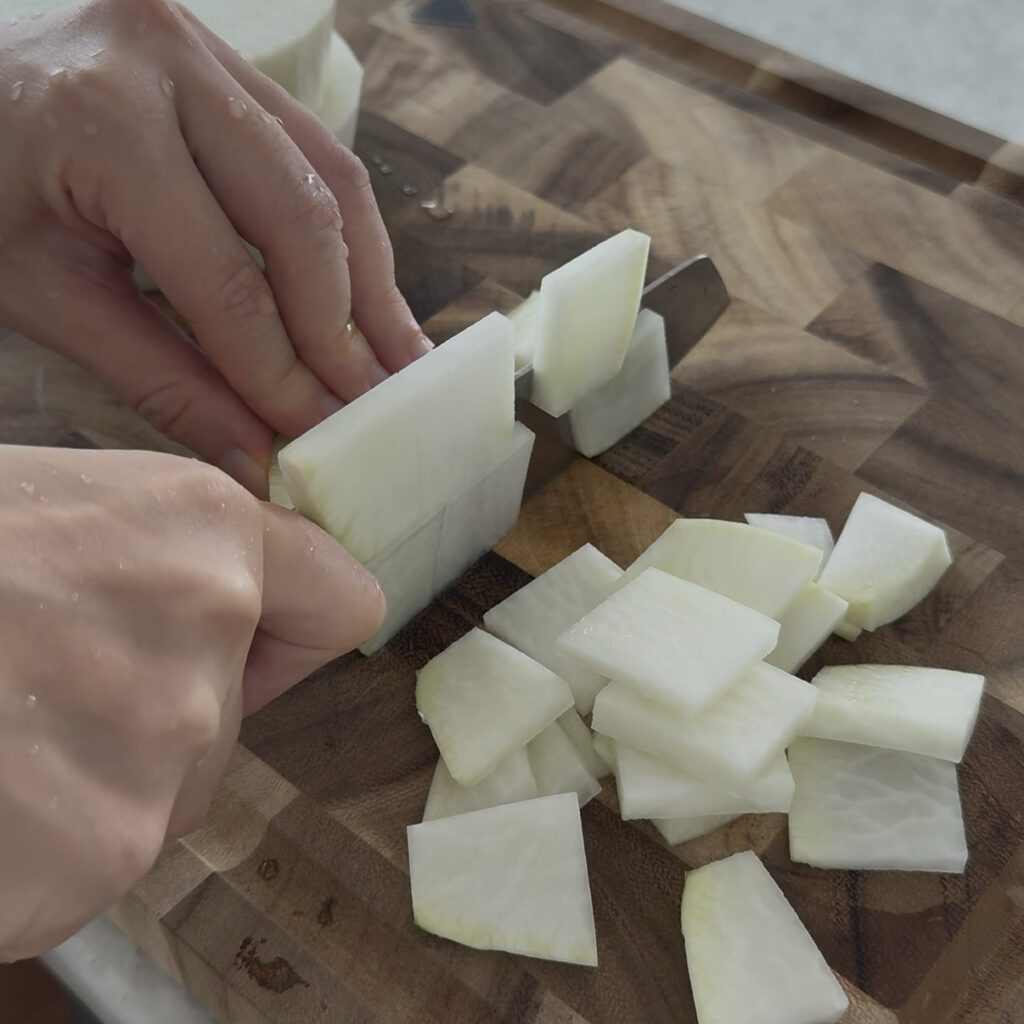
Peel the radish and cut it into bite-size pieces,
about 0.5 cm thick.
Set aside in a large bowl.
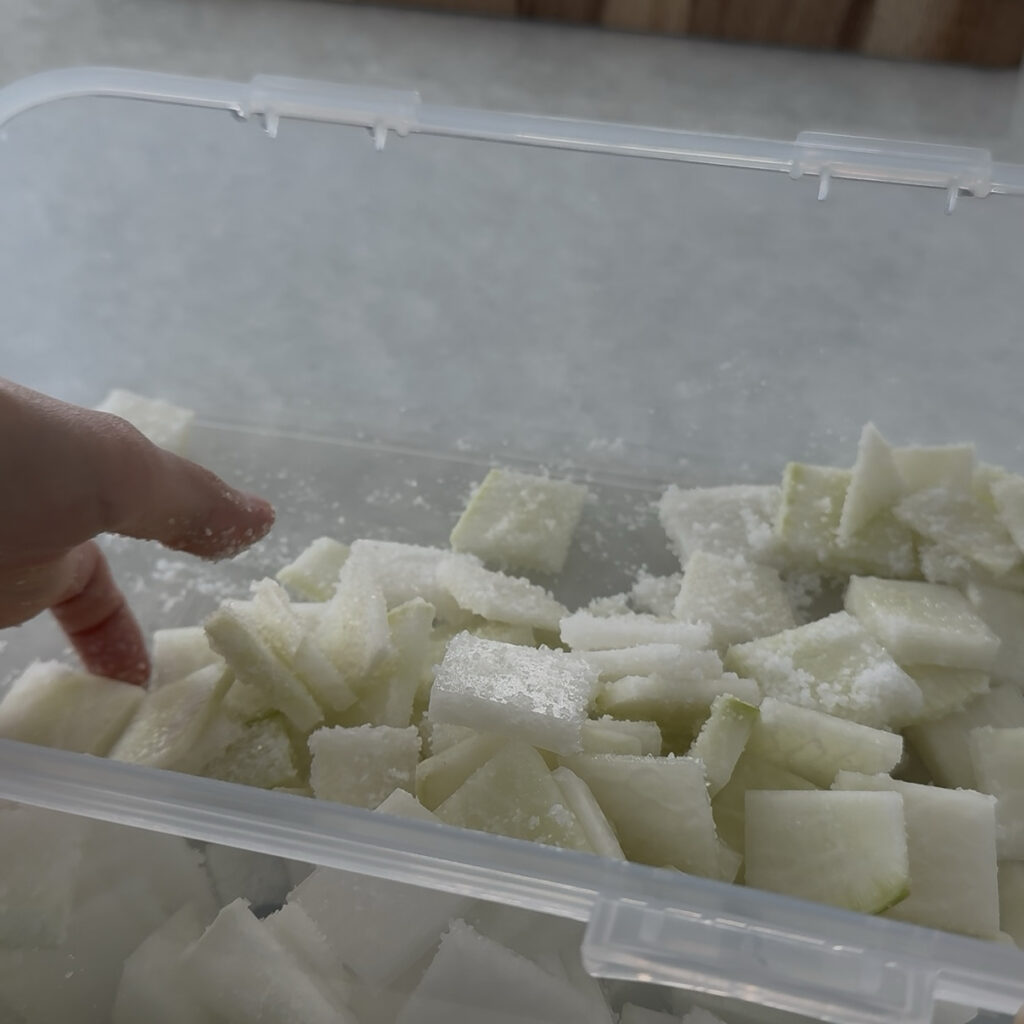
Step 2. Salt the radish
Add 3 tbsp coarse sea salt and 1 tbsp sugar to the radish.
Gently toss until evenly coated.
Let it sit for 30 minutes, until the radish softens slightly and releases some liquid.
Step 3. Prepare the remaining vegetables
While the radish is salting, prepare the rest of the vegetables.

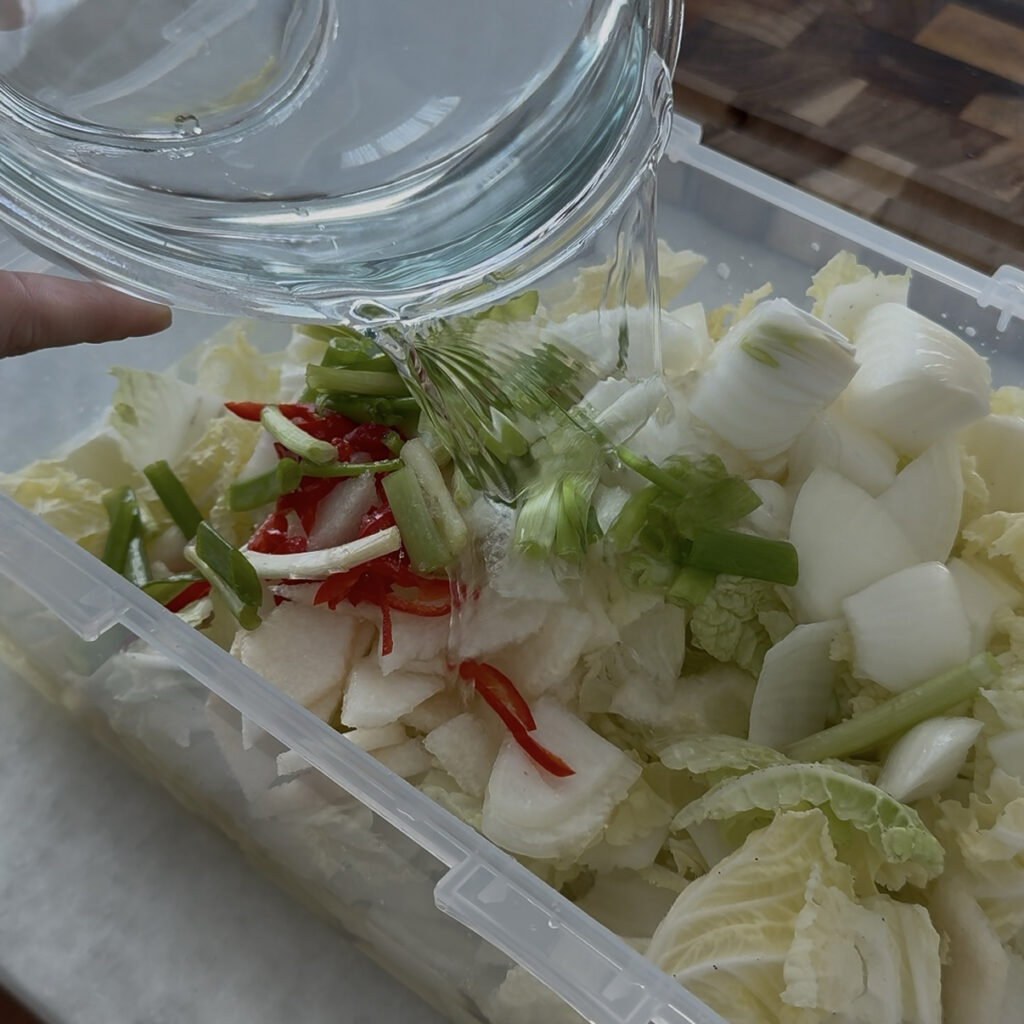
Step 4. Combine everything
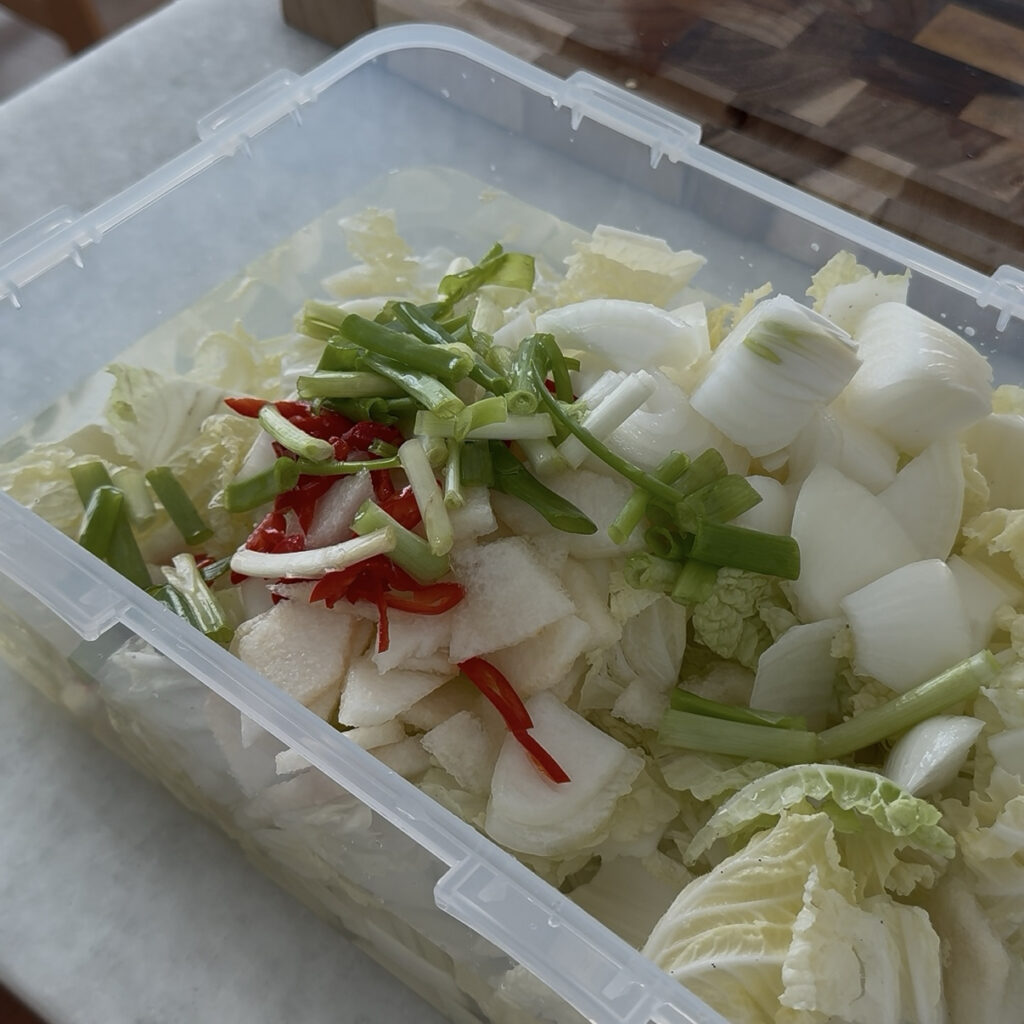
Add all the prepared vegetables to the bowl with the radish.
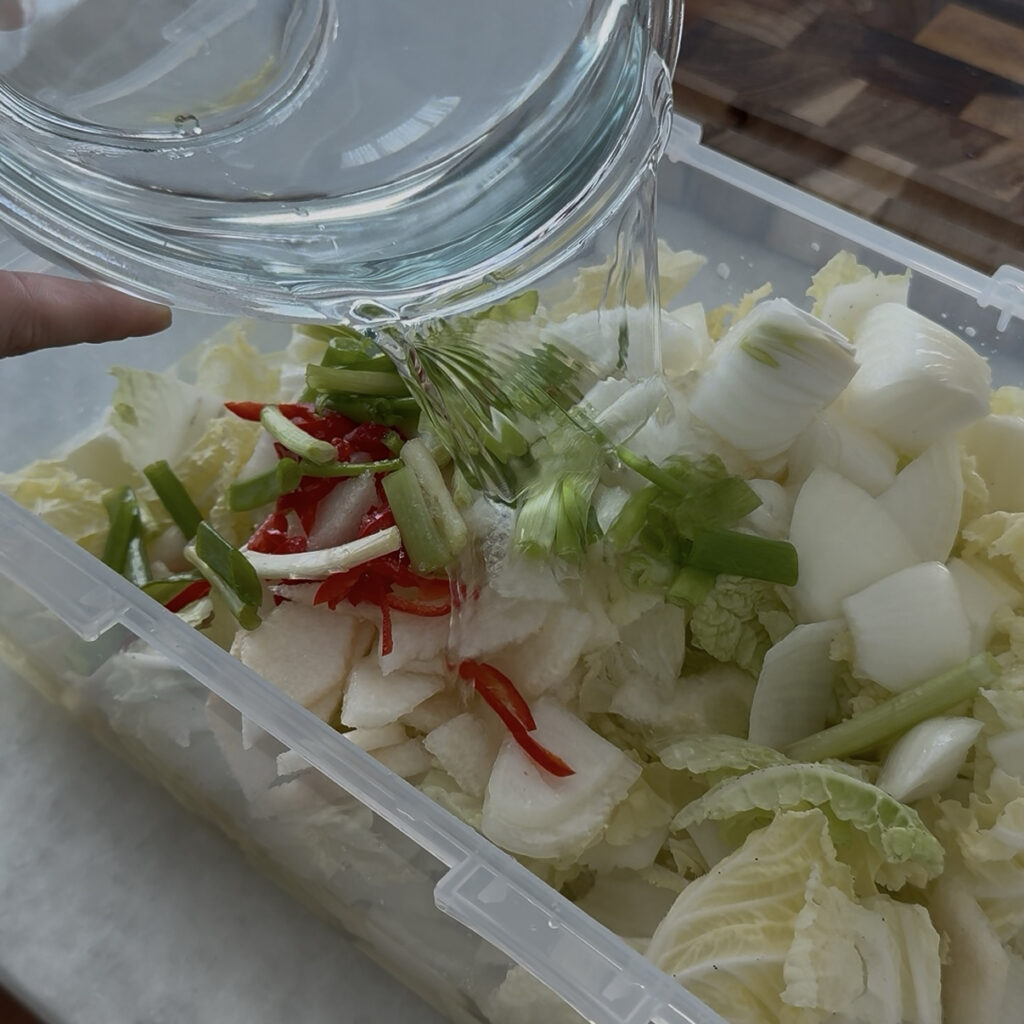
Pour in 2 liters of water and 1 tbsp fish sauce, then add the remaining ½ tbsp sugar.
Mix gently just once or twice, enough to combine without squeezing.
Step 5. Ferment
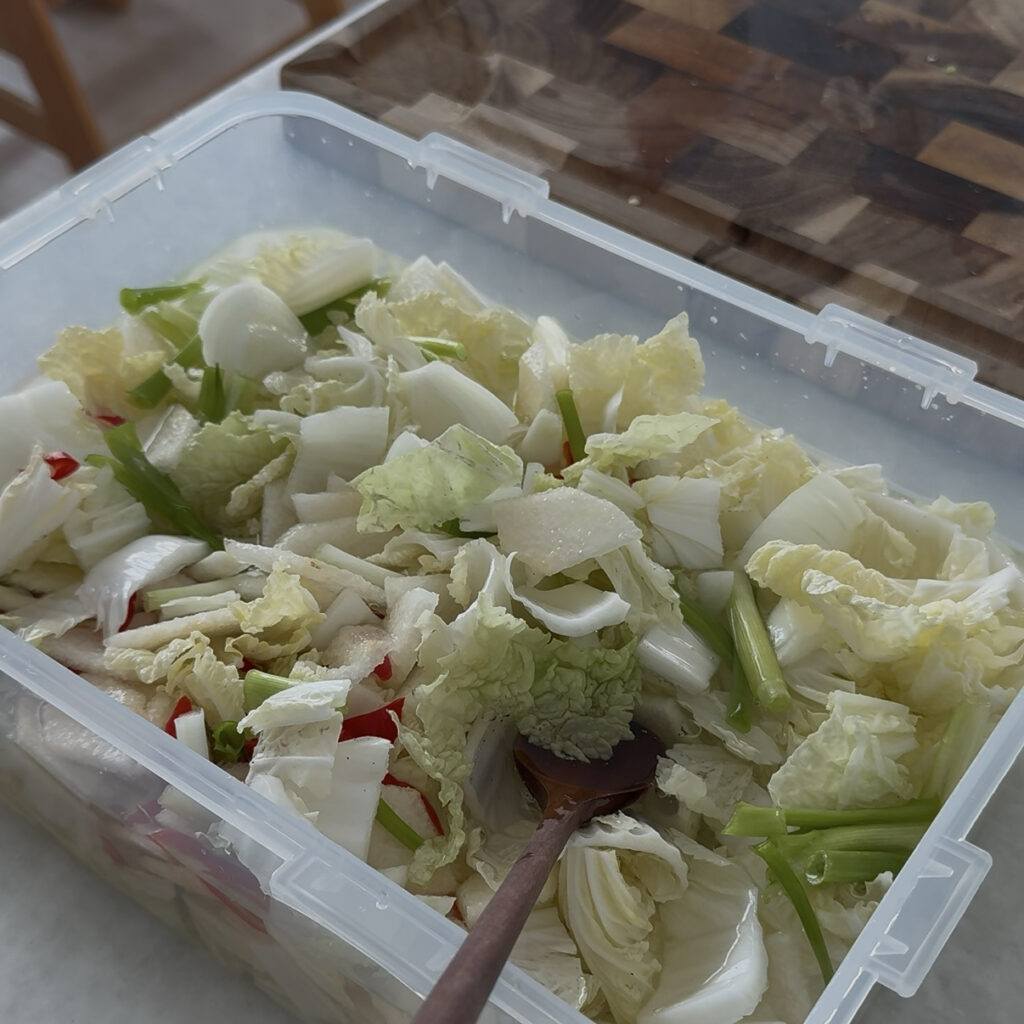
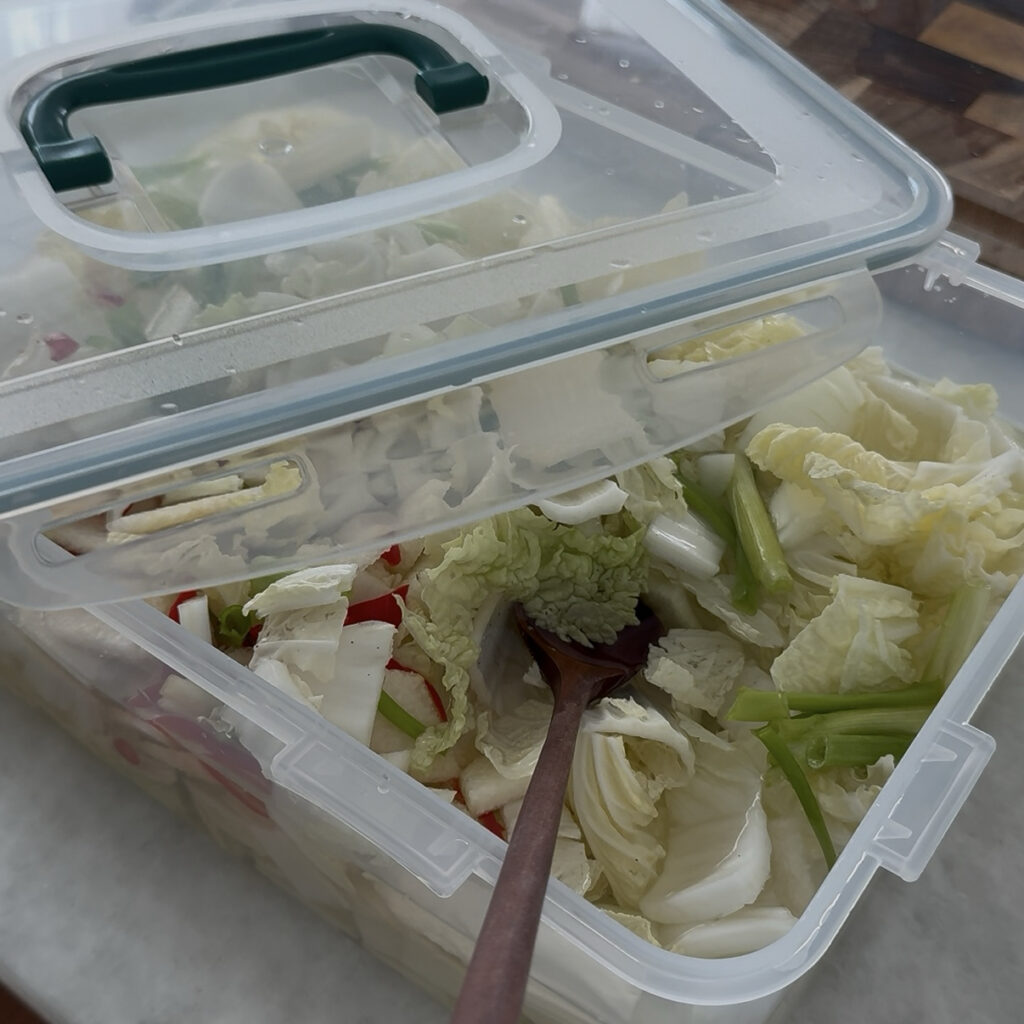
Transfer everything to a clean container.
Leave at room temperature for 1½–2 days.
Check after 24 hours —
it should smell lightly fermented and taste refreshing.
Step 6. Refrigerate
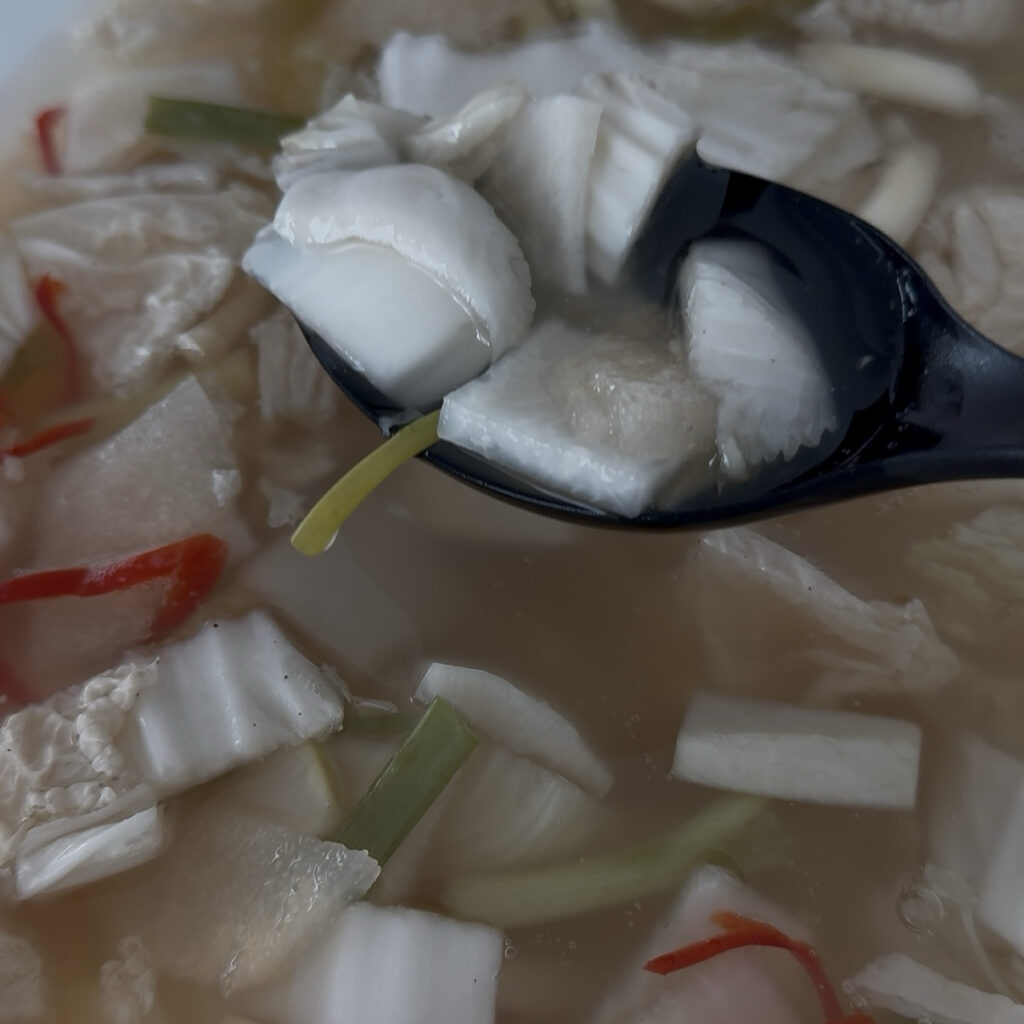
Once fermented, move the container to the refrigerator.
Chill for a few hours before serving.
The flavor will continue to develop in the fridge.
🍽️ Serving Tips
✔ Serve chilled for the cleanest, most refreshing flavor.
✔ Pair it with grilled meats, fried foods, or rich dishes to balance the meal.
✔ It also works well as a light side dish with rice and soup.
✔ The broth is just as good as the vegetables — don’t skip it.
✔ The flavor continues to develop slowly in the fridge.
💡 Additional Notes
✔ Use coarse sea salt if possible. It helps the vegetables ferment more evenly and keeps the flavor clean.
✔ If you only have fine salt, reduce the amount slightly to avoid over-salting.
✔ The vegetables don’t need to be fully submerged at the beginning — they will release more liquid as they ferment.
✔ If your room is very warm, check the kimchi after 24 hours to prevent over-fermentation.A
✔ This recipe is flexible. You can adjust the amount of pear or sugar slightly based on your taste.
❓ FAQ
Q. Do I need a special container for fermentation?
A. No. Any clean container with a loose-fitting lid works. Just don’t seal it airtight during fermentation.
Q. Does everything need to be fully submerged at the beginning?
A. Not at first. The vegetables will release more liquid as they ferment and naturally sink over time.
Q. Can I skip the fish sauce?
A. You can, but the flavor will be lighter. If needed, substitute with a small amount of soy sauce or leave it out entirely.
Q. How do I know when it’s ready?
A. It should smell lightly fermented and taste clean, mildly tangy, and refreshing. If it tastes flat, give it more time.
Q. My kitchen is warm. What should I do?
A. Check after 24 hours. If it already tastes fermented, move it to the fridge sooner.
Q. How long does white kimchi keep in the fridge?
A. White kimchi keeps well for several weeks, and often even a few months when properly refrigerated.
The flavor will continue to change and become more tangy over time.
👉 Like this recipe?


👉👉 You Might Also Like