
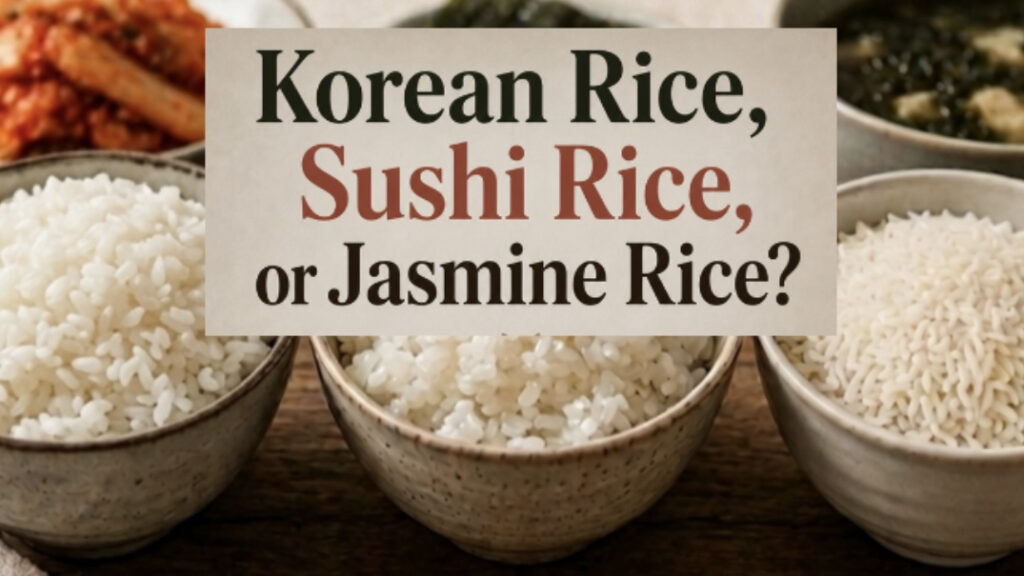
If you’re new to Korean cooking, you might wonder: Does the type of rice really matter?
As someone who has ruined a few dinners trying to make it work—yes, it absolutely matters.
In Korea, rice isn’t just a side dish. It’s the literal foundation of the whole meal. It’s what balances out the spicy kimchi, the salty stews, and the rich meats. If the rice is off, the whole meal feels incomplete.
The first time I tried making Korean food abroad, I bought jasmine rice without thinking twice. It was cheap, easy to find, and honestly, I assumed rice was just rice. It tasted fine on its own, but when I paired it with Korean food, it just didn’t feel like the meals I grew up eating.
That’s when I realized: you can’t just use any rice for Korean food.
🌾 What exactly is “Korean Rice”?
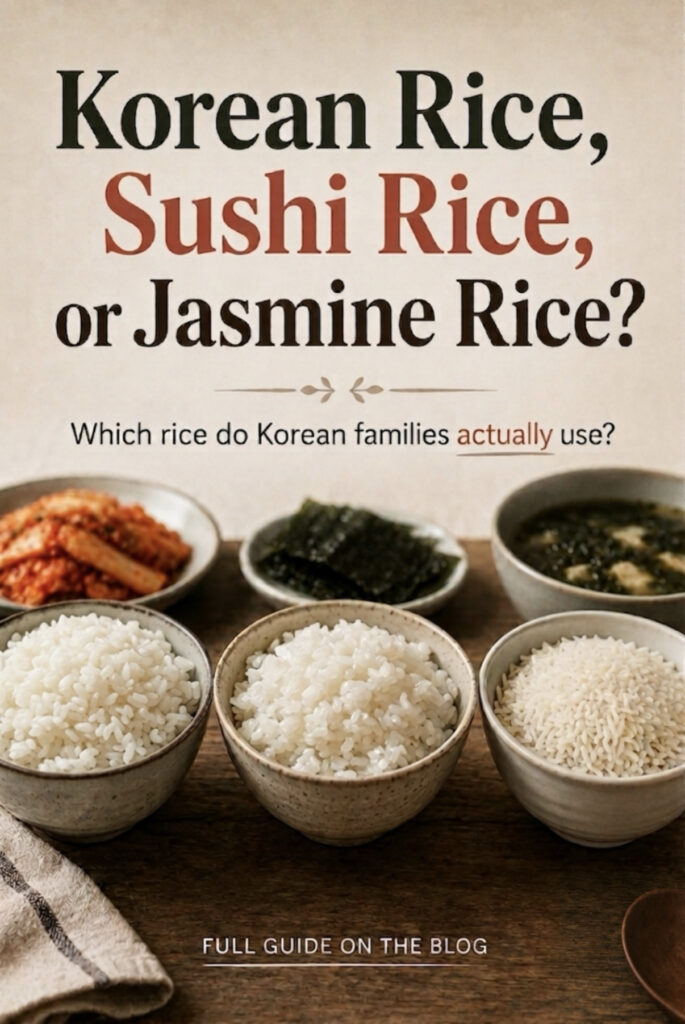
Most Korean homes eat short-grain white rice.
Unlike long-grain rice, these grains are plump and hold onto moisture. When cooked, they become soft, slightly chewy, and pleasantly sticky.
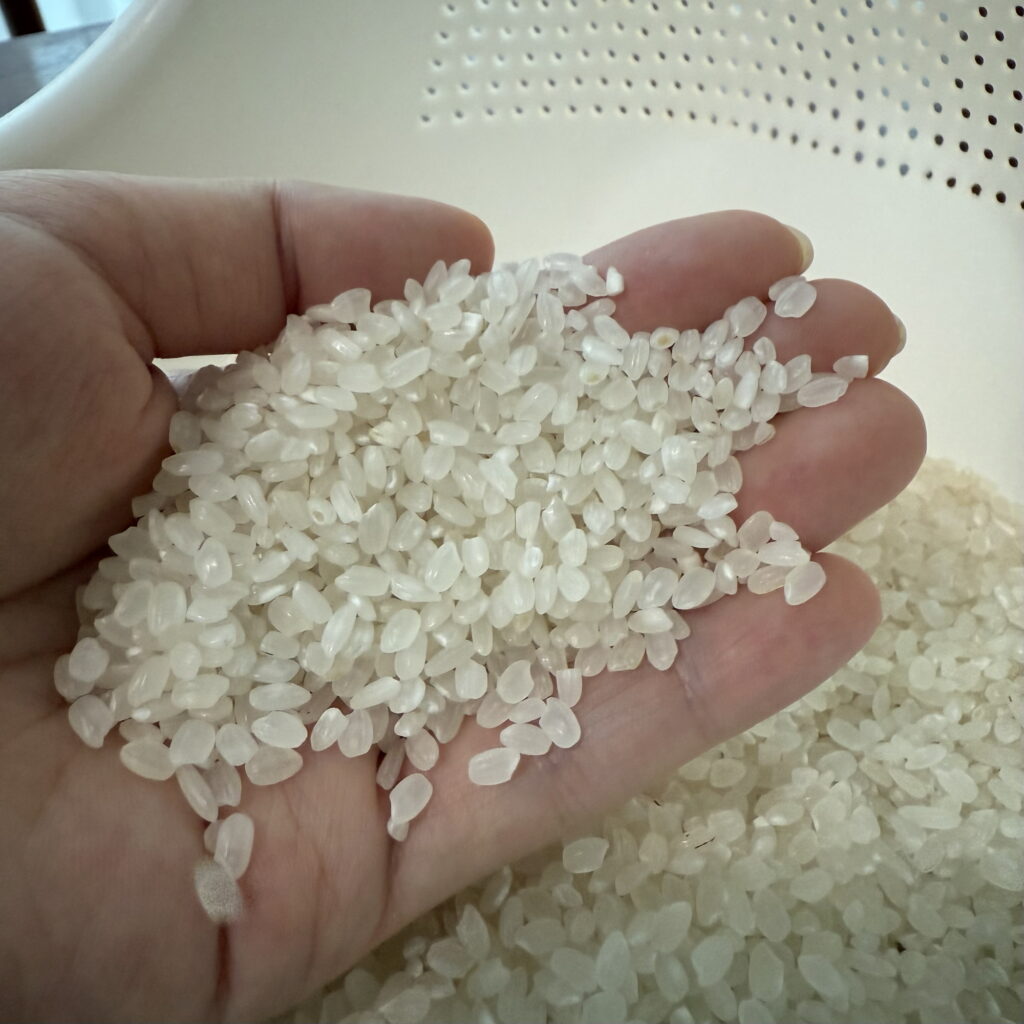
The secret is the texture. It’s slightly sticky—not “sticky rice” like the kind you use for Thai desserts, but just sticky enough to cling together so you can easily pick it up with chopsticks. It’s the only rice that properly soaks up the broth of a rich Korean stew or holds its own in a bowl of Bibimbap.
❓ Can I just use Jasmine Rice?
Look, if it’s all you have in your pantry, go for it! No one is going to police your dinner.
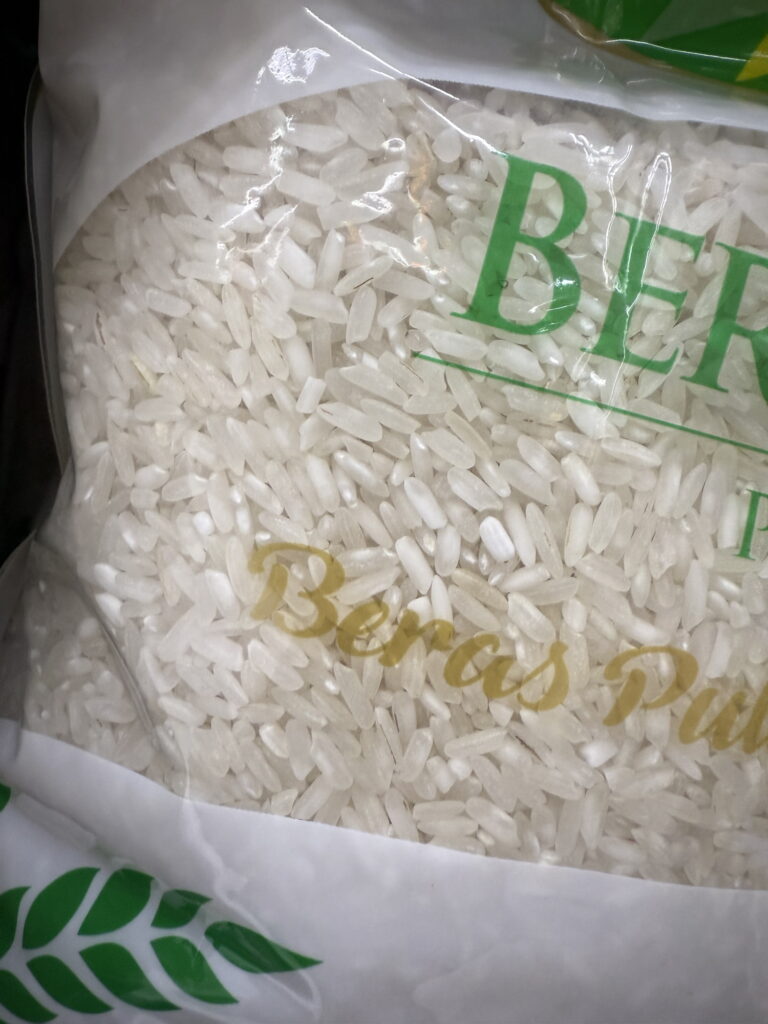
But if you’re craving that authentic, comforting taste you get at Korean restaurants, jasmine rice won’t quite get you there. It has a light floral aroma and a dry texture where the grains stay completely separate. It’s amazing for fried rice or curry, but it just doesn’t vibe well with Korean side dishes.
🛒 How to shop for it (Without getting overwhelmed)
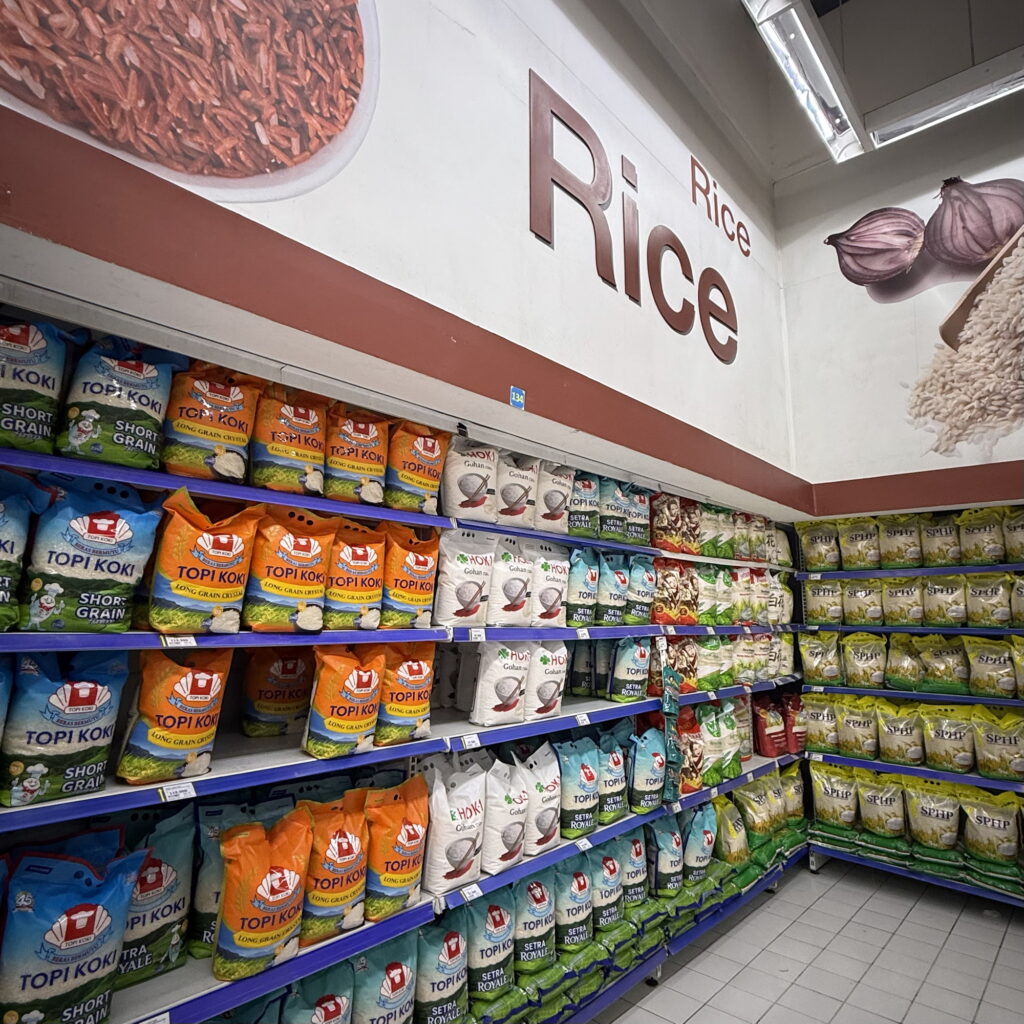
Walking into a store and seeing a wall of rice bags can be intimidating. To make your life easier, here is exactly what you should look for.
Look for these on the label:
✔️ Korean Short-Grain Rice (What most Korean families eat at home)
✔️ Sushi Rice / Japanese Short-Grain Rice (Easy to find and works very well for Korean meals. It’s essentially the same thing and available in almost every standard grocery store.)
✔️ Calrose Rice (If you’re in the US, this medium-grain rice is common, affordable, and works surprisingly well for Korean cooking.)
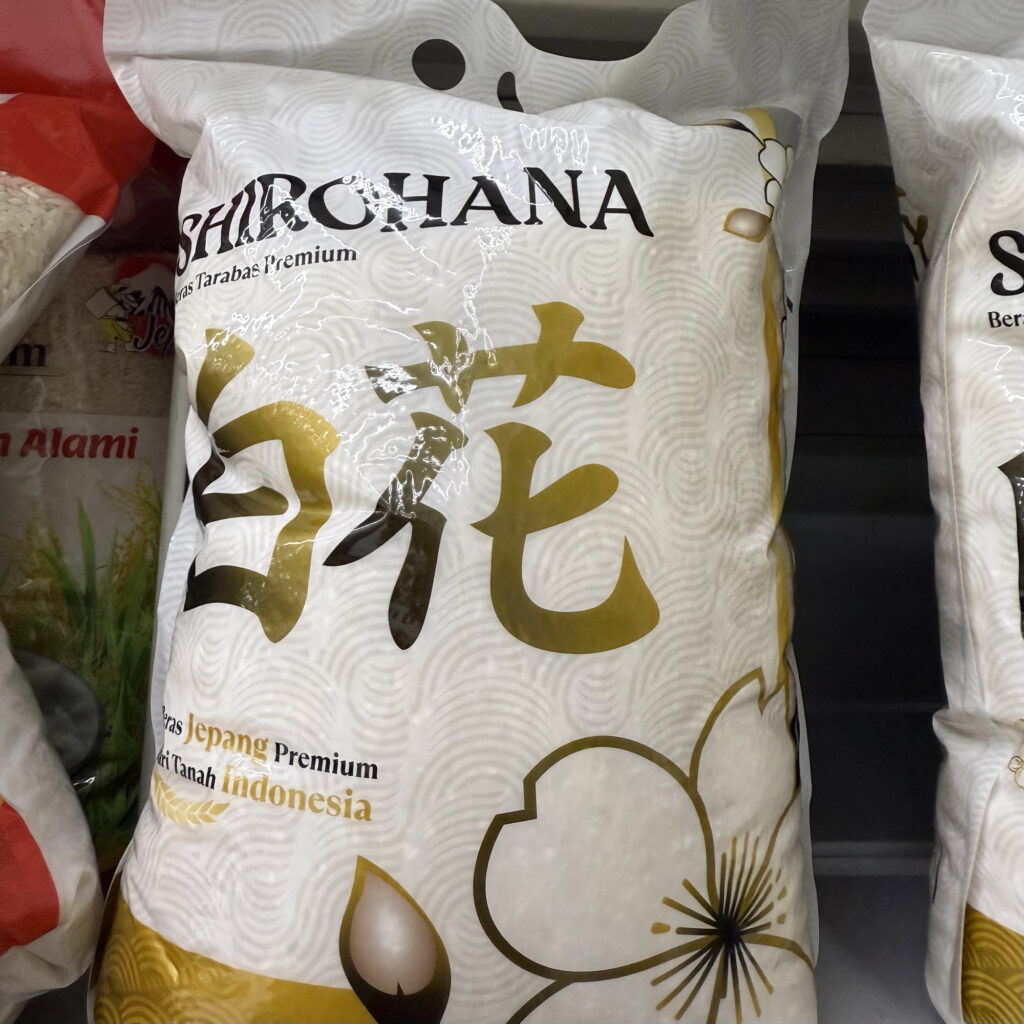
Skip these for Korean cooking:
✔️ Jasmine Rice, Basmati Rice, or anything labeled “Long-Grain.”
🤎 A quick note on Brown Rice
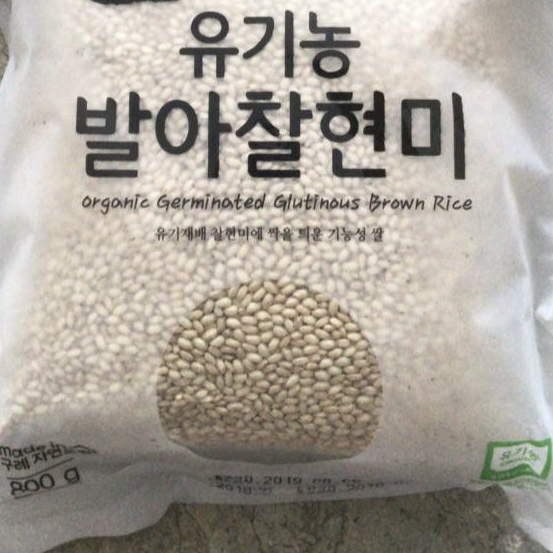
If you want to be healthy, you don’t have to eat 100% white rice. But in Korea, we rarely eat 100% brown rice because it can be a bit tough and dry.
Instead, try mixing them. A 70:30 mix of white rice to brown rice gives you a softer, chewier texture while still adding some extra nutrients.
💕 Keep it simple
If you remember only one thing from this, let it be this: Just look for “short-grain” or “sushi rice.”
You don’t need the most expensive specialty brand. As long as it cooks up soft, plump, and easy to eat with chopsticks, you’ve nailed the most important part of Korean cooking.
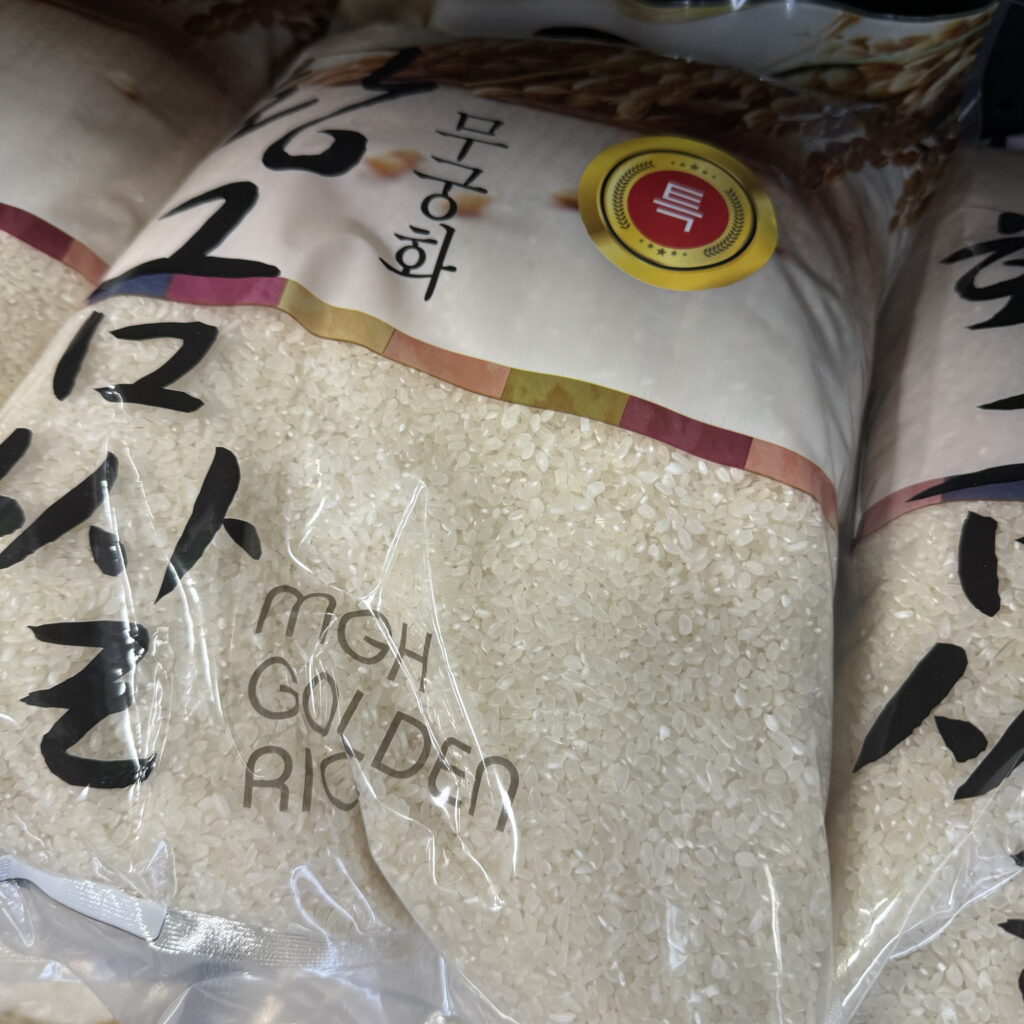
But what if you don’t have a rice cooker?
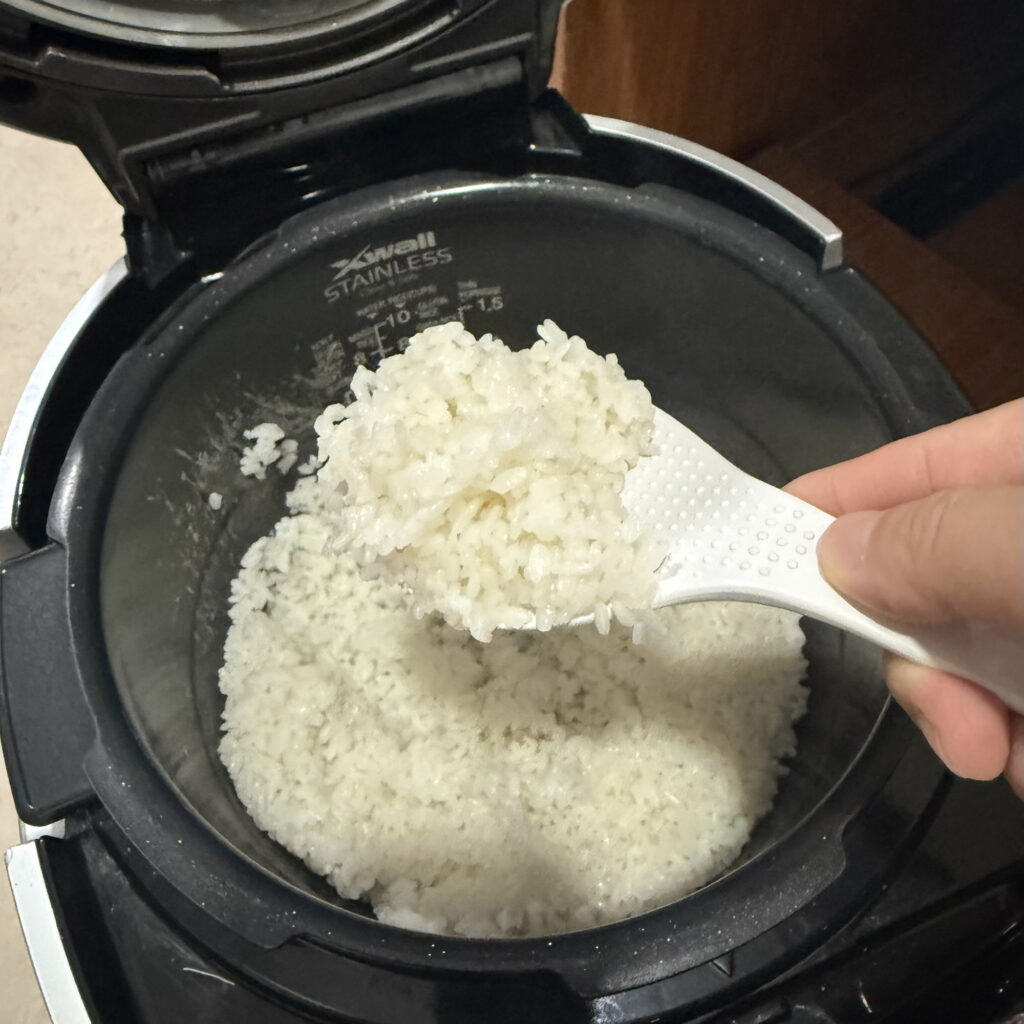
For years, I thought good Korean rice was impossible without a rice cooker. After moving abroad, I learned that wasn’t really true.
In my next post, I’ll share the method I use to cook Korean rice without a rice cooker.

Hi, I’m Vella, a Korean home cook sharing easy Korean recipes for everyday cooking. I focus on simple recipes, practical tips, and ingredients that are easy to find outside Korea.